Ask where each time estimate starts and ends. “Seven days” is not useful until you know whether it describes making the piece, handing it to a carrier, or reaching the recipient.
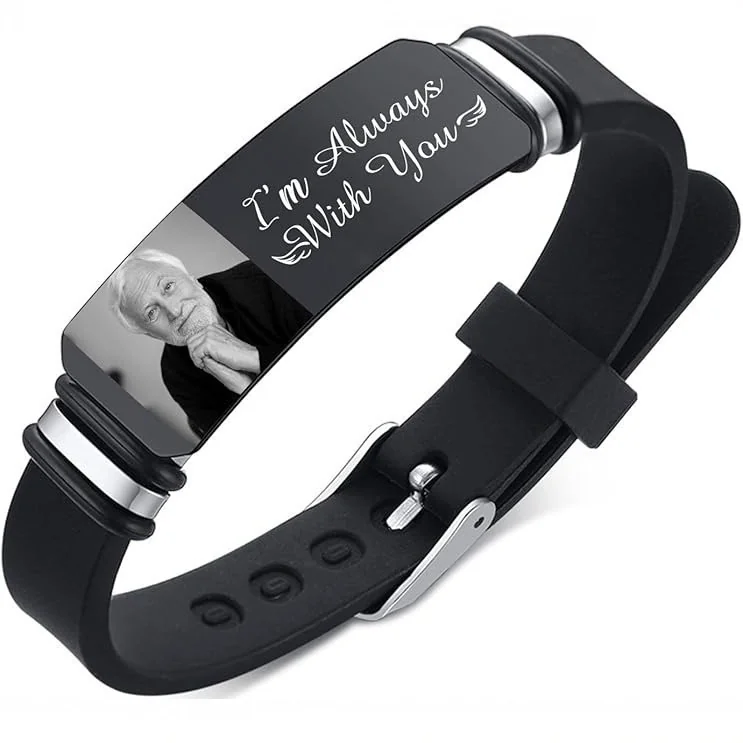
Split the timeline into four stages
Record brief completion, proof approval, manufacturing completion, and delivery to the destination. Dispatch belongs between making and delivery; it is not arrival.
Ask whether the estimate begins when the file is received, when payment is possible, or when a proof is approved. If a file needs revision, ask whether that changes the stated schedule.

Keep unconfirmed dates visible
For The Portrait Cuff or The Family Bracelet, record unavailable stage dates as not supplied. Do not add two vague estimates and announce a reliable arrival date.
Check current ordering information and request confirmation for the selected option; neither a production commitment nor a destination-specific delivery commitment follows from a reference photograph. When planning a gift, set a separate decision date for switching to a card or another confirmed option. That preserves the occasion without inventing a fulfilment promise.
Translate each estimate into a start and an end
Copy the seller's exact time wording into a private record, then identify the event that starts it and the event it ends at. A production estimate might begin after an approved proof; another statement might begin after the source file is accepted. Do not combine them until their definitions are clear.
Use ordinary event names rather than a single delivery label. File received, proof returned, approval received, piece completed, dispatched, and delivered describe different points. If the wording does not identify a point, mark it as undefined and ask for clarification. A precise timeline can contain unknown dates without becoming misleading.
Record time units and conditions
Ask whether an interval uses calendar days or working days when the stated estimate makes that distinction unclear. Retain any condition that affects the start, such as waiting for a revised crop or complete name list. Do not remove that condition when copying the estimate into your own schedule.
If a range is supplied, retain the range rather than selecting the earliest end as a promise. If a date is estimated rather than committed, label it accordingly. These are reading distinctions, not an evaluation of the seller's reliability or a guarantee about the eventual journey.
Use a stage-definition table
| Stage | Definition to obtain |
|---|---|
| Brief accepted | What information must be complete for acceptance? |
| Proof prepared | What review document is returned and when? |
| Approval recorded | Which version and decision start the next stage? |
| Manufacturing complete | What finished work does this milestone describe? |
| Dispatch | When and how is handoff identified? |
| Destination delivery | What destination and service does the statement cover? |
The table helps you identify whether two statements refer to the same interval. A manufacturing period and a transit estimate can be different without contradicting each other. A vague making period cannot establish the date on which delivery begins.
A fictional time-wording example
In this fictional editorial example, Alex receives one message saying production starts after proof approval and another saying shipping takes a stated interval after dispatch. Alex records both without adding them into a fixed arrival date. The proof has not yet been approved, so the first start event remains incomplete.
Alex's selected photograph also needs a crop decision. The worksheet identifies that as a brief-preparation question, distinct from manufacturing. If a revision is requested after a proof is returned, Alex asks how the revision affects the previously stated production interval. The answer is saved against the new version rather than silently assigned to the earlier one.
No actual number of days or Energvia commitment is supplied in the example. Its useful result is a timeline whose terms are defined, with the unresolved starting event visible.
Separate the buyer's action from the seller's stage
Some waiting may concern an answer you need to provide, such as spelling approval, while another interval concerns a seller's stated process. Record who is responsible for the next event. This allows you to prepare the missing information without claiming that production has already begun.
For a photo request, keep the selected file and crop version attached to the approval event. For a name-element request, keep the ordered names and option. If the source changes, the recorded approval point needs review. A statement about an earlier brief should not be treated as covering a revised configuration automatically.
Include a status beside each event: not started, awaiting information, or evidenced by a stated record. This prevents a proposed schedule from appearing to document work already completed when it only describes the intended sequence.
Keep the destination basis explicit
Record the country or region basis used for the estimate and the stated service, if supplied. Do not assume that an estimate for one destination applies to another or that dispatch is arrival. A transport statement should identify the end event it describes before it is used for planning.
The completed timing record contains the exact wording, defined start and end, unit, conditions, destination basis, and evidence date. If ordering or manufacture remains unavailable, the stages remain questions rather than booked milestones. This article supplies a way to interpret time terms, leaving any occasion deadline decision separate from an unsupported fulfilment promise.