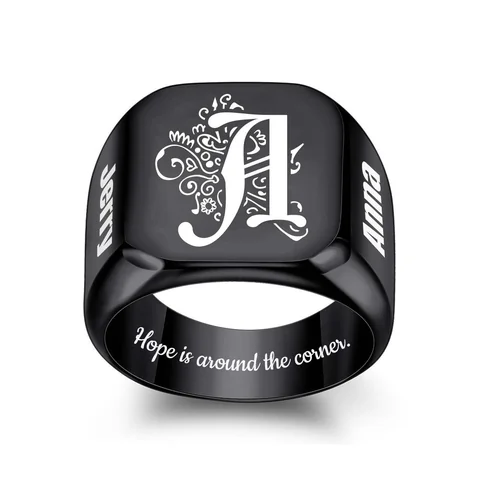
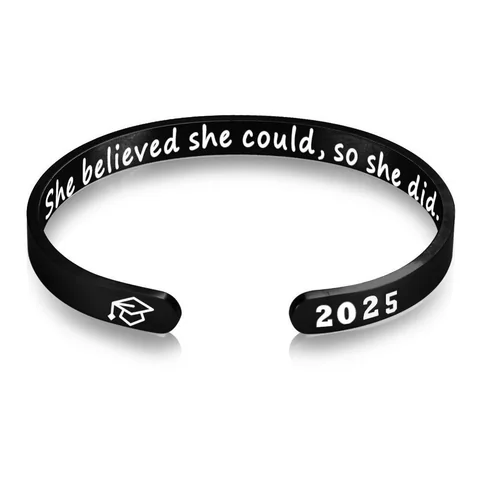
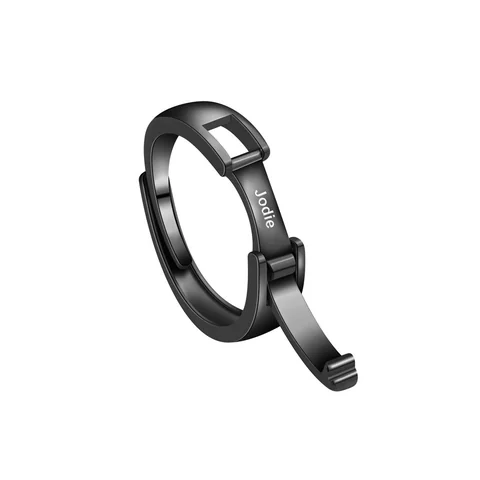
Choose the texture you want around the names. Round beads make a repeating sequence; a braided band creates a more continuous patterned line. That visual difference can help narrow a custom name bracelet even when the component materials still need confirmation.
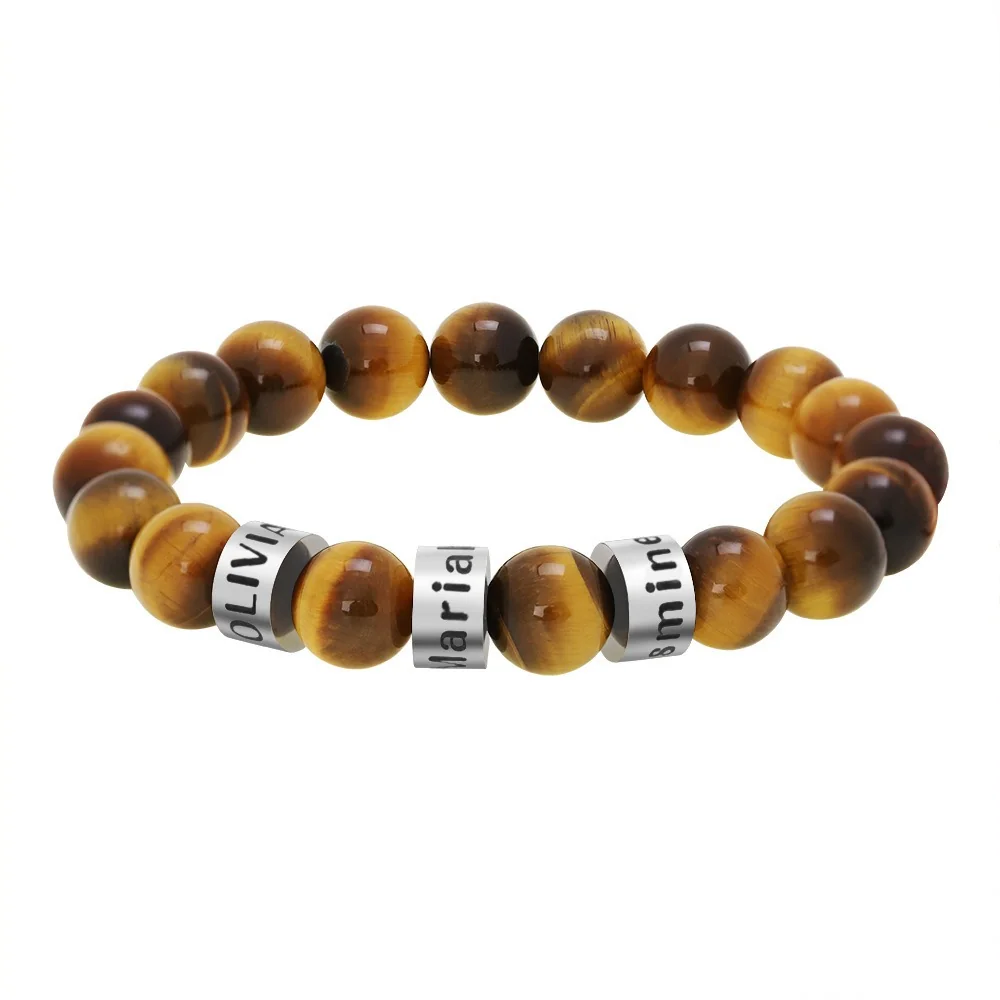
Test the pattern against one familiar outfit
Look at a plain shirt and then a patterned shirt you own. Beside each, compare the repeated circles in the bead design with the smaller changes along the braid. Record whether the bracelet adds a pattern you like or competes with one already present.
An original trial sheet can be this short:
| Outfit | Bead outline | Braided outline |
|---|---|---|
| Plain shirt | Names or bead texture draws my attention first? | Names or braid draws my attention first? |
| Patterned shirt | Repetition feels welcome or busy? | Continuous line feels welcome or busy? |
The answers are preferences. They do not establish that beads are heavier or that braid is more comfortable.
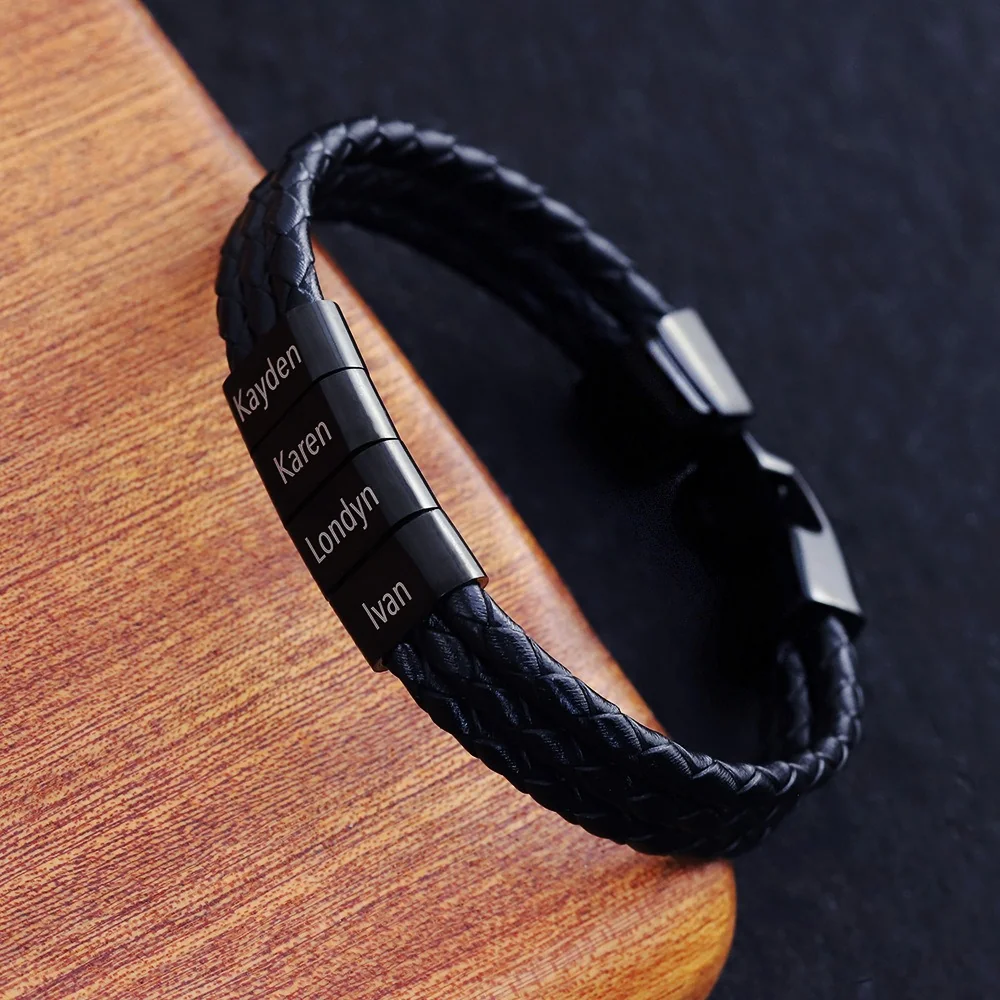
Keep texture and wording as separate choices
The Name Bead and Family Bracelet references also differ in their pictured name elements. Ask for the exact configuration if the same names must appear in both versions.
If neither outline works with the wearer's usual clothes, reconsider the shape before changing a meaningful name into an abbreviation. The surrounding pattern can change; the person's spelling should stay intentional.
Look at the spaces around the names
A bead arrangement creates repeated circles and gaps in its pictured outline. A braid creates a different continuous pattern behind the text-bearing elements. Notice how much of the visual attention belongs to the surrounding pattern and how much belongs to the names. This can help clarify what you want the bracelet to do in an outfit.
Do not identify bead material from brown, gold-colored, or stone-like appearance. Likewise, a braided texture does not establish leather or another material. Use the visible shape words during the styling comparison and save composition questions for the specifications.
Make the comparison about one preference at a time
Imagine a fictional wearer who likes plain navy shirts and wants three names to be the main detail. In the first reference, the round-bead pattern attracts the wearer's attention before the rectangular name elements. In the second, the dark braid feels like a quieter background. That response gives the wearer a reason to favor the braid reference for this brief.
Now imagine a different brief in which the repeated bead pattern is the desired feature and the names are a secondary detail. The same references can support a different preference. The exercise demonstrates a difference in visual priorities; it does not establish which design is more comfortable, durable, or appropriate for men.
Place the references beside a photograph of the clothes without modifying their proportions. If the garment has a pattern, ask whether another repeated pattern is welcome. If the garment is plain, ask whether the bracelet should provide the main texture. Keep the answer personal: “I prefer this with my shirt” is defensible; “this works with every outfit” is not.
Hold the inscription list steady
Use the same exact names when asking about both designs. Record the intended order and which entries must remain separate. The photographed examples may contain different numbers of elements, different text lengths, or different arrangements. Those differences can influence the comparison independently of the bead or braid outline.
Ask for the offered configuration rather than assuming the pictured element count is included. If a proposed configuration has fewer name regions, evaluate whether that changes the purpose of the gift. Do not call it an equivalent design merely because the overall color looks similar.
For a long name, request a whole-layout proof. A close-up of a short example does not explain what happens when several entries of different lengths are placed together. The desired texture should support the message rather than force an unapproved spelling change.
Make practical questions specific to the selected structure
For a beaded reference, ask how the elements are arranged in the actual version and how its fit is specified. For a braided reference, ask about the finished band, closure, and text-bearing components. Neither list authorizes pulling apart, stretching, bending, or replacing components.
If future additions are important, ask whether the offered design is explicitly expandable. Separate pieces in a photograph do not establish that a name can be added later. If expandability is not confirmed, decide whether the original list is complete enough for the gift.
Keep care questions component-specific once materials are identified. A mixed design may need guidance that covers the whole piece. Do not apply a method intended for one presumed bead material to a bracelet whose cord, elements, and closure have not been documented.
Save a reasoned shortlist
A useful final note is “Braided outline preferred because the names should lead; actual three-name configuration and finished fit remain to be confirmed.” Another is “Round-bead outline preferred for its repeated shape; the name list stays unchanged.” These notes preserve the result of the visual comparison without converting appearance into a manufacturing claim. Return to the shortlist when the exact configurations can be compared on the same terms.