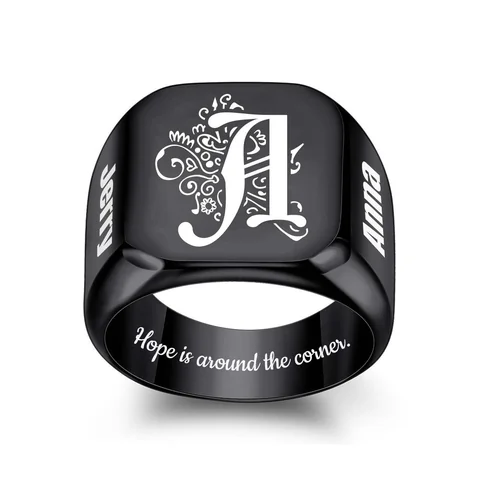
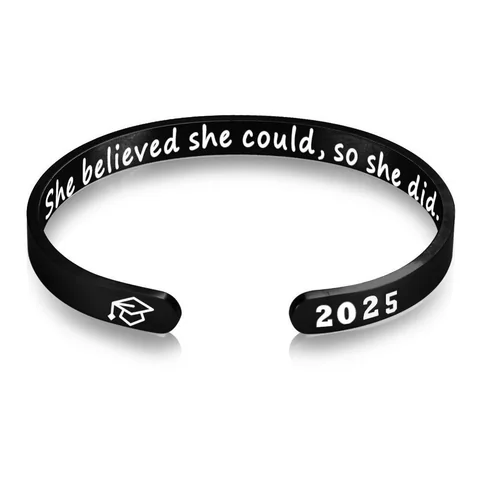
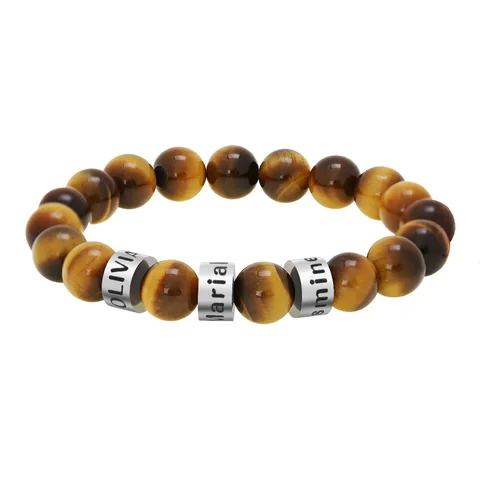
An initial keeps the message compact; a full name makes the identity explicit. Choose between them by asking what the wearer wants to recognize, then check how the specific design creates that detail.
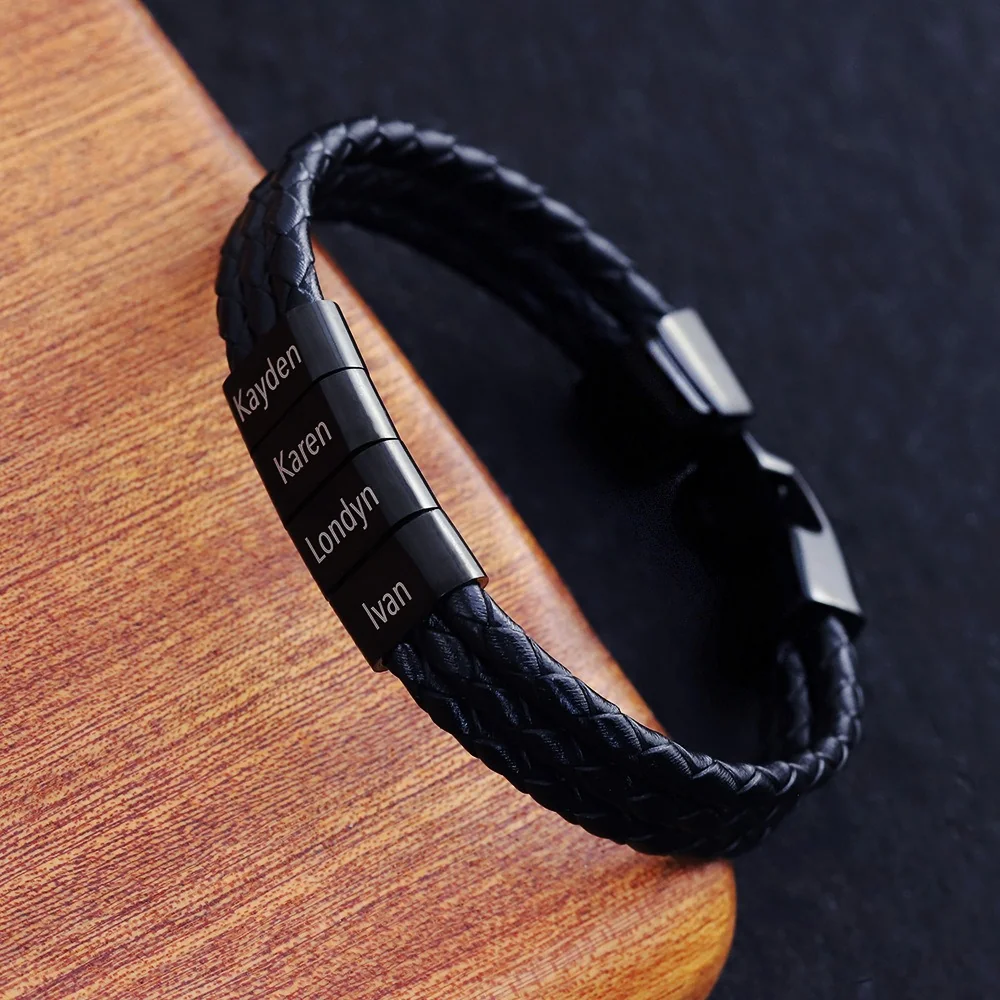
Write the two versions side by side
For the fictional name Morgan Ellis, compare “M,” “ME,” and “Morgan.” The first may be meaningful to the wearer while remaining ambiguous to someone else. The second introduces a choice about name order. The third is clearer but asks more of the text area.
If another person shares the same initial, decide whether ambiguity matters. There is no need to reveal a full name when the wearer prefers a private reference, but privacy should be a deliberate choice.
Identify the customization method
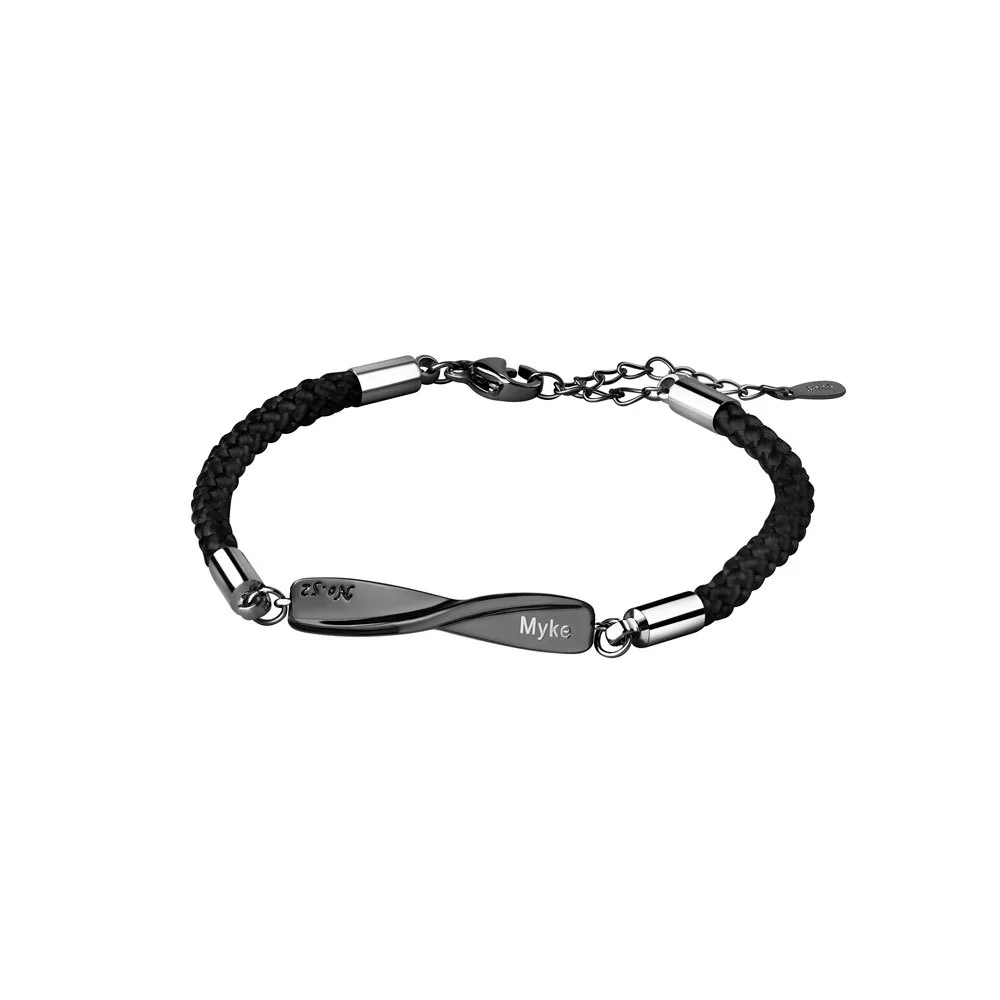
A shaped letter element and an engraved letter are different requests. Ask which is offered, which characters exist, and where the detail sits. The Initial Bracelet reference has a name that needs to be checked against its actual photographed structure; do not use the label as a manufacturing specification.
The Family Bracelet is a visual starting point for separate names. If you want only initials, submit them as an exact alternative brief and request confirmation instead of assuming the full-name field approves it.
Finish with one text version and a named method. “ME, engraved in one region” is more actionable than “an initial bracelet like the photo.”
Decide how much explanation the inscription should need
A single initial may be immediately meaningful to the wearer and unclear to everyone else. A full first name may be easier for another person to recognize. Neither level of disclosure is inherently better. Ask whether the detail should identify a person publicly, act as a private reminder, or simply provide a familiar visual mark.
For an original example, consider the fictional names “Maya” and “Miles.” Both reduce to M. If the bracelet is meant to represent both people separately, two identical initials may need an intentional order or another distinction. If the wearer likes the shared initial precisely because it joins the two names, no distinction may be wanted. The meaning has to be settled before the layout.
Compare several exact text drafts
Write the full name, the first initial, and the preferred two-initial form on separate cards. Do not add periods automatically. “ME” and “M.E.” are different strings and may also feel different to the wearer. If surname order matters, establish it with the person rather than applying a monogram convention without asking.
Read each draft out loud as you would explain it to the recipient. If explaining the initials becomes awkward or exposes information they prefer to keep private, choose a simpler interpretation. An inscription does not need to contain the entire story of the gift.
Keep the spelling master visible beside the abbreviation. This prevents a revision from losing an accent, changing the name order, or substituting a nickname that was never chosen. Shortening a name should be an explicit personal decision, not a technical assumption.
Identify whether the letter is text or structure
An engraved M is a mark on a supported surface. A separate M-shaped element is part of the jewelry's structure. A photograph of one does not prove availability of the other. Ask whether the selected design offers engraved characters, shaped letters, or another documented option.
For shaped letters, request the available characters and the arrangement method. For engraved letters, request the actual text region and supported character treatment. If the answer only refers to the product's title, ask for a photograph or specification tied to the proposed configuration.
Do not assume that a design named Initial Bracelet includes a library of letter charms. The referenced image needs to be considered alongside the title. Where the structure shown and the name differ, describe what is visible and keep the customization method unresolved.
Plan for recognition without adding unnecessary information
Suppose the fictional wearer wants to recognize one person named Morgan while keeping the reference discreet. A useful brief is “M, engraved in one confirmed region; the meaning belongs in the gift note.” Suppose another wants the name to be easy to recognize. That brief is “Morgan, with the exact spelling preserved; show a proof of the whole name.” These are distinct requirements, not better and worse versions.
If the full name cannot be accommodated legibly, ask whether another supported design would preserve it. Choosing an initial can be an acceptable fallback, but only if the wearer accepts the change in meaning. Do not treat the preview's ability to fit one letter as a reason to override that preference.
Keep one interpretation through the proof stage
After selecting a draft, copy it exactly into the request. State whether punctuation is present and whether capitalization is intentional. Review a proof for the chosen text method, not just a decorative font sample.
The saved result should explain what the initial represents, how it is meant to appear, and whether ambiguity is acceptable. That provides something useful to verify later. Until the selected design's manufacturing limits are confirmed, the text draft remains a prepared request rather than a promise that the piece can be made.