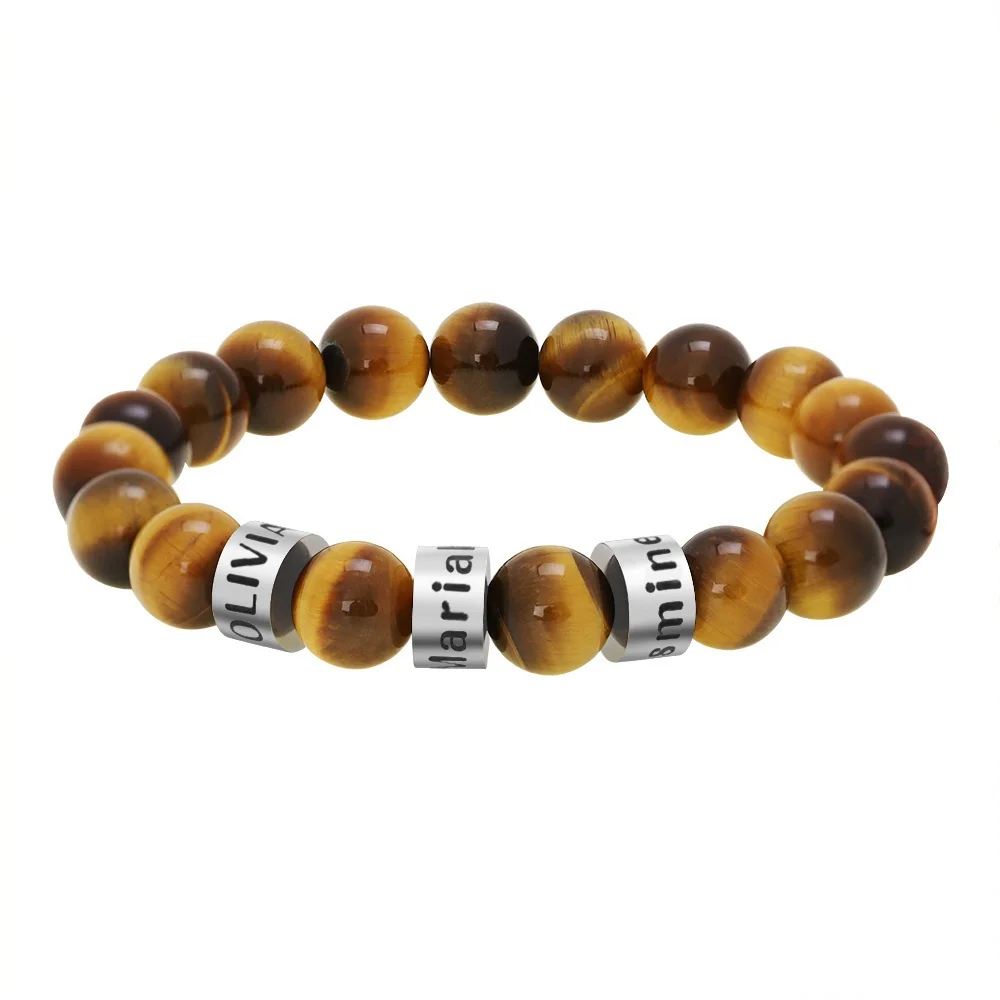
Choose separate name elements when each name needs its own place. Choose an ID-style panel when you want to read the inscription as one piece of text. That distinction is more useful than deciding which style is supposed to be “for men.” Both can carry a personal detail; they organize it differently.
Before comparing a chain, a braided band, or a row of beads, write down the exact information you want on the bracelet. Three first names and one short sentence are different design problems.
Two ways to organize the same meaning
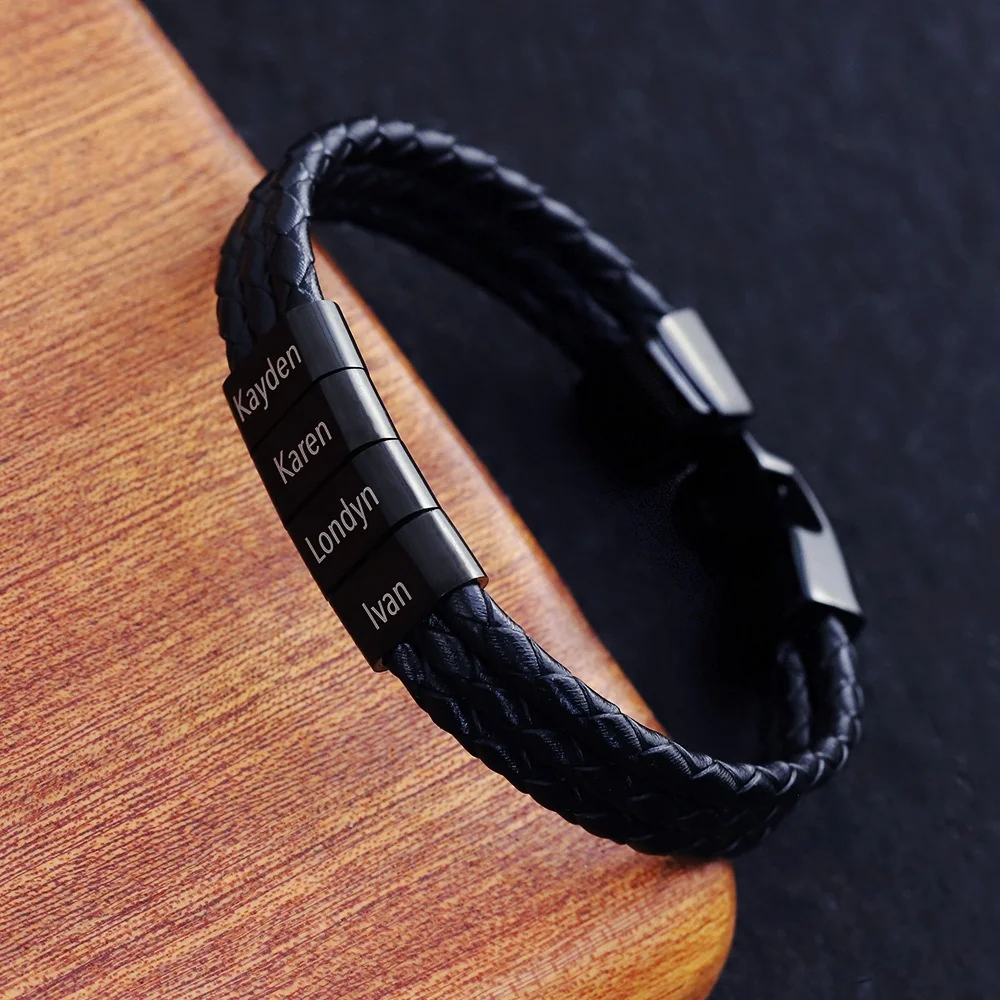
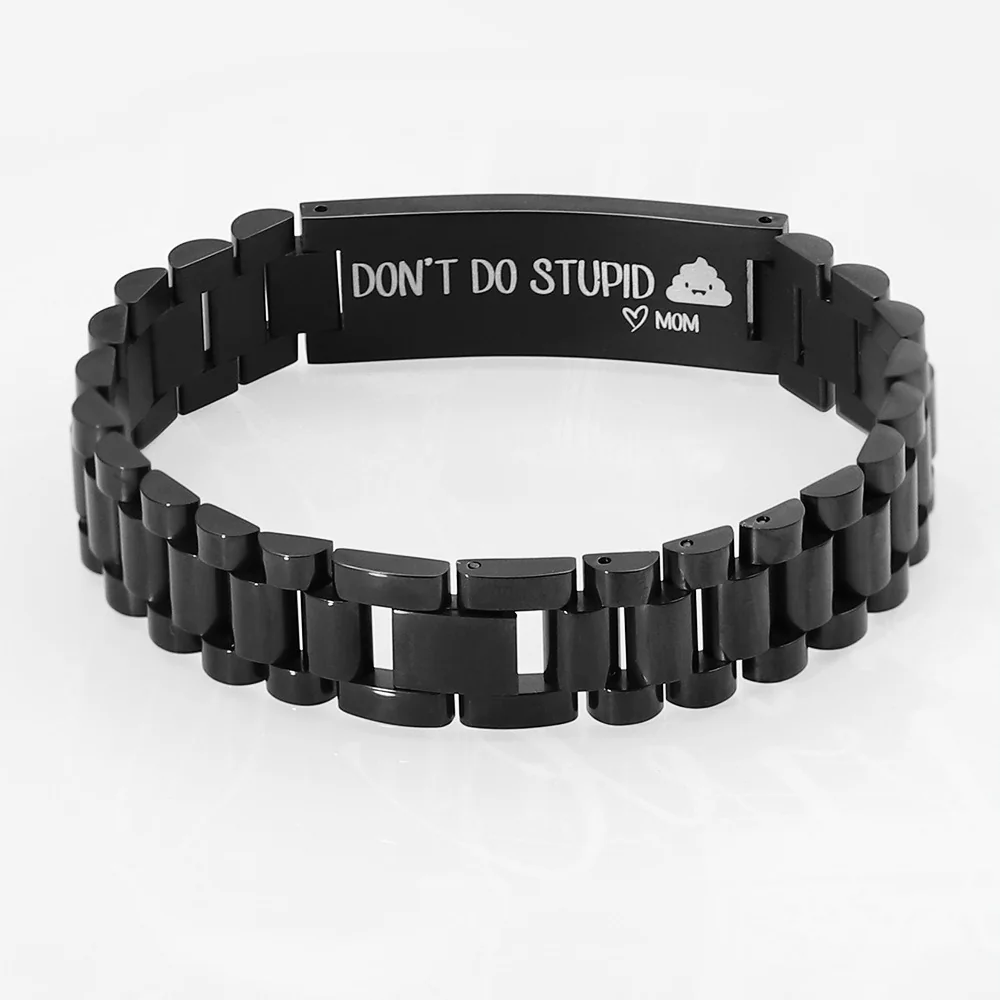
In a name-element layout, the inscription is divided across individual parts. A family name list can read as several small units. An ID bracelet usually presents a continuous panel, although the number of usable sides and lines depends on the specific design.
| Your starting point | A layout worth considering | What still needs confirmation |
|---|---|---|
| Several names that should have equal attention | Separate name elements | Number of usable elements and text allowance for each |
| One name or one short message | A single panel | Usable area, placement, and supported characters |
| A date plus a phrase | A panel with a confirmed layout | Whether both items fit without shrinking the lettering |
| Names you may want to add later | A design explicitly sold as expandable | Whether parts can actually be added and who provides them |
The last row is easy to overlook. Separate parts in a photograph do not prove that the bracelet can be opened, extended, or engraved again.
Look at the inscription area before the band
The reference photograph for The Family Bracelet shows four dark name elements on a braided band. The photograph for The Engraved ID Bracelet shows a broad panel within a linked bracelet. These are useful examples of the visual difference. They do not establish a finished engraving limit or confirm that every arrangement pictured is available.
Try writing your planned text in separate boxes on paper. Then write it as a single line. If separating it makes the meaning clearer, name elements deserve a closer look. If the words depend on being read together, a panel may be a better starting point.
For example, the fictional names “Ada,” “Eli,” and “Nora” remain understandable as three separate entries. “Here for the climb” needs to be read as a phrase. The example does not assume that any particular bracelet accepts those words.
Keep style and manufacturing questions separate
A dark band may suit the clothes you already wear. A linked design may repeat the shape of another accessory. Those are visual preferences, not evidence about weight, metal composition, resistance to water, or comfort.
Ask for the specifications that matter to your decision: the finished size, the inscription area, the closure, and a sample of the intended engraving method. If a seller supplies only a large on-screen preview, you still need to know what happens at the finished scale.
Use three questions to narrow the choice
- Does the information need to stay together? A phrase loses its rhythm if it is divided awkwardly. A list of names may benefit from separation.
- Do I want one focal point or several? A panel makes the message a single visual feature. Separate elements create repetition along the bracelet.
- Is a future change essential? If so, require explicit confirmation of an expandable structure before choosing it. Treat an unconfirmed feature as unavailable for the decision.
Once the layout makes sense, check fit and personalization rules for the actual piece. A design that looks right can still be unsuitable if its size or text space is not confirmed.
Check the current product pages for available options and purchasing information before relying on a particular design or proposed inscription. Use them to compare layouts rather than as proof that a proposed inscription has been approved for production.
Resolve unequal names before comparing photographs
A short name and a long name are not interchangeable shapes. Imagine a planning list containing “Bo,” “Alexandra,” and “Ray.” Giving each person one element may look fair in a sketch, but the longest name still needs a legible treatment. Making every name the same height could require different amounts of horizontal space. Making every name fit the same box could produce different lettering sizes. Neither result is automatically wrong; the important point is to choose deliberately.
Ask for a layout showing all the names together, rather than approving three isolated text previews. Check whether the longest entry attracts less attention because its lettering has been reduced. If equal visual emphasis matters, explain that requirement before asking for a production proof. A typed field with equal character limits cannot settle this question.
A panel raises a different issue: punctuation can clarify where one name ends and another begins. Compare a simple separator with a line break on paper. Keep a separator only if the wearer likes it and the maker confirms that it is supported. Do not add decorative symbols merely to fill unused space.
For either layout, save a single spelling master. Copy from that master whenever you request a revision. Changing the order, spelling, and band style at the same time makes it harder to see which change improved the design. First resolve the reading sequence; then compare the surrounding bracelet. That process leaves a useful result even while manufacturing specifications remain unavailable: an exact list, a deliberate order, and an identified visual priority.