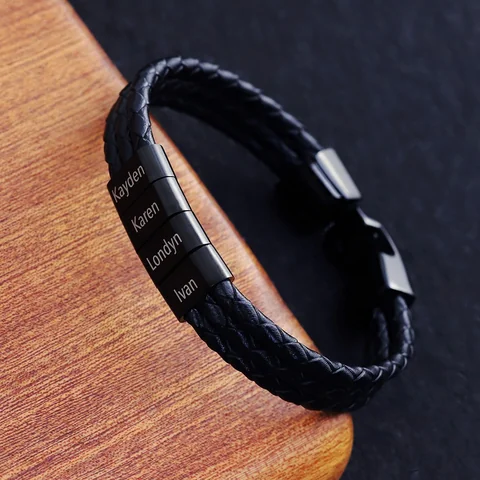
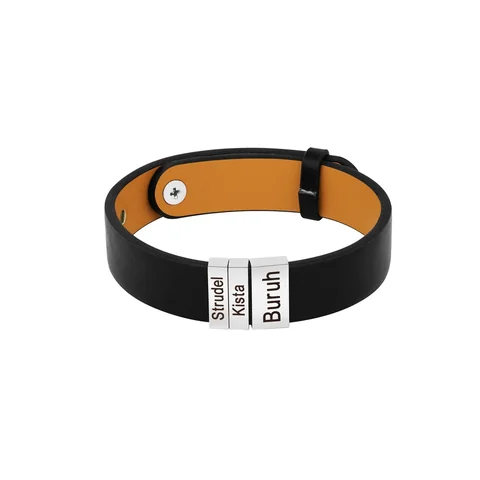
A useful clasp photo shows the joining parts, the release area, and the bracelet in both open and closed positions. A close-up of the engraved face alone cannot tell you how to operate the closure.
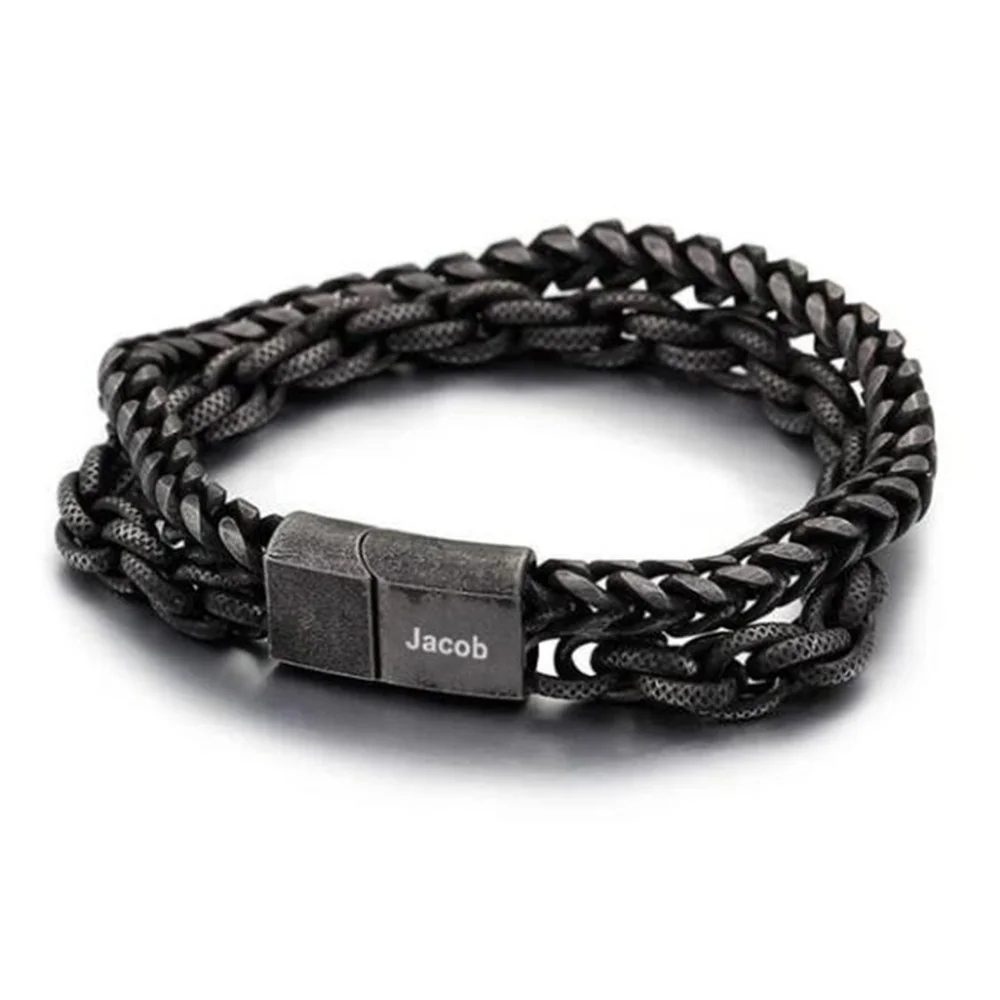
Read the image in this order
- Locate where the two ends meet.
- Find a visible tab, slot, hook, or other feature that might be part of the release, without assuming its action.
- Ask for an open view of the same option.
- Compare the open and closed views for orientation.
- Request a short demonstration if the movement remains unclear.
Do not label an unseen closure “magnetic” or “locking” because a similar-looking bracelet uses that mechanism. Appearance can suggest a question; it cannot settle the answer.
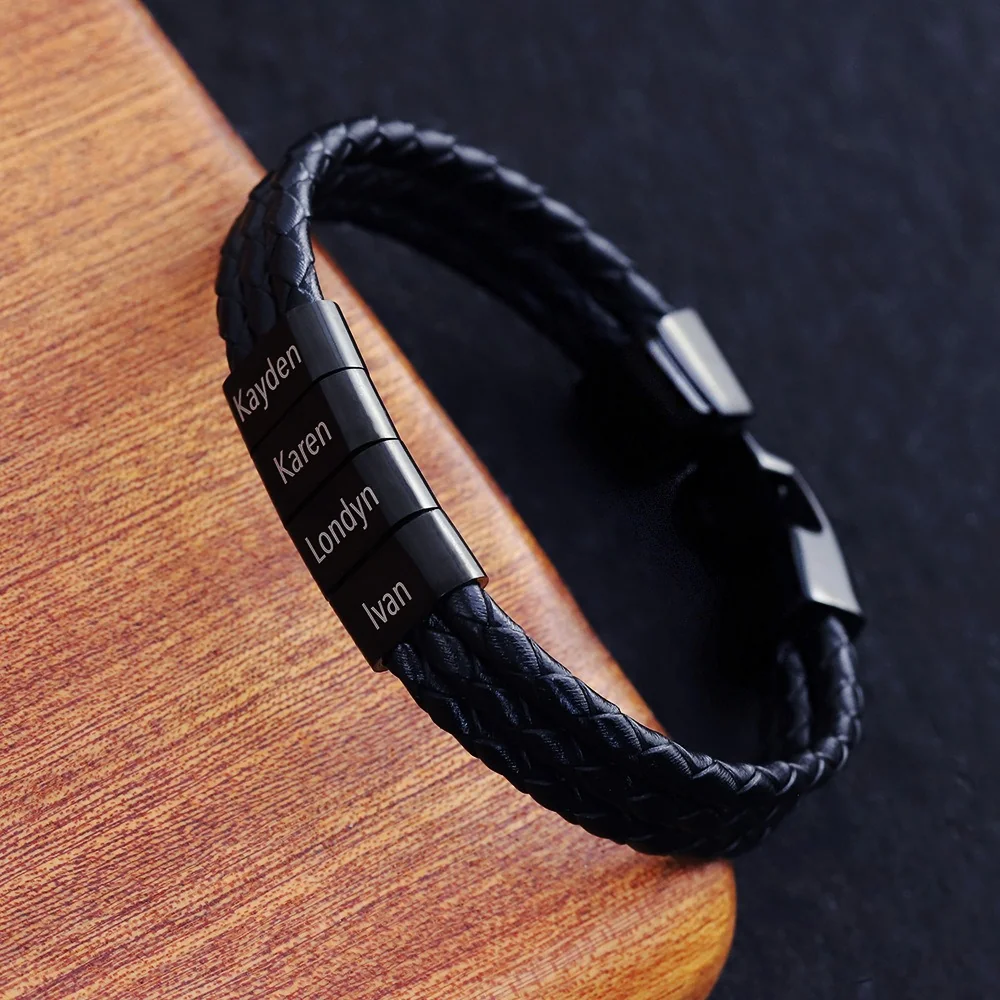
Send a precise photo request
For the Double Chain or Family Bracelet, an original request is: “Please show the closure on this exact option, open and closed, from the same side. Mark the release point and explain the opening action.”
If one-handed use matters, request a demonstration of that requirement separately. Even a complete demonstration is not a test of long-term security or wear resistance.
Save the answer with the product ID and selected option. A clear explanation for a different bracelet leaves your original question unresolved.
Give each photograph a question to answer
Collecting five similar closed views does not necessarily provide more useful closure information than collecting one. Make a small image list with a purpose beside each requested view. The closed view identifies the assembled outline. The open view identifies the joining surfaces. A side view may clarify which part is raised or recessed. A demonstration explains movement that none of those still images can establish.
If a seller sends a new photograph, compare the strand arrangement, joining component, and selected option with the original reference. If they differ, ask whether the new image shows another version. A clear photograph of a different closure is helpful background, but it cannot answer how the selected bracelet operates.
Annotate uncertainty instead of inventing a mechanism
Draw an arrow to a feature and label it “possible release area; action not confirmed.” That label preserves an observation without treating it as an instruction. Avoid labels such as magnetic clasp, safety lock, or push button until the source identifies the actual mechanism for the version in question.
Consider a fictional review exercise in which the first photograph shows only an engraved front face. The reviewer can identify the text-bearing component but cannot locate an opening action. A second photograph shows the ends separated. Now the reviewer can compare the mating parts, but still may not know whether the opening requires sliding, pressing, or another action. The result of the review is a narrower unanswered question, not permission to test a guessed method.
A useful follow-up is “Please show the movement between the closed and open positions in these photographs.” It refers to the evidence already supplied. Asking only “Is it easy?” invites a preference-based answer that may omit the actual procedure.
Look for the complete fastening sequence
Request a demonstration that starts with the bracelet open, shows the joining action, and ends with the closed configuration clearly visible. Ask what the wearer should check before use. Keep this request tied to the maker's instructions; do not invent a pulling test or force a release feature to discover its limit.
The removal sequence matters too. If the demonstration ends immediately after fastening, request the reverse action. An operating explanation should identify where the wearer holds the piece and where the relevant movement occurs. If a cord or name element obscures the joining area, ask for a closer view of that stage.
For a person who requires one-handed operation, state that need before interpreting the demonstration. A two-handed sequence can still explain the mechanism, but it does not resolve the one-handed requirement. A short video should not be described as proof of suitability for every user's dexterity.
Keep personalization from obscuring the operating details
An engraved name may sit on the closure's most visible surface. That makes the area important for both design and operation. Ask whether the proposed text stays within a confirmed region and whether any decorative treatment changes the offered closure configuration. The reference cannot establish these relationships by itself.
Review the lettering separately from the release point. A beautiful name proof does not replace an open view. An excellent operating explanation does not approve a name length or font. Saving the two answers in separate notes helps prevent one satisfactory answer from hiding the other unresolved question.
Save a closure record another person can understand
Your record can contain the product ID, selected reference option, image names, the maker's stated opening action, and the date of the reply. Add a short description of what each image establishes. If the reply does not identify the mechanism, write that explicitly.
The outcome may be “Joining component located; open view obtained; operating action still unspecified.” That is a real progress result from a photo review. Once the action is supplied, compare it with the wearer's needs and the finished fit information. Until then, keep the design provisional rather than converting attractive clasp photographs into a claim of secure or effortless wear.