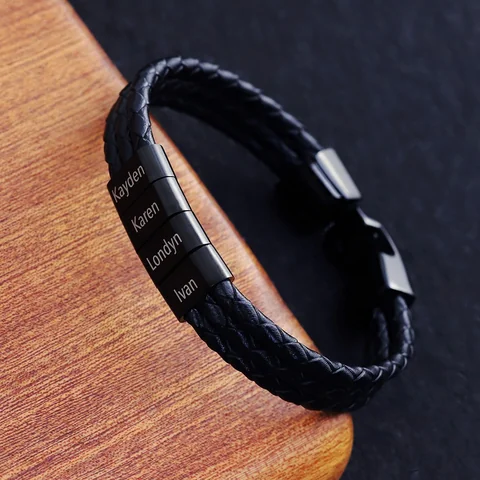
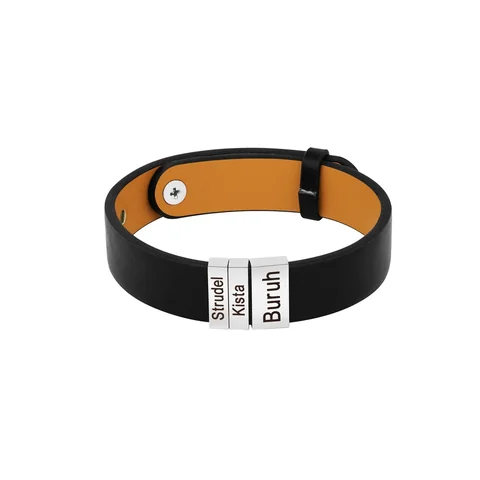
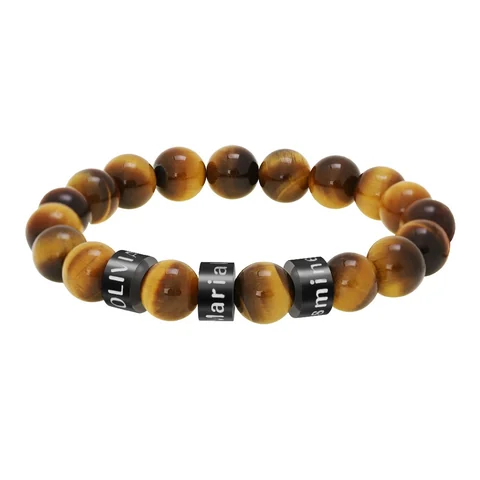
Leave visible room around important facial features in the proposed crop, then ask for the actual production boundary.
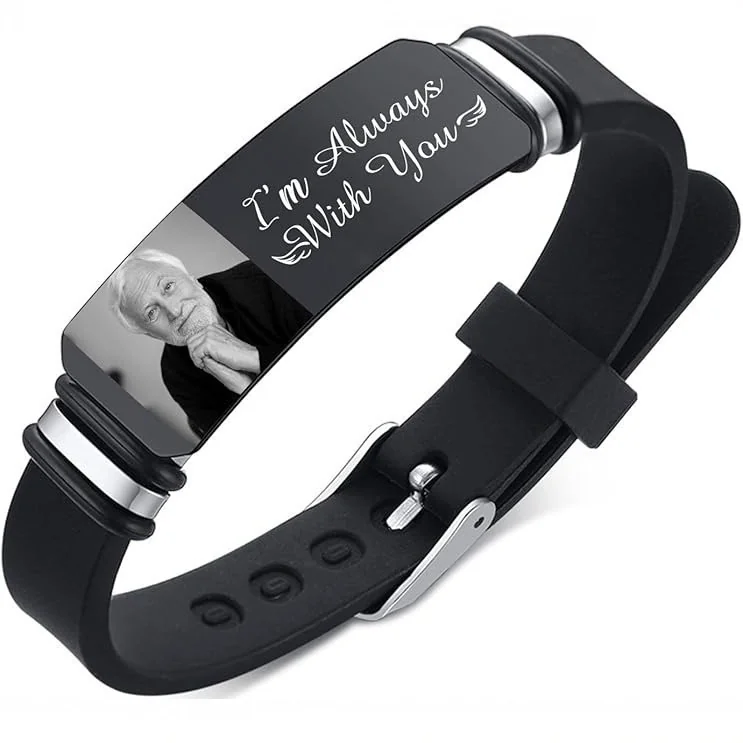
Make a crop that keeps the complete head or the agreed features inside the image. Avoid placing an eye, ear, or chin exactly on its edge when the manufacturer's final boundary is still unknown.
Keep the untouched original and label the crop as a proposal. Do not invent a numerical safety margin without the product's template. Ask where any border, curvature, or masking falls on the selected option.
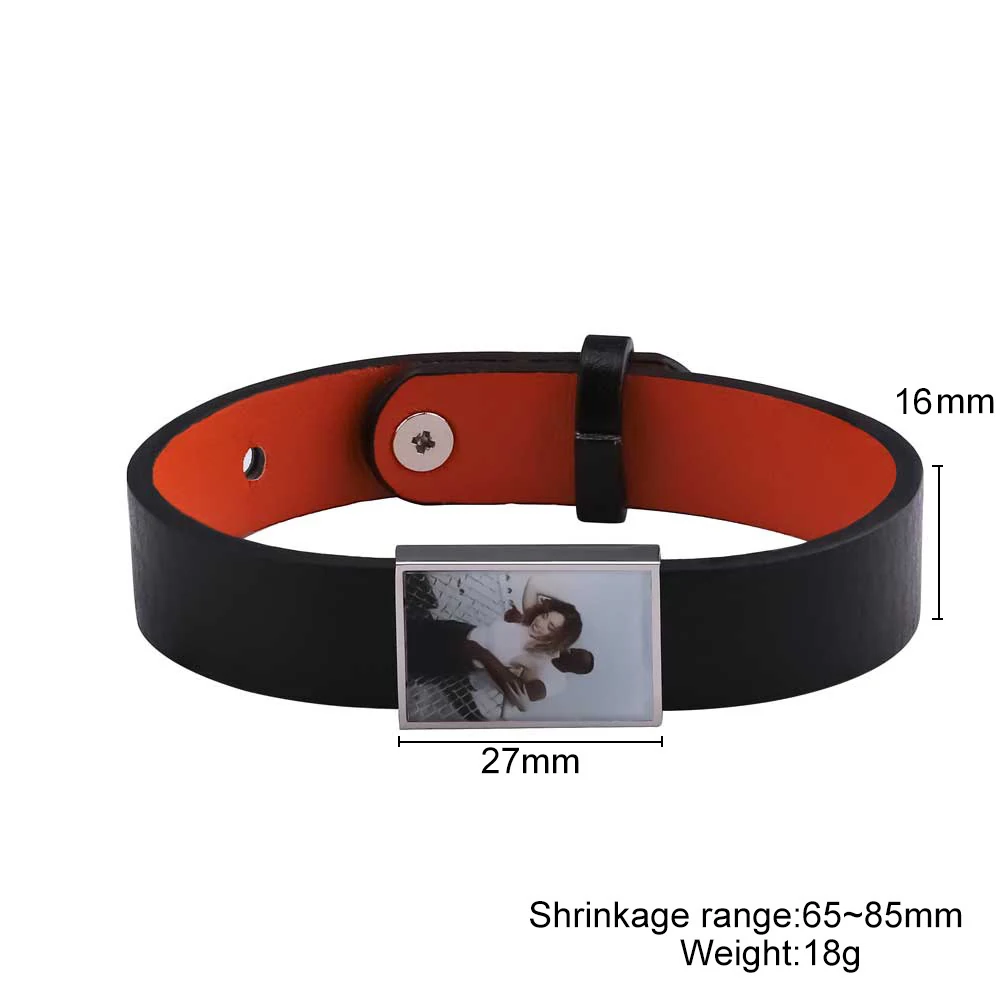
The Portrait Cuff and Portrait Cord have rectangular examples; the Round Portrait reference has a circular surface image. A rectangular crop cannot be assumed to fit all three shapes.
Review the approved boundary together with the subject priority. If a face would be lost, choose another crop or image rather than trusting automatic centering to preserve the intended person.
Identify the features that cannot be clipped
Ask the recipient what should remain inside the image: the complete head, both ears, the chin, or another particular feature. This creates a practical crop brief without prescribing a universal margin. The desired boundary may differ between a formal portrait and a candid scene.
Look at the full source photograph before judging whether more room is available. If the original already cuts off the head, a wider crop cannot recover content outside the file. Keep that limitation visible instead of expanding the canvas and presenting invented surroundings as part of the original photograph.
For a fictional portrait, the recipient wants the whole head and a distinctive earring retained. The planner's first tight crop cuts through the earring, so it is rejected before any product-specific assessment. A wider proposal preserves both features, while its final compatibility with the chosen region remains unconfirmed.
Prepare a proposal with breathing room
Make a working crop that leaves visible space around the agreed features. This is a provisional composition decision, not a production tolerance. Do not label an arbitrary border as a verified safe area. The actual panel shape, border, and available image treatment still need their own information.
Keep the crop separate from the untouched source and describe what changed. A simple note such as “wider crop retaining both ears” is more useful than a file called “better.” The note allows the recipient to understand the purpose without comparing every pixel.
Do not let automatic centering decide the subject. The center of the file may fall between people, on a background object, or away from the preferred face. Review the proposed position against the subject brief rather than assuming a centered image preserves the most meaningful detail.
Ask for the actual boundary and its orientation
Request the template or a clear explanation of the image region for the selected option. Ask whether a surrounding border, curved face, or other design feature affects the visible image. Keep the answer attached to that product rather than applying it to all photo bracelets.
The rectangular Portrait Cuff and Portrait Cord examples differ from the Round Portrait's circular appearance. A rectangular file may need another crop for a circular proposal. The Round Portrait's production boundary remains unresolved, so its visible circle should not be treated as a confirmed template.
If only dimensions are provided, ask how they relate to the visible image. Overall component size may differ from the image-bearing region. Do not calculate a numerical facial margin from an unrelated measurement or a photograph's apparent scale.
Review edge loss in the proposed proof
Place the proof beside the selected crop and examine the outermost important features first. Check the top of the head, sides of the face, chin, and any chosen accessory. Then inspect the whole subject. A centrally placed face can still lose a defining feature at the edge.
Ask whether the proof represents the intended visible boundary or merely displays the source within a general preview. Those views have different purposes. If the edge behavior cannot be established, keep the boundary approval open rather than claiming the face is safely inside it.
If clipping appears, propose a revised crop and identify the specific feature it preserves. Do not simply request “more space” without showing the intended result. A complete revised file and brief are easier to assess than a detached instruction to move the face slightly.
Choose another source when space is unavailable
If the original does not offer enough surrounding content, look for another authorized photograph with the same intended subject. Ask the recipient whether that alternative is acceptable. A sharper or wider file can still be the wrong personal image if it changes the memory they wanted represented.
A nonphoto option can remain available when no crop satisfies the preference. Keep the original photograph for a card or private presentation rather than forcing it into an unsuitable boundary. Its personal value does not depend on being reproduced on jewelry.
Save the final selected crop with the confirmed or still-requested boundary description. That makes edge preservation a concrete review task and prevents a later tighter crop from replacing the composition the recipient approved.