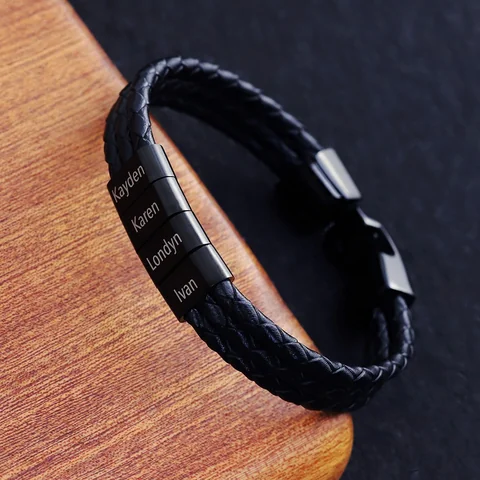
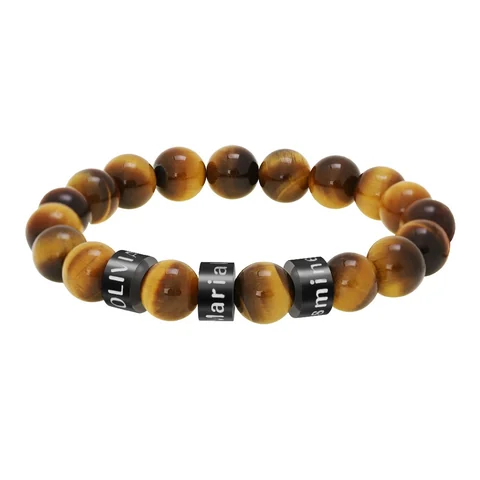
A dark appearance does not identify the finish or tell you which cleaning products are permitted.
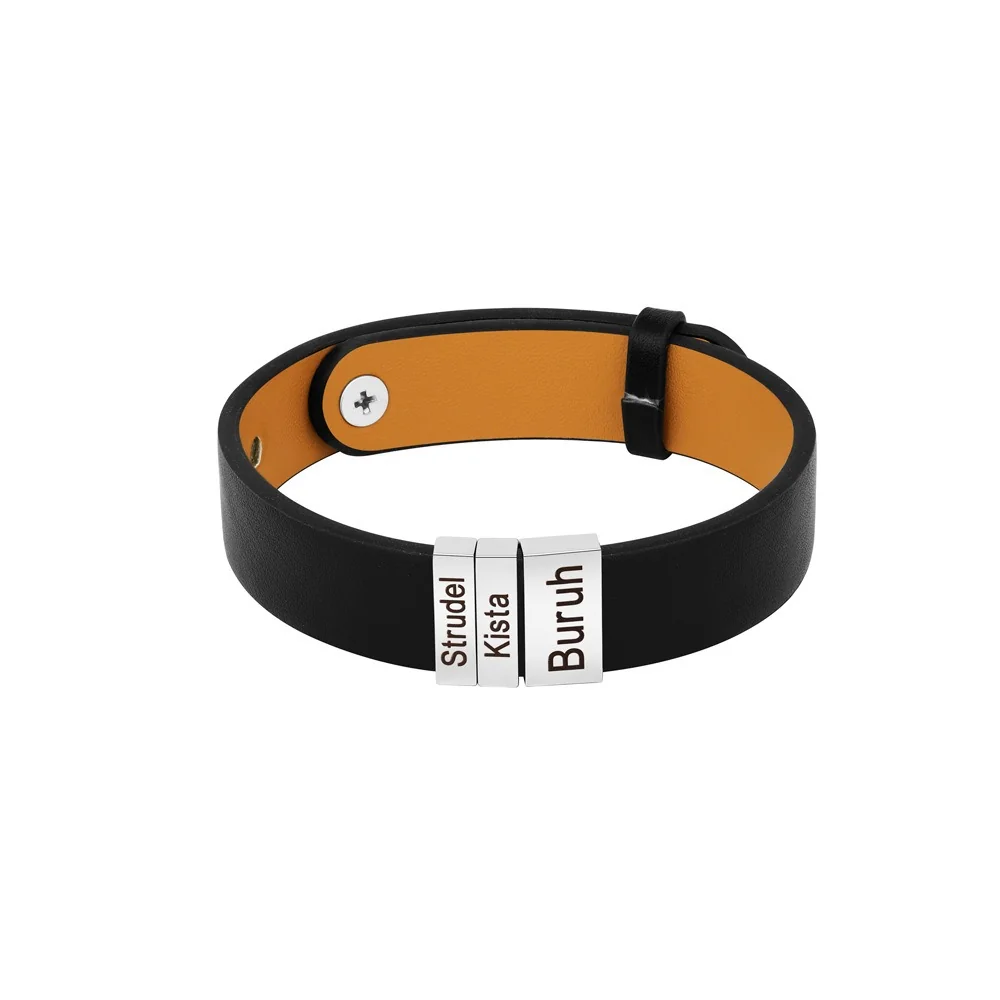
Record the exact color option and ask what material and finish apply to the strap or links, name elements, and closure. Request care instructions for that option, not just for a similar silver-colored example.
The Slim ID, Wide Link, and Bold Link references all contain dark components but different visual constructions. Their photographs cannot prove a common coating or wear resistance.
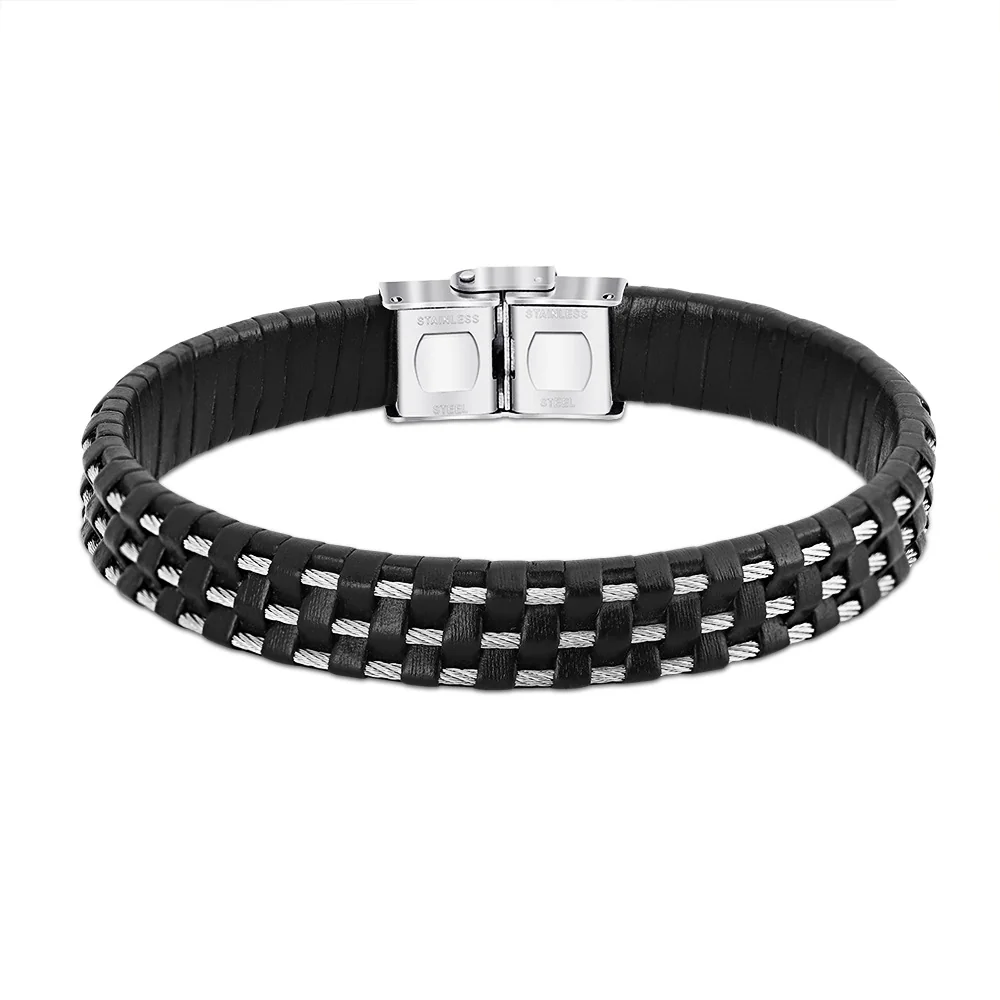
If a reply says only “black metal,” ask which component it describes and whether the surface treatment has a separate care rule. Keep unanswered fields marked as unconfirmed.
Do not recommend polish, abrasives, solvents, or soaking because the surface looks smooth. A useful black-finish care article begins with the identified finish and actual instructions, rather than promising that the color will never change.
Identify the option before discussing its surface
Save the product reference, the color label exactly as written, and the image used to identify the option. A photograph showing several colors may illustrate more than one version. Do not choose the darkest part of that photograph and assume it represents the option you intend to discuss. If the option label and image cannot be matched, record that mismatch as the first question.
Next, divide the visible construction into regions. A black-looking band, silver-colored name elements, and an orange-colored interior form three appearance observations in the Slim ID reference. They do not prove three particular materials, and they do not prove that a care rule for the band applies to the other regions. Treat the Wide Link's woven appearance as a different construction requiring its own record.
Ask what “black” describes
A useful finish inquiry distinguishes the material underneath from the treatment of the visible surface. Ask which region a material statement describes, whether the dark appearance comes from a specified surface treatment, and whether that treatment has separate restrictions. You do not need to guess the finish name in order to ask an accurate question.
Avoid presenting a list of possible coatings as a diagnosis. That can lead a responder to agree with your wording without addressing the exact option. A neutral question such as “What produces the dark surface on the links of this option?” is more precise than “Is this the durable coating used on other bracelets?” The latter introduces both a presumed method and an unsupported performance claim.
Separate appearance preference from maintenance readiness
You can compare a dark woven band with a broad dark link design for visual style while the finish remains unresolved. Record preferences such as a quieter contrast with clothing or a preference for a broad panel as personal choices. Do not translate those preferences into statements that one design will resist marks better or need less maintenance.
If the reason for choosing black is a specific upkeep requirement, define that requirement plainly. For example, a fictional buyer may want documented instructions that can be followed without a machine cleaner. The comparison then asks whether an approved care method meets that requirement. It cannot award the design a pass merely because the source picture looks clean and uniform.
Keep a finish-specific response sheet
Create fields for region, exact option, base-material statement, surface-treatment statement, allowed method, excluded method, and unanswered condition. Include the source and date next to any quoted instruction. A reply that names a material but says nothing about the dark surface belongs in the base-material field only.
Read the instruction for its scope. Does it cover the inscription? Does it include the closure? Does it apply to the dark option or to an uncoated-looking reference? If the scope is unclear, save the reply as incomplete and ask about the identified gap. Do not use an answer for one region as permission to treat the whole assembly.
Review a fictional comparison
In a hypothetical editorial example, Cameron compares two dark bracelet references. Candidate One has a clearly matched color label but no finish description. Candidate Two has a general material statement and a gallery containing both dark and silver-colored versions. Cameron's sheet marks the finish unknown for both, and the image-to-option match unresolved for Candidate Two.
Candidate One is easier to identify visually, but it still lacks a care instruction. Candidate Two cannot borrow the silver-colored version's instruction. Cameron can keep both on a style shortlist while postponing any maintenance recommendation. The comparison is useful because it distinguishes a selection preference from evidence needed to care for the chosen surface.
Know when the record is complete enough
A practical endpoint is an instruction tied to the exact option and every region it will touch, with unresolved restrictions clearly listed. If that endpoint is unavailable, keep your care decision unresolved and retain the question for the maker. A before-and-after photograph or an unchanged appearance after one use would still not establish a finish's lifetime behavior.
These source references do not supply verified black-finish specifications or approved cleaning treatments. They support the component questions above. No promise about fading, scratching, or service life follows from their appearance, and the reference catalog was recorded as closed to ordering on October 3, 2026.