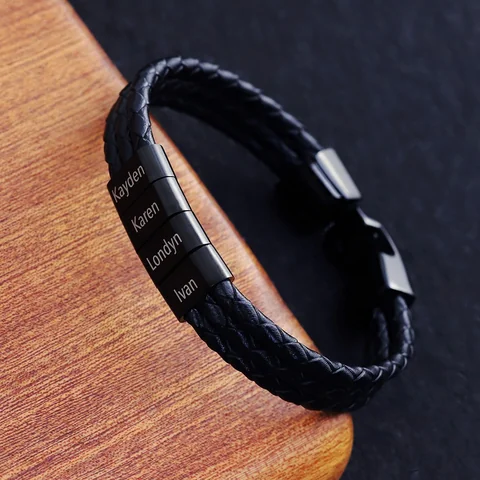
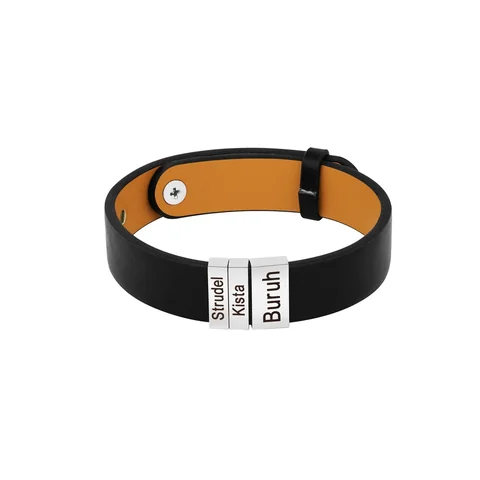
Finalize who should be represented before choosing a layout or counting the available name elements.
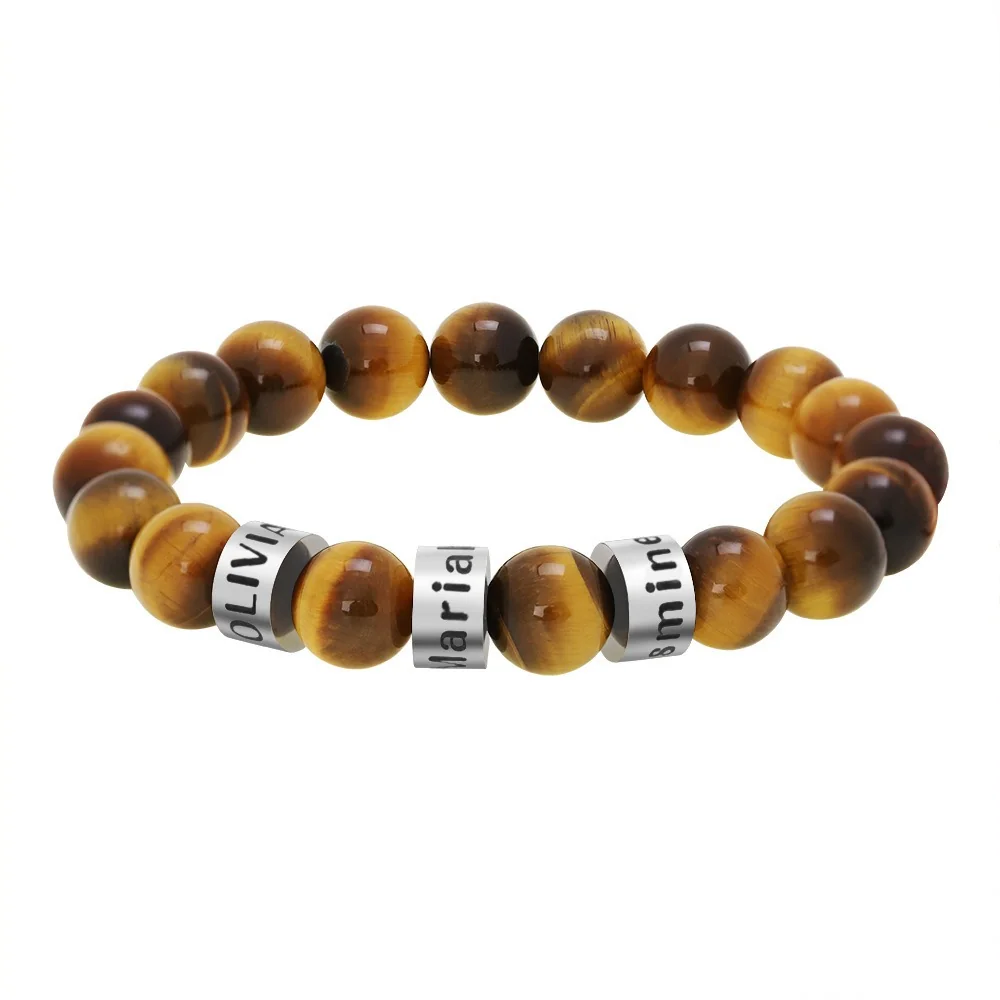
Write one intended name per line using the person's preferred spelling. Add a separate note for an initial, nickname, or omission that still needs agreement. Do not compress the list into a phrase to make it fit an unconfirmed selector.
Then count the requested entries and ask which configuration supports them. The Name Bead, Family Bracelet, and Cuban Name references have different visible arrangements; the number of names in a source image is not a universal included count.
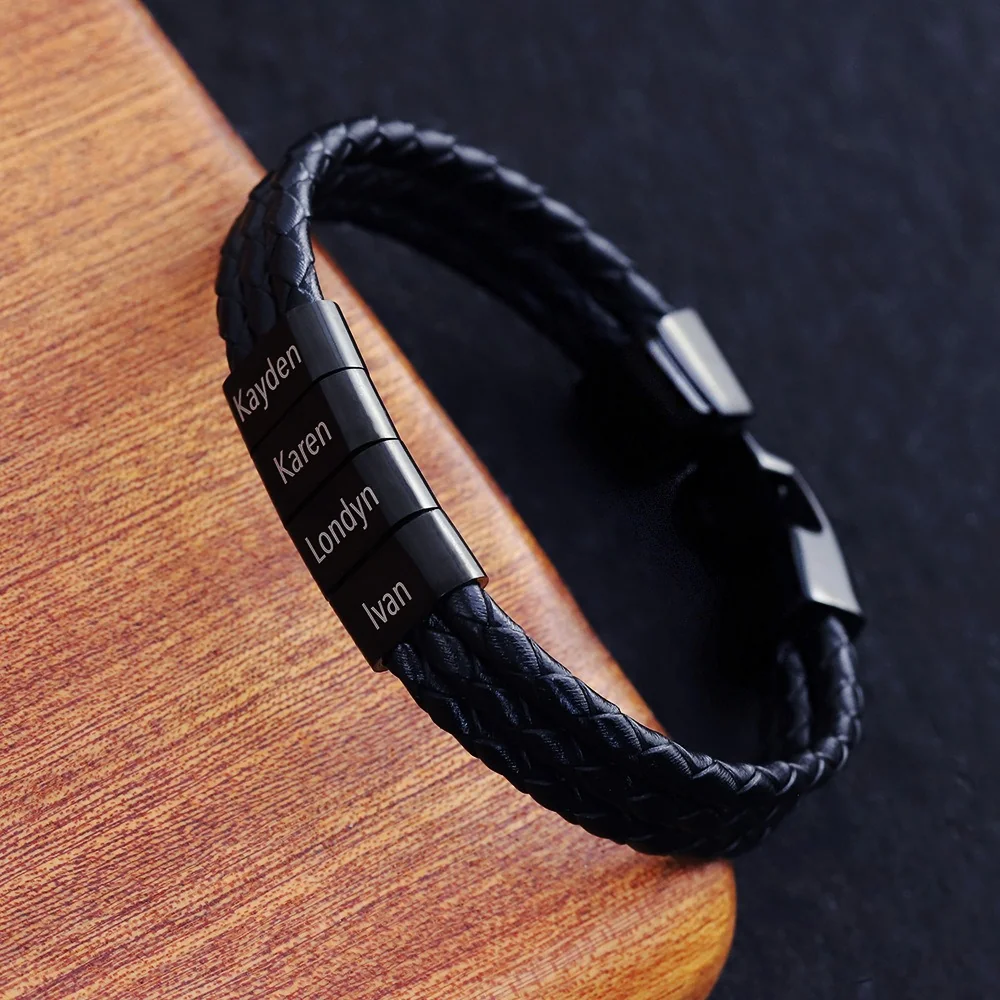
Use an original planning list such as “Maya / Leo / Noa,” then specify whether that order matters. Ask for the approved region and allowance for each entry.
If the product cannot support the full agreed list, revise the design choice or ask permission to simplify. The layout should follow the intended people rather than letting a sample photograph decide who is represented.
Decide the purpose of the list
Write who the wearer wants represented and what the list is meant to express. It may be a group of family members, a smaller chosen set, or a particular relationship. Do not populate the list with everyone shown in a supplier example or assume a category title defines the group. The wearer's intended meaning should determine the people before the photographed layout determines the number of spaces.
Keep possible entries separate from agreed entries. A person whose inclusion is still being discussed can remain in a pending section, rather than being typed into an active inscription request. This prevents an early mockup from making a personal decision appear settled. If the list changes during discussion, revise its version and keep the previous list as a reference rather than mixing both into one document.
Collect one approved display form per person
Use one row for each person and write the exact name they prefer for this use. Record capitalization, punctuation, and spaces as part of the entry. A formal name and a familiar nickname are different candidates. Do not choose the shorter candidate merely because it looks easier to arrange. Obtain the preferred form before evaluating whether a region can support it.
Give each row a private planning label if needed, especially when two names are identical. The label helps you discuss the people without adding private role information to the inscription. Keep the planning label in another column. The production string should contain only the approved displayed name unless the person has deliberately chosen an additional distinguishing detail.
In a fictional planning exercise, the agreed entries are Maya, Leo, and Noa. A fourth possible entry remains in the pending section until the wearer decides whether to include it. The active list therefore requests three text entries. This invented example demonstrates how to preserve the distinction between discussion and final wording; it does not establish any product's included element count.
Count entries without assuming components
After the names are agreed, count the independent text entries. Keep that count distinct from the requested number of physical elements. The manufacturer may offer a particular arrangement, but the list itself does not explain its mechanics. Ask which exact configuration supports the approved entries and whether each has a separate region. A gallery quantity is a reference, not an answer about your version.
Retain multiword names as one person's entry unless a different approved arrangement is intended. Do not count spaces as evidence that there are more people. Similarly, a repeated spelling can represent two separate people. A clean source list should identify requested text units without asking a designer to infer identity from punctuation or apparent repetition.
The Name Bead, Family Bracelet, and Cuban Name references need individual configuration answers. You can send the same approved name list to compare them, but keep each response separate. If one design cannot support the full list, leave that result visible and evaluate another confirmed arrangement. Do not drop a person to preserve an attractive source layout without the wearer's approval.
Choose order only after the entries are stable
Ask whether the names have a required sequence or whether placement can be discussed. Write the agreed sequence in the list, then map it to a product-specific starting point when the selected configuration is identified. The source photograph's order should not become the family's order by default. A list can be complete before its physical reading direction is settled.
If a simplified form is proposed later, return to the affected person's approved entry. A character-count or region problem is not permission to invent an initial or nickname. Record the new wearable form only after it is chosen. If the group itself changes, update the entry count and reopen any assembly question whose previous answer depended on that count.
Before preparing a proof request, review the active list for one approved form per intended person, a clear entry count, and a current order decision. Remove working labels and unselected alternatives from the actual text fields. Keep the list alongside the selected configuration's answer so a later reviewer can check both inclusion and spelling. Your completed source list makes the layout serve an agreed group instead of letting the picture quietly decide who belongs in it.