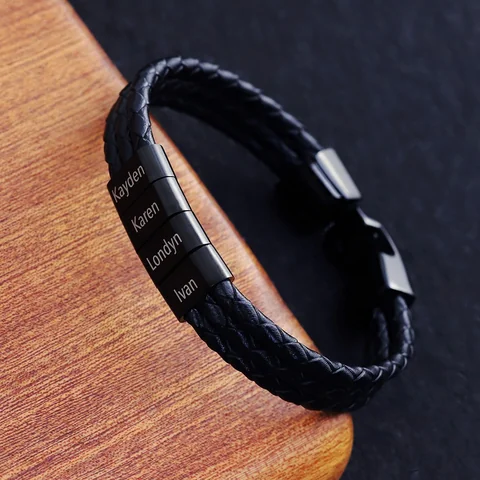
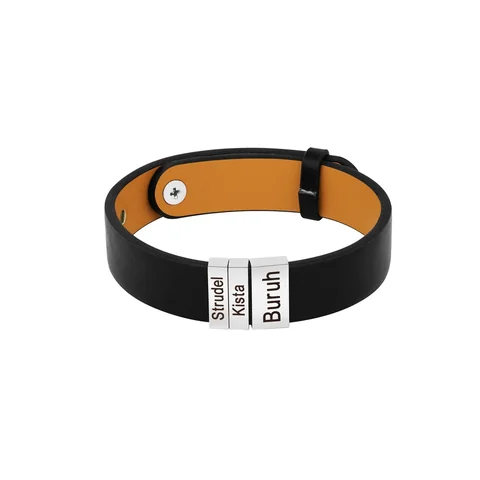
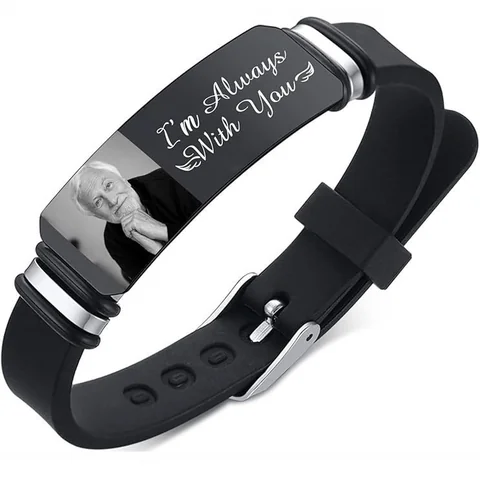
Identify the band, name elements, closure, finish, and any decorative components before requesting a cleaning method.
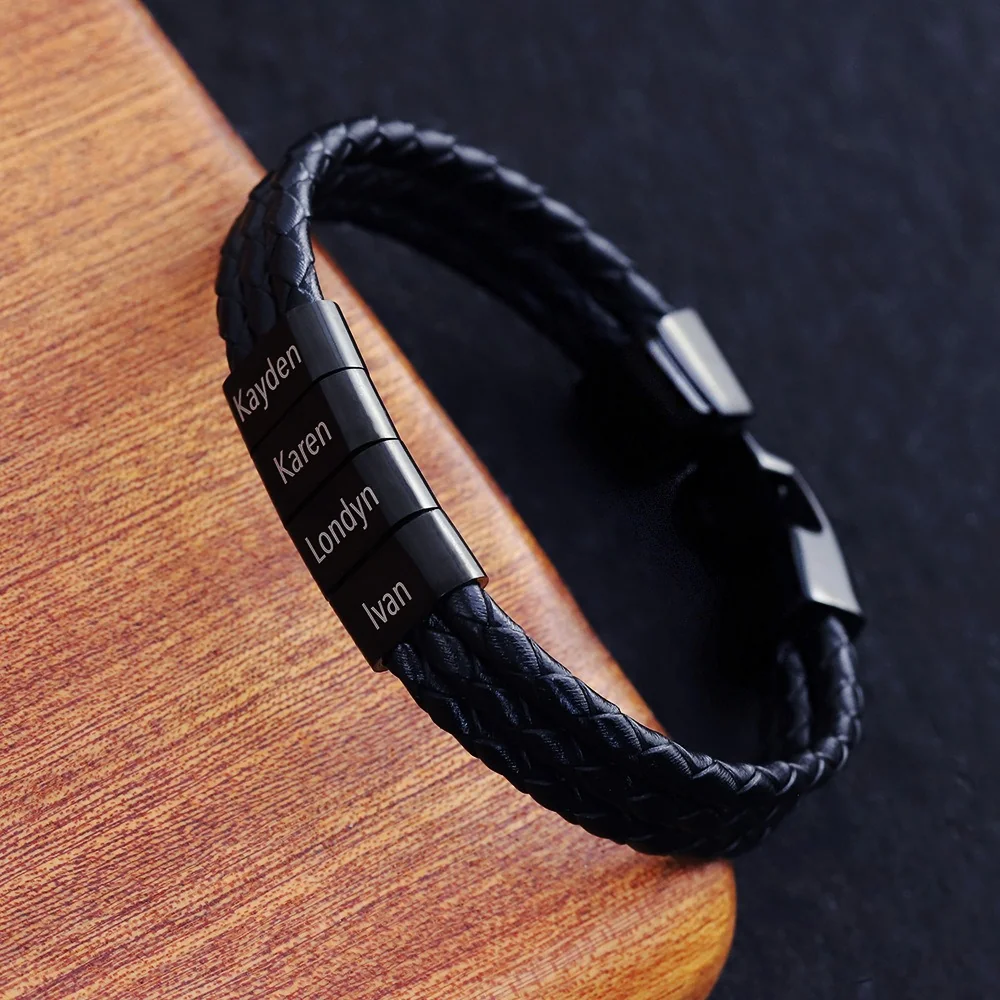
Create a component table with confirmed material, source, and missing information for each part. A material named for the plate does not establish the cord or chain material.
The Family Bracelet source shows braided strands and name elements. The Name Bead uses round beads with metal-colored elements. The Engraved Chain has a woven-looking chain and name component. Those visual differences help identify questions, not chemical composition.
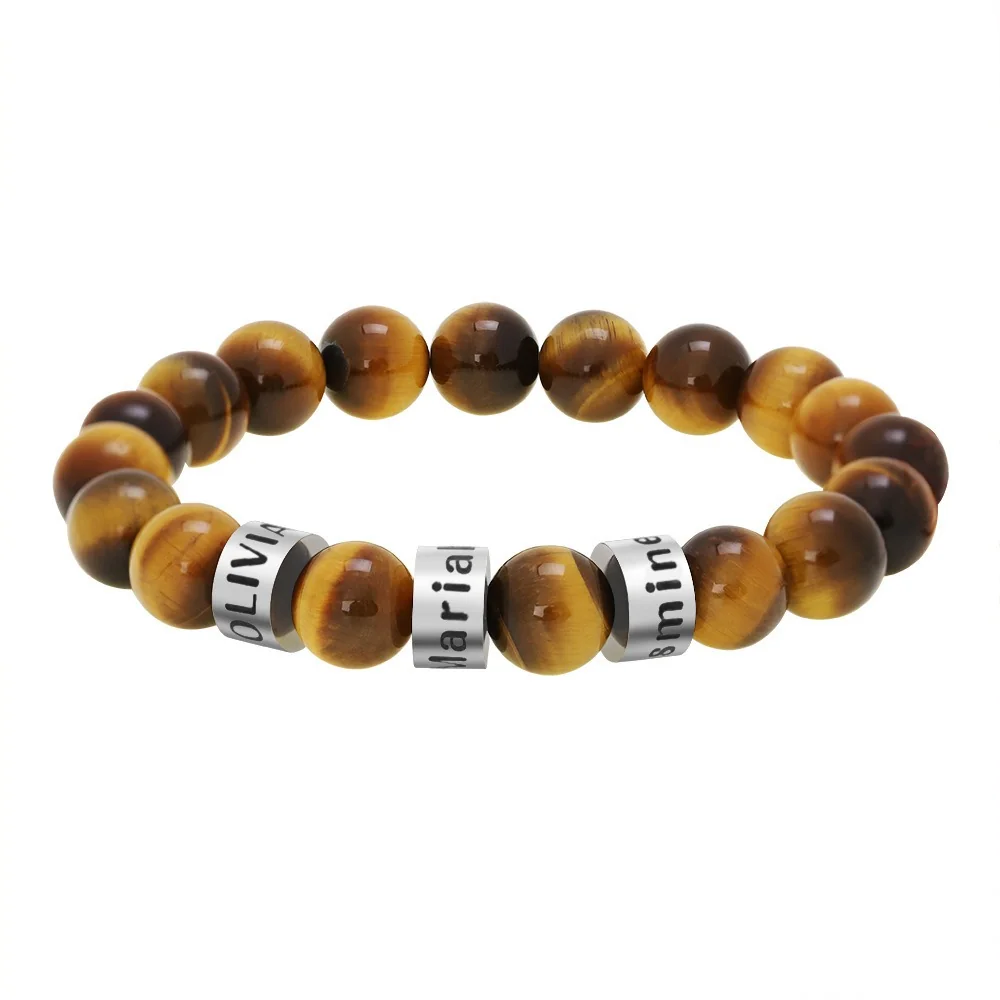
Ask for product-specific instructions covering the complete assembled piece. Do not select a cleaning solution based only on the best-known component.
Keep polishing, soaking, heat, and machine cleaning unresolved until the instructions address every relevant part. The component list makes the inquiry precise and prevents a general metal-cleaning rule from being applied to a mixed construction.
Draw the bracelet as a set of parts
Begin with an ordinary photograph of the whole piece. On a copy, label the band as A, the personalized elements as B, and the closure as C. Add another label for a decorative part if one is present. These labels describe locations; they do not identify materials. Keep an unmarked original so that arrows and writing do not cover the detail a responder needs to see.
For a design with several strands, show where each strand enters the closure and where name elements surround it. Do not pull elements apart to reveal a hidden surface. A component that cannot be inspected without disassembly belongs in the unanswered part of the record. Its invisibility is a reason to request information, rather than a reason to assume it matches its neighbor.
Build a useful component table
Use one row for each labeled region and include four fields: appearance, documented composition, information source, and care question. An appearance entry might read “dark braided strands.” The composition entry can remain “unconfirmed.” Avoid moving the appearance phrase into the composition column, because that would make an observation look like a specification.
For the name elements, record whether the answer identifies the entire element or only its outer surface. For the closure, ask whether the instruction includes the joining parts where the band meets it. The same visible color across two parts does not answer either question. A generic material word in a product heading also needs a stated component scope.
Check that every row has either a supported answer or an explicit unknown. An empty cell is easy to overlook later, especially when another row has a reassuring reply. Writing “no instructions received for this region” keeps the gap visible and prevents an incomplete table from becoming a complete care plan.
Describe the cleaning need before choosing a method
Separate the task from the proposed solution. “There is a visible mark beside the second name element” describes a need. “I will soak the bracelet” proposes a treatment that may not be supported. Record the location, when the mark was noticed, and any handling since then. A clear task allows the responder to address the actual assembly rather than approve a method in the abstract.
If the concern is only appearance in a listing photograph, say that no physical item has been examined. Do not describe the reference bracelet as dirty or damaged. If you have a physical item, use its own images and identifying record. A source illustration can help locate a region, but cannot replace evidence of your particular item's condition.
Use an inquiry that covers the junctions
An effective request says, “Please identify materials and finishes for regions A, B, and C of this exact option, and provide a cleaning method for the bracelet assembled as shown.” Add the cleaning need and photographs. Ask whether instructions cover contact between the band and personalized elements, because a treatment aimed at one region may reach another during handling.
If the response addresses only B, mark B as answered within the reply's wording. Leave A and C open. A follow-up can point directly to those labels instead of repeating the whole inquiry. Keep the date and the original response; an abbreviated personal note should not broaden its scope.
Work through a fictional incomplete reply
In a hypothetical editorial example, Avery prepares a table for a braided family-name design. The reply identifies the name elements but says nothing about the strands or closure. Avery now has a better component record, yet no complete-product cleaning instruction. Avery asks about the missing rows and does not convert the reply into permission to immerse the bracelet.
If a later answer identifies all three regions but still gives no approved method, composition and cleaning permission remain separate fields. The next useful step is requesting the assembled-product instructions, not selecting a cleaner from the best-known material.
The finished output is a labeled image, a component table, and a scoped instruction record. It should let another person see exactly which questions remain unanswered. For these reference designs, verified care instructions are still missing; the table organizes that uncertainty without implying that cleaning has been tested or that ordering is available.