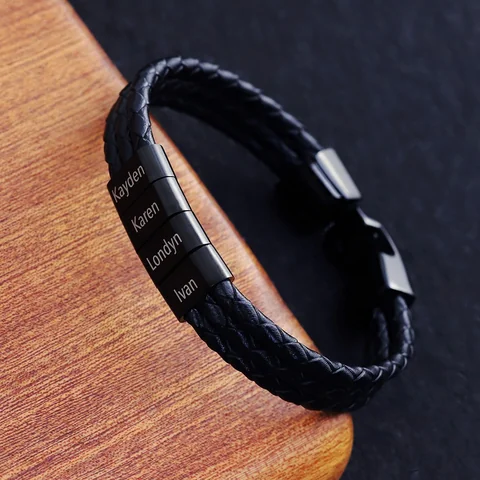
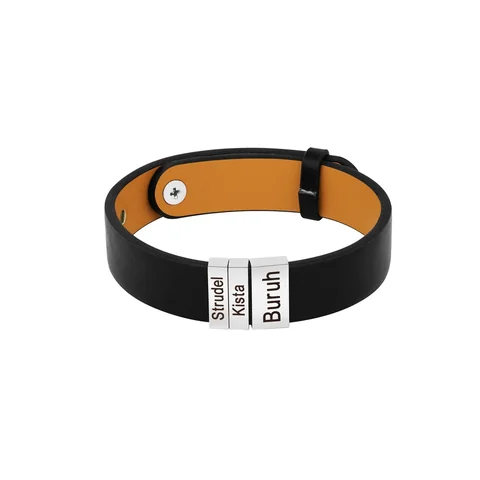
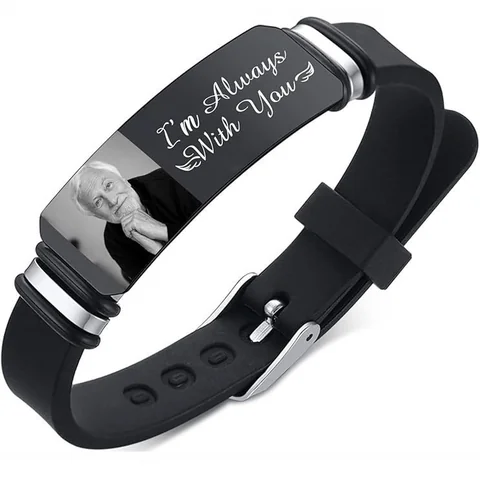
Choose how much family information the wearer wants visible. A complete list of names is one option; an agreed shared word or initials may preserve the meaning with less disclosure.
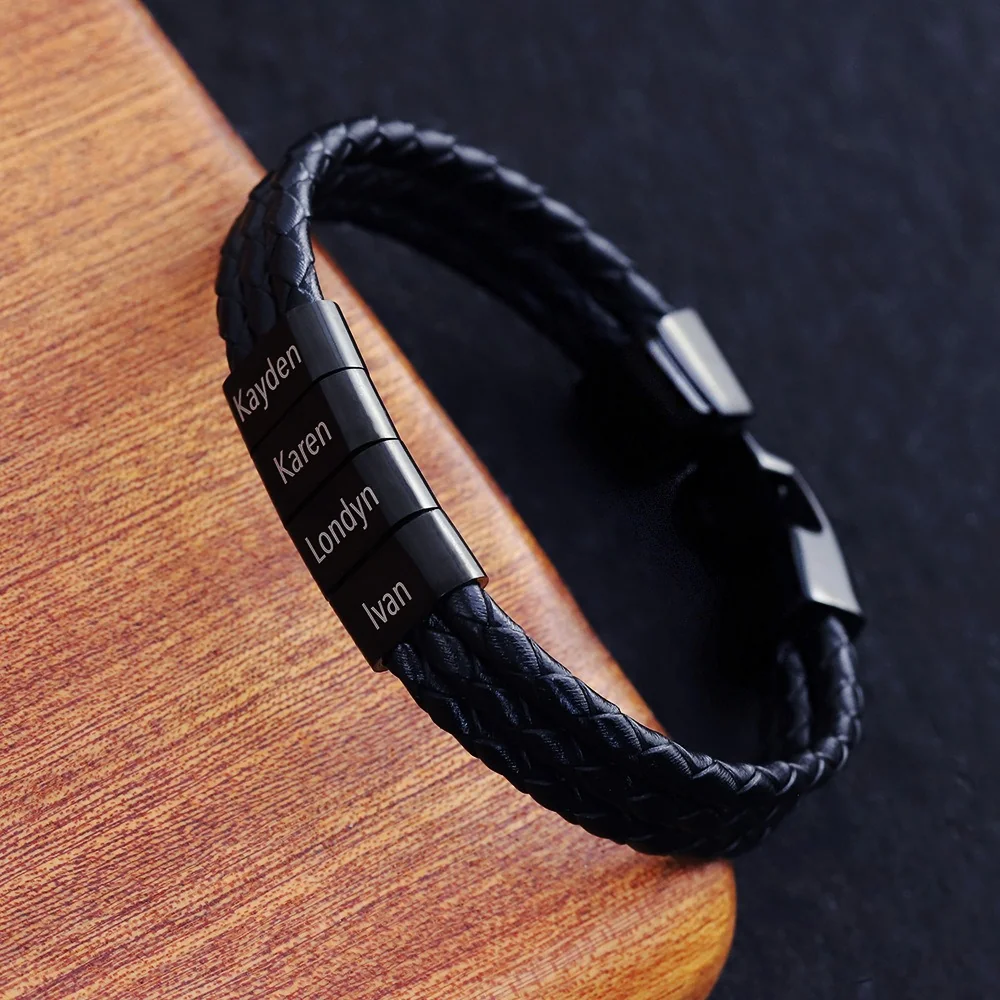
Separate recognition from public readability
Ask whether the wearer needs each person named or only a reminder of the group. Keep the full private list in the brief if needed, but do not automatically put it on the jewelry.
For an original exercise, compare “Ada / Eli / Nora” with an agreed shared word such as “Home.” The word is not a substitute unless the wearer accepts that change in meaning.
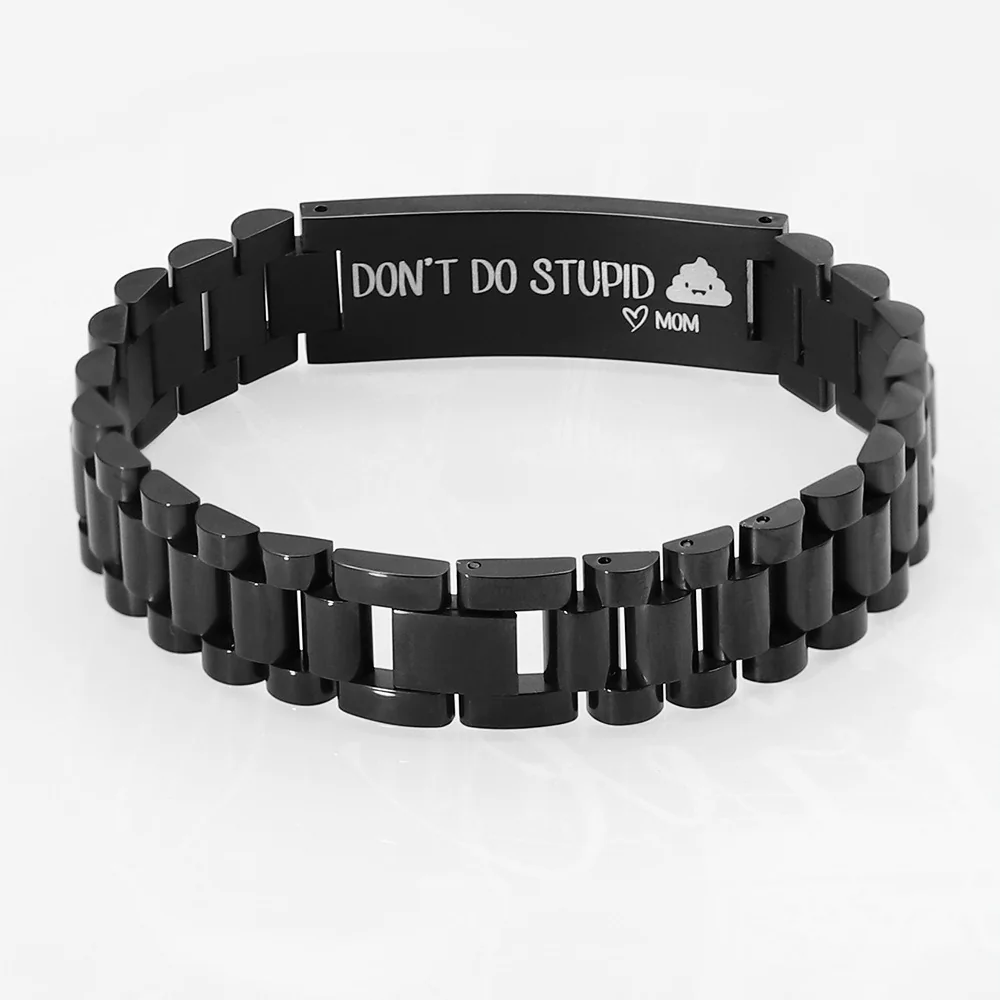
Confirm the intended placement
For The Family Bracelet or The Engraved ID Bracelet, ask which surfaces can carry the chosen text and how it is oriented when worn. A panel pictured on an inside surface does not guarantee a private region on every variant.
Avoid relying on a sleeve to hide the message at all times. Keep the visibility goal, exact text, and unresolved region question in the same brief. If the placement is unsupported, discuss another confirmed layout or leave the longer explanation on a card.
Decide which family information must appear
Start with a private full list, then ask which parts of it the wearer actually wants on the piece. A full list can be important, but it should not be treated as the only authentic way to represent a family. The wearer may prefer a shared word, agreed initials, or a phrase that preserves the connection without identifying every person directly.
Keep the full private list separate from the proposed inscription. It serves as a meaning record, not automatic production content. A maker should receive only the actual agreed text and the information necessary for the task, rather than being left to decide how much family detail to expose.
Compare disclosure and recognition separately
| Proposed content | Personal recognition question | Disclosure question |
|---|---|---|
| Full chosen names | Does each person need direct identification? | Is displaying those names welcome? |
| Agreed initials | Are they meaningful enough to the wearer? | What information does the wearer want shown? |
| Shared word | Does it preserve the intended family connection? | Is its meaning comfortable to leave implicit? |
| Card-only explanation | Can the meaning remain outside the jewelry? | Is visible jewelry text needed at all? |
These are choice prompts, not claims that initials or a short word guarantee anonymity. Any inscription may be seen or photographed. Decide what the wearer is comfortable showing rather than relying on a layout to make sensitive content impossible to read.
Confirm the meaning of any substitution
If you move from full names to initials or a shared word, write the change beside the original requirement and seek the wearer's agreement. A substitution that reduces disclosure can also reduce specificity. It should not be described as equivalent unless the person receiving or wearing the piece accepts it.
Avoid choosing a family label that one person does not use or want represented. The wearer can select a neutral cue without explaining the whole relationship history. The brief needs the agreed string and visibility goal, not necessarily the private story behind them.
A fictional family-detail worksheet
In this fictional editorial example, Morgan considers three full names, their initials, and a shared word associated with home. Morgan wants the group recognized personally but does not want every name prominent in the exterior design. Morgan chooses the shared word after confirming that it carries enough meaning.
The full list remains in Morgan's private note and is not submitted as additional text. The layout question asks which approved region can carry the selected word and what its orientation would be. The inside panel photograph remains a reference for a question, not confirmation that the intended option offers private placement.
Another fictional wearer wants each family member explicitly named and accepts that visibility. That wearer keeps the full list and focuses the next inquiry on count, exact strings, and approved regions. The worksheet supports both choices without imposing a universal privacy preference.
Review the region with the disclosure goal
Ask the proof to identify the actual surface and reading direction. If a proposed region is unavailable, revisit whether another supported placement meets the visibility preference. A sleeve may sometimes cover the piece, but it should not be the only basis for a promise that the names remain concealed.
Keep wording and placement approvals distinct. The wearer can approve the shared word while leaving its region unresolved. If the region later changes, the disclosure preference deserves another check even if the string stays identical.
Keep public-image use as a separate decision
Approval of the inscription is not approval to share a photograph of it or explain the family connection publicly. Ask separately about any intended public display of the image or story. A private meaning can remain private even when a simple exterior word is chosen.
The final worksheet contains the intended recognition, acceptable disclosure, exact agreed text, and supported or unresolved placement. It produces a concrete privacy tradeoff the wearer has chosen. It does not promise hidden lettering, approve an unconfirmed internal region, or treat reduced text as an automatic substitute for the original family information.