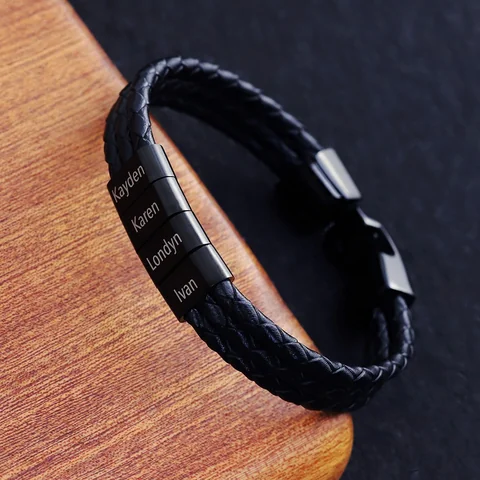
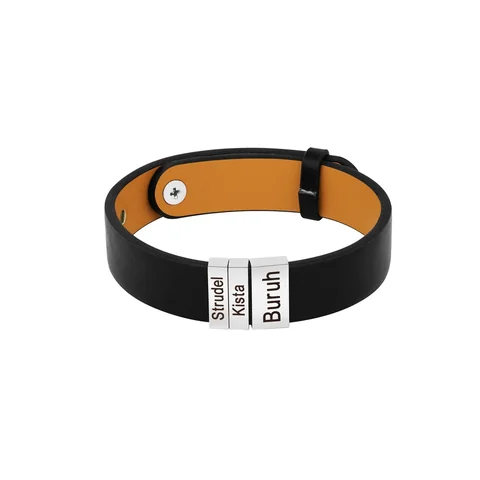
Write the information you want to preserve before looking for a bracelet shape. Three names, one phrase, and a name with a date are different briefs.
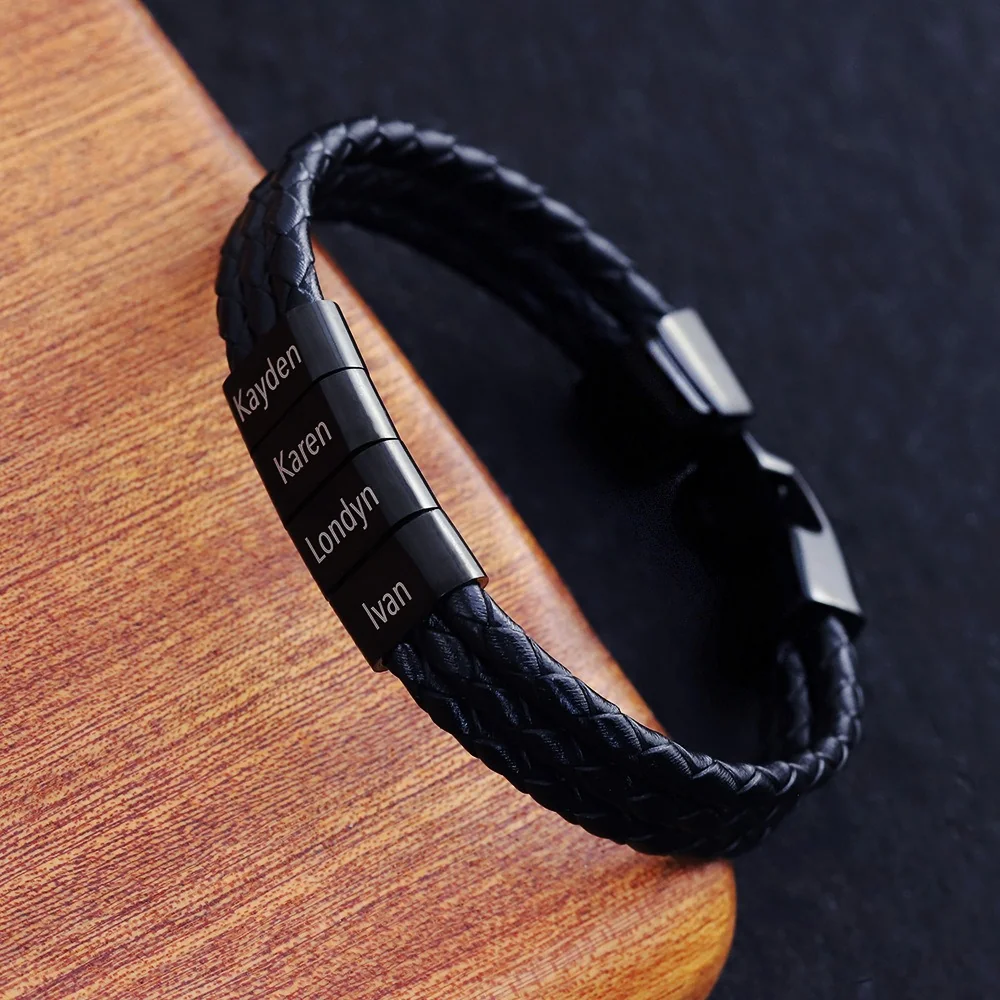
Build a three-line brief
For an original fictional example, write:
- Essential text: Ada, Eli, Nora.
- Reading requirement: Each name should have equal attention.
- Flexible choice: The surrounding band shape can change.
For a phrase, the second line might instead say: “The words must read together in this order.” That requirement points toward a continuous region rather than automatic separation.
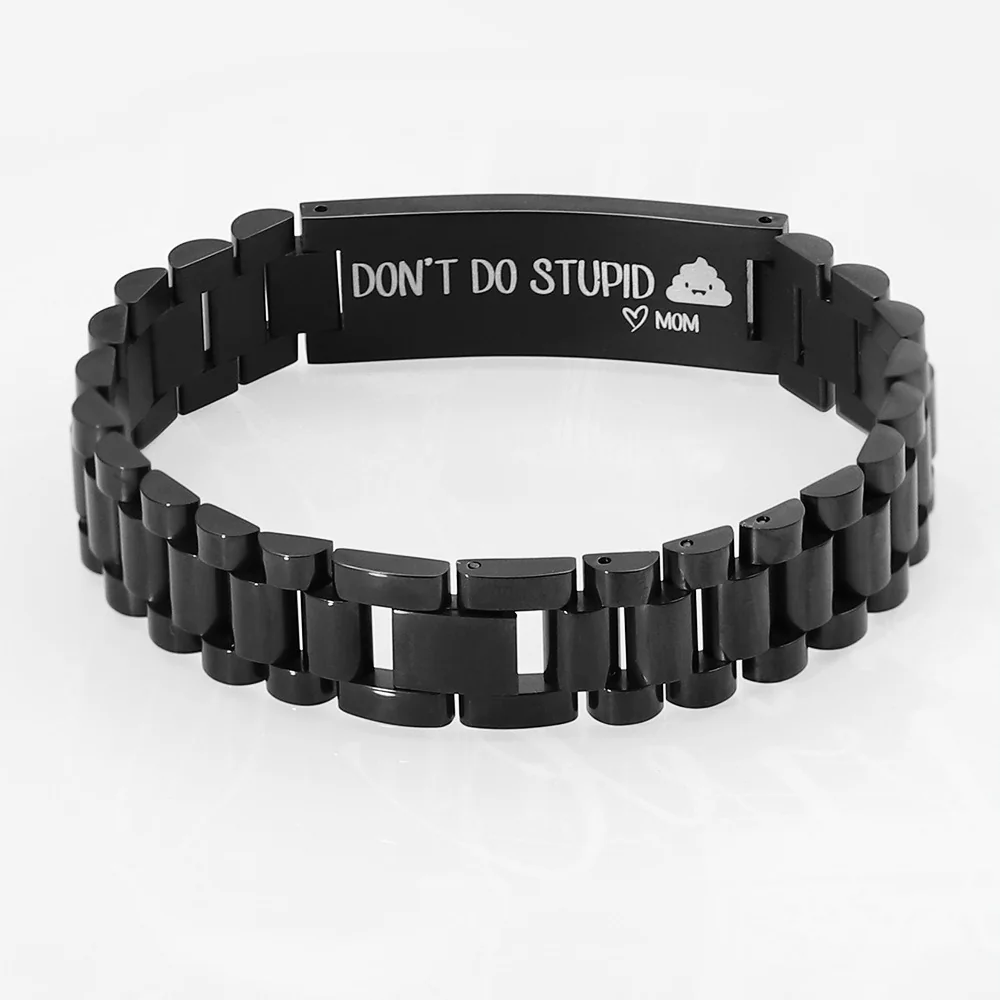
Compare the structures against the brief
Use The Family Bracelet for a separate-entry reference and The Engraved ID Bracelet for a continuous-text reference. The Cuban Name Bracelet offers another name-element outline to investigate; it needs its own configuration answer.
If a candidate cannot support an essential requirement, remove it from the shortlist rather than editing away the important information. The completed brief should name what must stay and what may change, then list the missing manufacturing facts.
Write the complete message before shortening it
Create a full private text record containing every name, word, or date that matters. Include accents, punctuation, capitalization, and the required order. Do not edit it to resemble a gallery sample at this stage. You need a stable message against which different structures can be evaluated.
Then identify the reading units. Three independent names may need separate treatment, while a phrase may need to read continuously. A name and date may have a particular relationship the wearer wants preserved. These are meaning decisions you can make before knowing the manufacturing limits.
Mark essential and flexible elements
Underline the content that cannot change without changing the intended meaning. Separately list features that can vary, such as the surrounding band outline or whether a background detail is prominent. Keep possible abbreviations as proposed alternatives requiring approval, not automatic permissions.
| Brief element | Reader's decision |
|---|---|
| Essential content | The full strings that must remain |
| Reading unit | Which words belong together |
| Sequence | The order that carries the meaning |
| Equal or unequal emphasis | Whether entries should receive comparable attention |
| Flexible appearance | The surrounding details that may change |
| Open manufacturing facts | The region, count, and limits needing confirmation |
This produces a selection card rather than a completed production instruction. It makes the actual information need visible before a design's shape becomes the deciding factor.
Match the reading requirement to a reference structure
For separate entries, investigate whether the intended option provides independently approved elements in the needed count. For continuous wording, investigate a supported region that preserves the phrase as a reading unit. The visible structure helps identify the question, but it does not establish the available configuration or allowance.
Do not select a continuous panel and then omit an important name simply to make the preferred shape work. Likewise, do not split a phrase across separate elements if that alters how the wearer wants it read. If a compromise is acceptable, write it as a revised brief with the wearer's approval.
A fictional message-to-outline example
In this fictional editorial example, Jamie wants three names with equal attention and no dates. Jamie writes the exact strings first and lists equal emphasis as essential. The shape of the supporting band is flexible. Jamie compares a separate-element reference with a continuous-panel reference using that card.
The separate-element reference raises questions about the actual count and per-element space. The panel reference raises questions about whether the three names can receive the desired arrangement within one approved region. Jamie does not declare either suitable from the image alone.
Suppose one candidate only supports a single continuous phrase and cannot preserve the separate-entry requirement. Jamie can remove it from the message-based shortlist while retaining its outline as a style preference. Changing the requirement would be a new decision, not a silent fix performed by the maker.
Prepare a candidate response card
For each remaining reference, record the product and option, which essential requirement it appears to address, and the exact unanswered manufacturing point. This keeps the shortlist small and task-specific. A candidate can be visually appealing while remaining unresolved for the message.
You can ask the most important question first. If the needed count is unsupported, there is little value in refining lettering before deciding whether another structure is required. If the count is supported, the next question can address the exact strings and arrangement.
Label candidates as supported for the named requirement, unresolved, or unsuitable for that requirement based on the supplied answer. Do not use a general favorite label in place of those statuses. A visually preferred outline can remain unresolved until the required content and region are actually supported.
Review any proof against the message card
Check content first, then reading units, sequence, and emphasis. A correct spelling can still be arranged in a way that changes the intended hierarchy. Keep the source card beside the current layout version so these decisions do not disappear during decorative editing.
The useful outcome is a precise text-to-structure brief: complete content, defined reading requirements, flexible appearance, and candidate-specific questions. It does not repeat a generic bracelet definition or claim that a visible element count establishes production readiness. It gives the wearer a concrete basis for choosing a supported form that preserves the intended information.