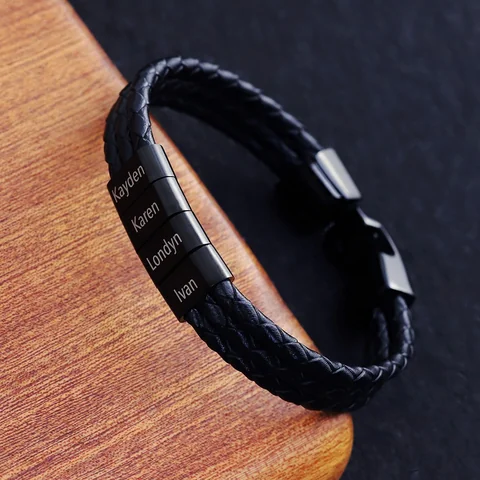
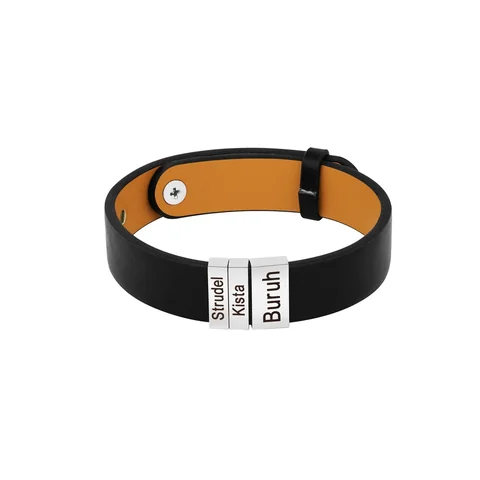
A personalized soundwave bracelet does not automatically play a recording. A sound-related pattern on its surface does not tell you how audio will be accessed. Before choosing one for a voice message or a song, establish whether the design is a visual representation, a working scannable code, or something else entirely.
Those options need different information. A waveform image needs an identified source if it is meant to represent your recording. A scannable code needs a valid destination and a demonstrated way to read the finished piece.
What the current reference supports
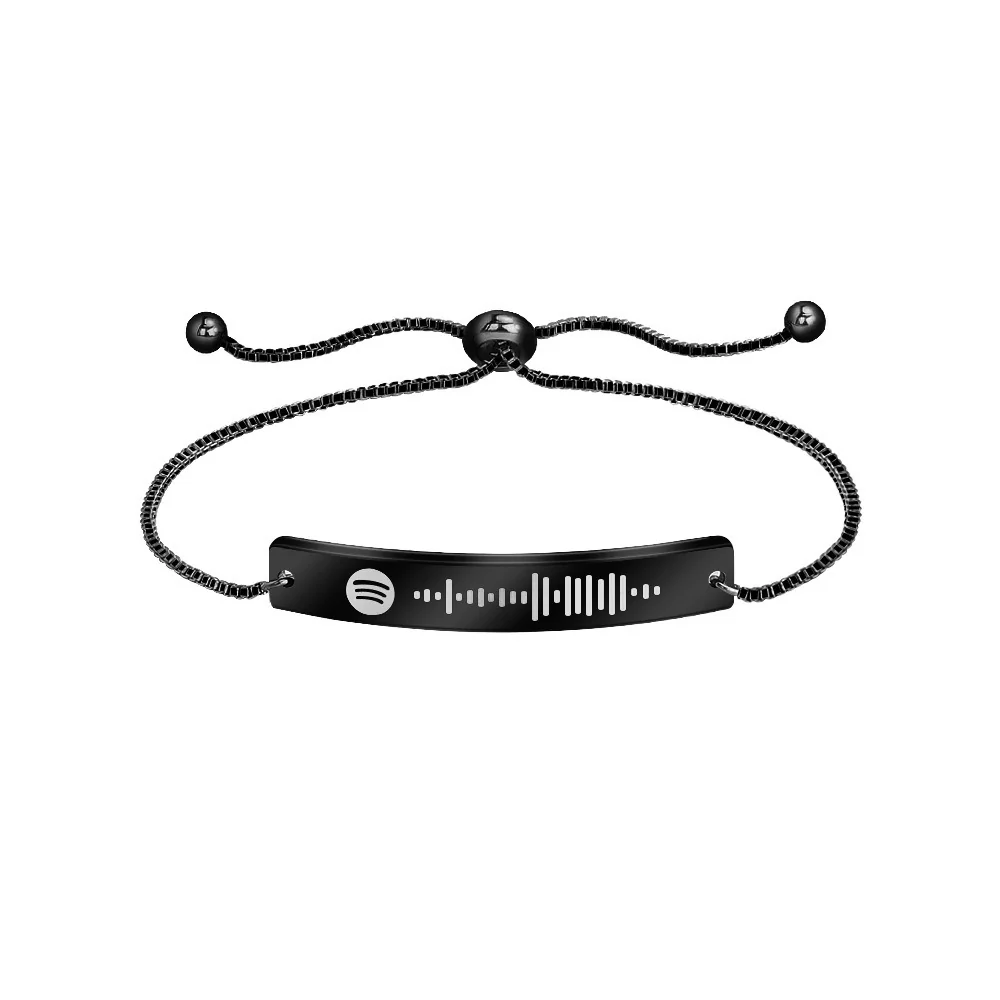
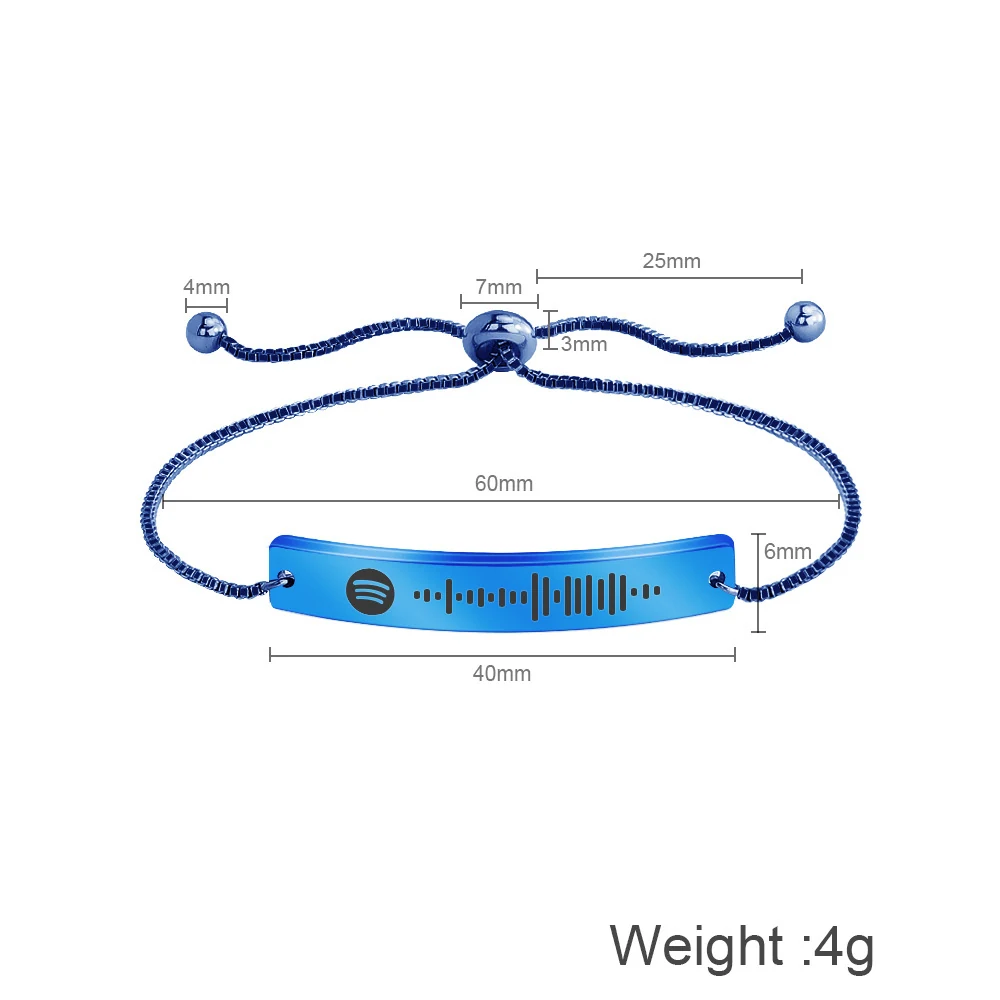
The supplier record behind Energvia's Soundwave Bracelet describes an engravable curved plate. Its archived description states a plate size of 6 by 40 mm. A source dimension image also labels that plate with those measurements and shows a sound-related bar graphic beside a familiar-looking service symbol.
The record does not establish that the pictured pattern is a working code, that a buyer's recording can be converted into it, or that Energvia stores audio. The special customization workflow remains unapproved.
The plate dimensions are supplier-reported. They describe the source reference, not an independently measured finished item or an approved code area.
A decorative graphic and a working code have different jobs
A decorative graphic can be meaningful because you chose what it represents. Its purpose may be entirely visual. If that is your intention, say so in the brief and ask how the image is created from your selected recording.
A working code is useful only if it reaches the intended content through the stated scanning method. A service logo beside a set of bars is not a successful scan test.
Spotify's own sharing instructions explain how Spotify Codes are shared and scanned using its mobile app. Those instructions concern genuine Spotify Codes. They do not verify the pattern in this supplier photograph, establish permission to reproduce it on merchandise, or prove that the Energvia reference supports that service.
Treat a product-specific demonstration as a separate requirement. If access to the audio is the main reason for your choice, a mockup with the right-looking symbol is insufficient.
Prepare a recording brief before a graphic brief
For a voice recording, decide which exact segment carries the meaning. A complete file and a selected segment are not the same instruction.
Here is an original planning example:
| Brief field | Example entry |
|---|---|
| Source file | Voice-message-original |
| Selected segment | 00:12 to 00:18 |
| Intended meaning | The six-second greeting in that segment |
| Desired result | A visual design representing this segment |
| Audio access | Not assumed; ask whether any separate access method exists |
The names and timings are illustrative. They are not a customer's submission or the supplier's upload requirements. Keep the original file and the segment note together, and establish permission to use a recording that belongs to someone else.
For a song, record the exact track and version. A title alone can leave room for a different recording. Do not assume a shop will upload, host, or license the audio for you.
Ask for the result you need
If your goal is a visual keepsake, ask whether the supplied pattern will be derived from the chosen segment and request an explanation of the approved image area.
If your goal is access to audio, ask for the destination, the required scanning method, and a demonstration on the finished version. Also ask what happens if the destination becomes unavailable. Do not describe access as permanent without a documented commitment that covers it.
A useful answer identifies the mechanism. “Personalized,” “soundwave,” and “scannable” are labels; none substitutes for that explanation.
The saved source identifies a soundwave-style design, but playback, audio storage, and a working scanning mechanism have not been verified for this option. Ask for a demonstrated mechanism before relying on it for access to a recording.
Keep the recording useful independently of the jewelry
If the recording itself is important, keep your own original file and a note identifying the selected segment. A bracelet design should not become the only record of where the audio came from. This is especially useful when the proposal involves a separate destination: you can still identify the intended recording if that destination changes or becomes unavailable.
In a fictional editorial example, a gift giver selects a short greeting and wants the recipient to hear it. The gift giver first distinguishes that goal from a decorative pattern representing the greeting. If the maker can only discuss a visual graphic, the brief remains a visual-design proposal. The gift giver can provide the recording separately through an appropriate agreed method rather than promising that the bracelet retrieves it.
If a playback mechanism is later proposed, the reviewer should check the exact finished version using the stated method and confirm that it reaches the intended recording, rather than merely a service homepage or a similarly named track. Ask who controls the destination and what information about continued access is actually provided. Record unresolved requirements plainly. A successful demonstration at one moment would answer a current access question; it would not by itself establish permanent availability.
Product source
1688 Soundwave Bracelet source. Archived product text and the dimension image were reviewed on October 3, 2026; playback, audio storage, and code-production capabilities have not been verified.