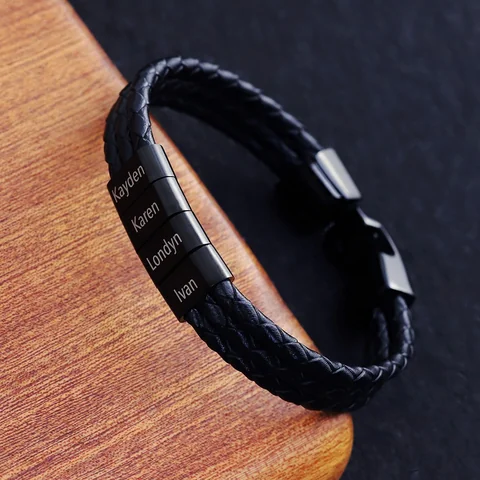
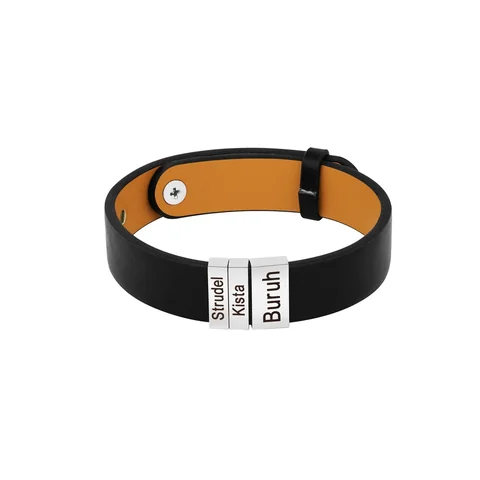
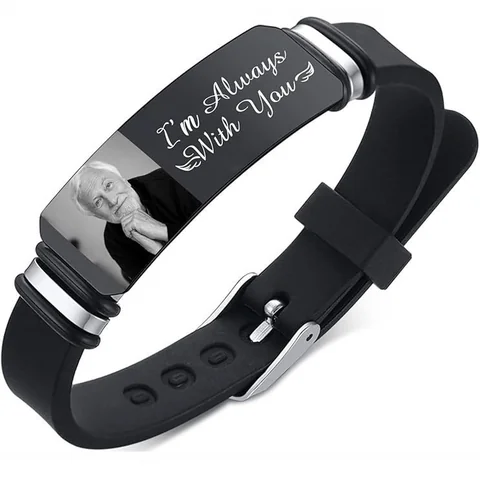
Choose a name when the wording is the detail that matters; choose a photograph when recognizing the pet's face or markings is essential. Do not assume that a portrait example automatically confirms production of a pet image.
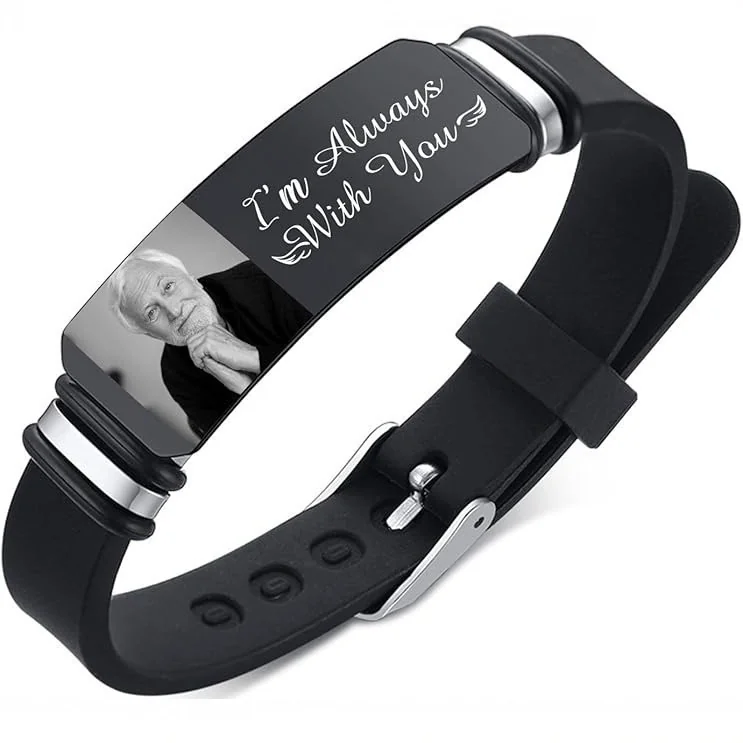
Compare the information, not just the style
Write the pet's exact name beside the intended photograph. Ask what you would lose if only the name remained: a distinctive marking, a familiar pose, or the expression. Then ask what you would lose if only the photograph remained: the name, a nickname, or a short phrase.
If both are important, confirm two separate regions rather than fitting text over the face in a mockup.
Prepare one clear brief
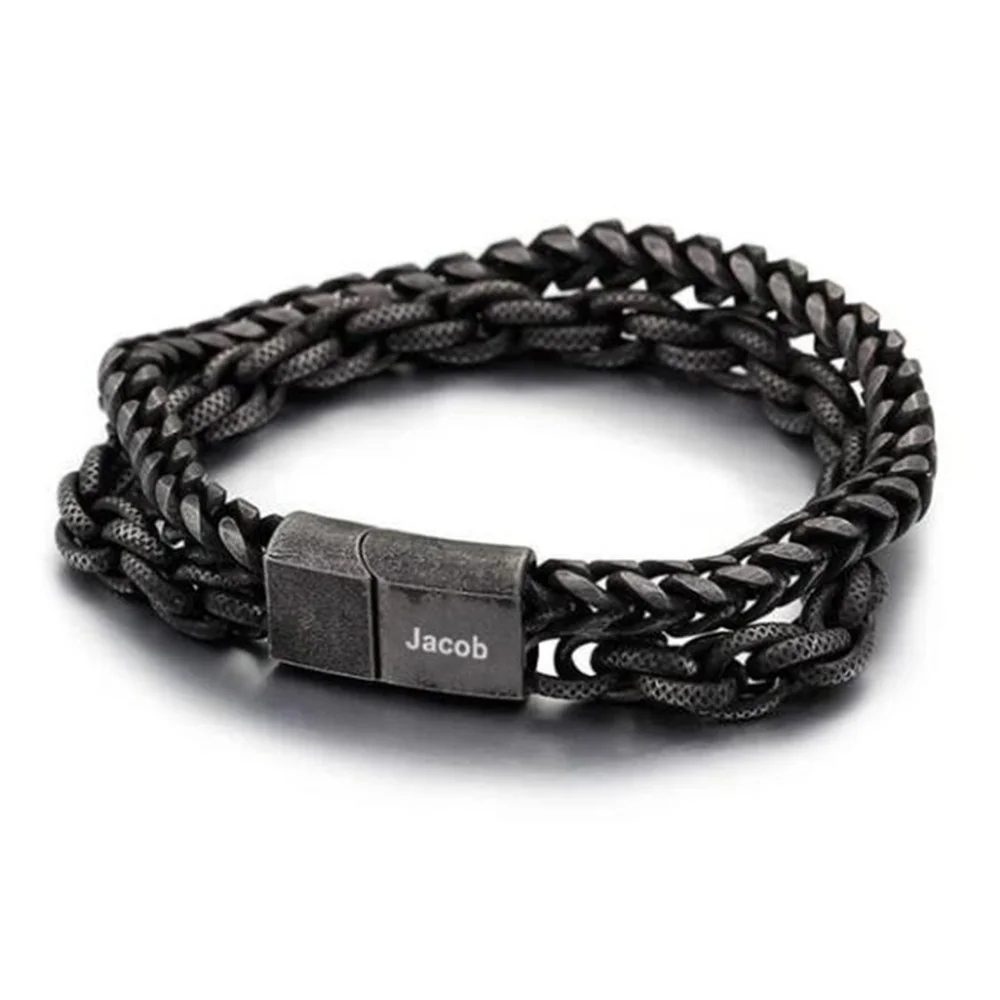
For The Portrait Cuff, identify the details to preserve and ask whether the exact image can be represented by the offered process. For The Double Chain, confirm the pet name as an ordinary text request, including spelling and case.
Keep the original photograph even if you prepare a crop. If no image capability is confirmed, do not promise a finished pet portrait. The name-only route remains a separate option to discuss, not an automatic fallback the seller should choose.
Identify the detail that makes this pet recognizable
Look at the candidate photograph without enlarging it to fill the screen. Write down what distinguishes the pet: an uneven patch around one eye, a familiar ear position, or the outline of a particular coat pattern. These are features in the supplied image, not guarantees that a small jewelry surface can reproduce them. If the essential feature is hidden or blurred, another photograph may be a stronger starting point.
Separate recognition from the surrounding story. A favorite garden may matter to the owner, but including the entire garden could make the pet occupy very little of the image. Decide whether the location belongs in the portrait or in an accompanying note. The priority list helps you evaluate a proposed crop instead of accepting one simply because the rectangle is filled.
Compare a name-only and image-first brief
Prepare two independent drafts. The name-only draft contains the exact spelling, capitalization, and any chosen nickname. The image-first draft identifies the source file and the features that must remain visible. Neither should instruct a seller to make the other if the first proves unsuitable. Each represents a separate preference that needs its own approval.
| Question | Name-focused draft | Image-focused draft |
|---|---|---|
| What carries the recognition? | The chosen name or nickname | The face, silhouette, or marking |
| What must be checked? | Exact text and approved location | Process, crop, and image area |
| What stays outside the piece? | Longer story or explanation | Background details that do not help recognition |
| What remains undecided? | Fit and manufacturing limits | Fit, image capability, and text placement |
This comparison can reveal that the intended gift is about a familiar word rather than a picture. It can also reveal that a name is insufficient because the photograph is the central memory. Either answer is useful before editing a file or choosing a design.
Make a pet-specific crop comparison
Keep an untouched original, then save two proposed crops with descriptive names. One can preserve the full head and ears; another can show a broader pose if that pose carries the meaning. Review the crops beside each other and check whether the eyes, nose, and distinguishing marking remain visible. Do not infer a required aspect ratio from the gallery panel until the intended production area is confirmed.
Pay attention to whiskers, ear tips, or a tail only when they are important to this image. A crop that retains every surrounding object may leave too little space for the feature you actually care about. Conversely, a tight face crop can lose a distinctive outline. State the tradeoff explicitly so a maker can explain whether the available process supports your priority.
A fictional pet keepsake brief
In this fictional editorial example, Casey is considering a gift featuring a dog named Miso. The original photograph includes a sofa, a blanket, and the dog's full body. Casey identifies the dark patch over the left eye and the raised right ear as the recognition priorities. A head-and-shoulders crop preserves both; an extremely tight crop loses the ear and is rejected.
The alternative text draft says “Miso” with that exact capitalization. Casey does not combine the name with the image until separate placement has been confirmed. If the image process remains unavailable, Casey can choose the text draft after reviewing it, retain the portrait for a card, or postpone the gift. None of those choices authorizes a seller to replace the portrait silently.
Check the source and the recipient's preference
If a friend or photographer supplied the image, clarify whether it may be used for the proposed private gift before submitting it. Keep that permission separate from any request to publish the finished piece or photograph. The pet's presence does not resolve the rights to the image, and a private family photograph should not automatically become a shop example.
For a memorial gift, ask whether the recipient wants a wearable reminder and whether a name, image, or date is welcome. Do not promise that the gift will relieve grief or represent a therapeutic benefit. The final preparation package can be small: the selected original, one labeled crop, a priority note, and any separately approved text. That package describes a decision to evaluate, rather than an unsupported promise of a finished portrait.