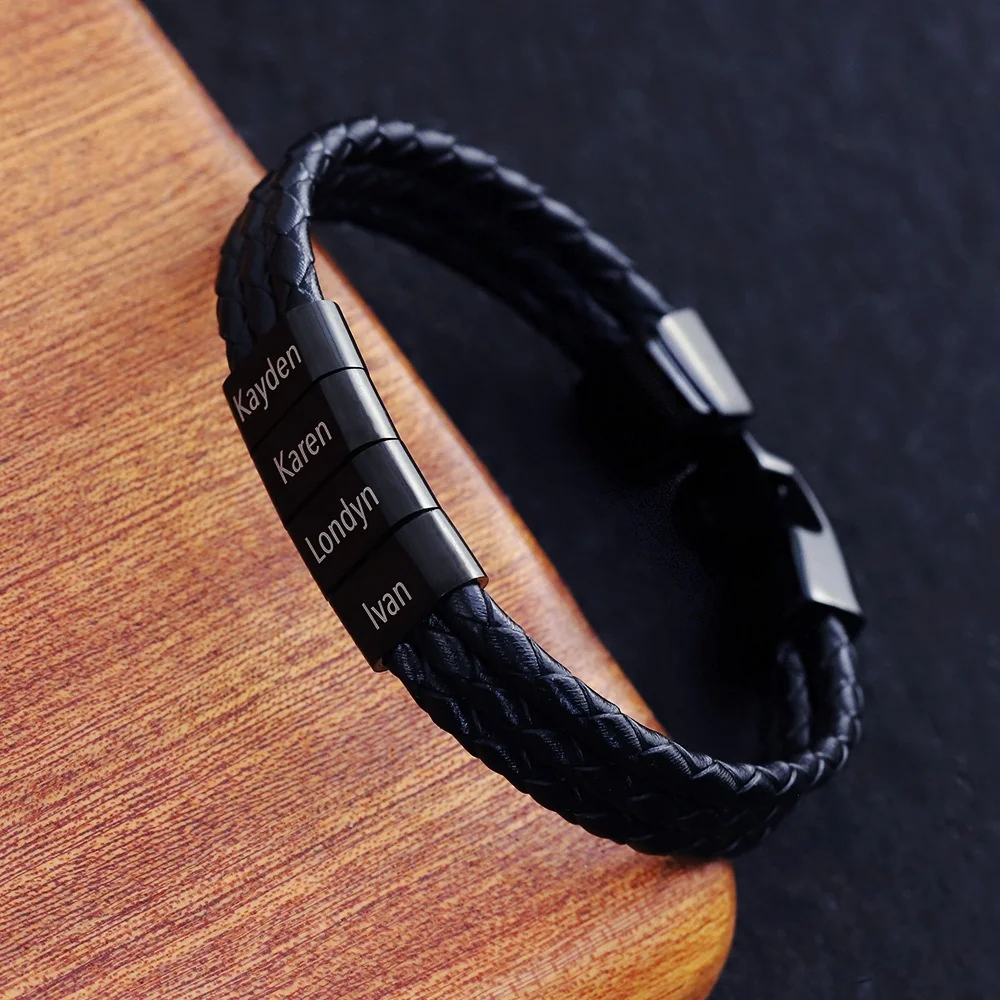
List everyone who must stay before cropping a group photo. Centering the most obvious face can accidentally remove someone near an edge.
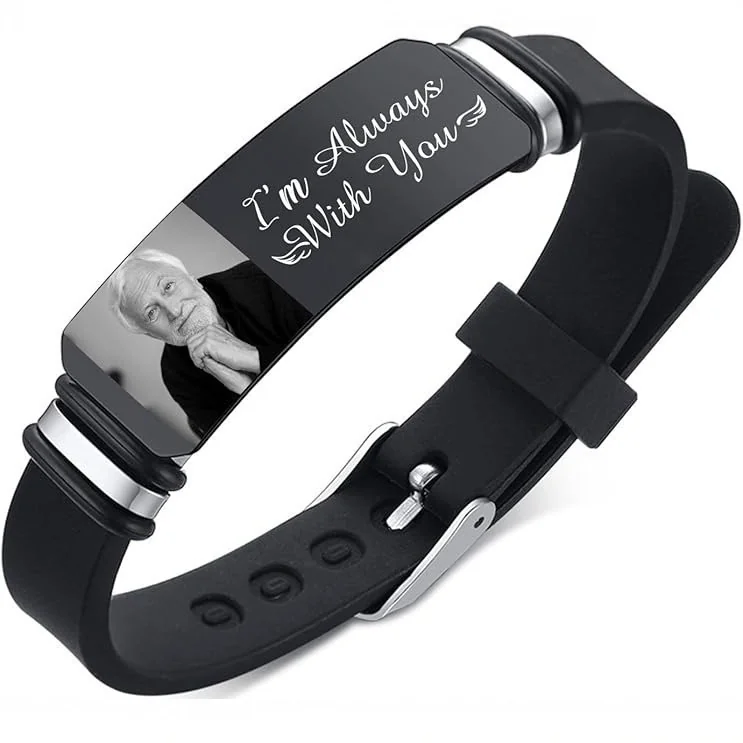
Check the crop against a name list
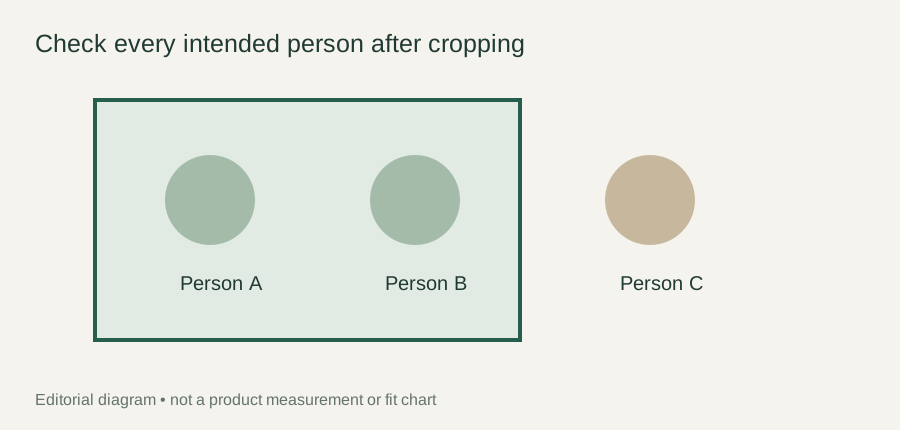
Use a private list such as Person A, Person B, and Person C when discussing the image. Check each face for clipped features, obstruction, and changes in scale. Ask the person approving the gift to confirm who is included; do not infer the intended group from the photo alone.
Choose a workable image rather than forcing the group
If the confirmed region leaves the people too small to distinguish, ask about another photograph with closer framing. Combining faces from different photos is a separate artwork request and should not be assumed supported.
For The Portrait Cuff, obtain the actual image area and representation method before making the final crop. Preserve the original and give each proposed crop a clear version name. An approved crop is not yet proof that the manufacturing process can reproduce its important details.
Establish the required group before choosing its boundaries
A group photograph may contain people who are central to the gift and others who are incidental to the scene. Ask the person approving the image which people must remain and whether excluding anyone would change its meaning. Use neutral labels in the working notes if full names are unnecessary. Do not guess from the position of the people or from who appears most prominently.
Mark each required person's location on a separate planning copy. Note whether someone is partly behind another person, close to an edge, or much smaller than the others. These differences affect what a crop can preserve. A centered frame may look balanced while failing the inclusion requirement, so establish that requirement before adjusting the rectangle.
Compare the people one at a time
For every proposed crop, inspect each required face individually. Check the top of the head, eyes, nose, mouth, and chin according to what is visible in the source. Also check whether a neighboring person's arm or an object obscures a feature. A crop can retain a person's body while leaving too little of their face to support the intended recognition.
Then compare the group as a whole. Does one person become much smaller than the others? Does the frame make a required person look like an accidental background figure? These are composition questions, not reasons to promise that an editing service can change the scene. If the original arrangement is unsuitable, a different photograph may be a clearer solution.
Save alternatives with explicit tradeoffs
Prepare a wider candidate that preserves all required people and a closer candidate only if it can also preserve them. Label the alternatives by what they retain, not simply “good” and “better.” Keep the untouched original available so the crop can be revised after the production area is confirmed.
| Crop question | Useful note |
|---|---|
| Who must remain? | List all required people with their working labels |
| What may be reduced? | Identify empty background or incidental objects |
| What cannot be clipped? | Specify a face, hand, or meaningful shared detail |
| Which compromise needs approval? | Describe reduced scale or lost context |
| What is still unconfirmed? | State the actual image area and process |
Do not submit competing crops without saying which is preferred and which is only an alternative. If both are feasible, the recipient should choose the composition. If neither is feasible, the maker should explain the limitation before another source image is considered.
A fictional three-person crop review
In this fictional editorial example, a photograph shows Person A at the left edge, Person B near the center, and Person C lower on the right. The gift is meant to represent all three together. A first crop centers B but removes part of A's face. The reviewer rejects it even though B looks clear.
A wider crop keeps all three faces but includes an empty area above them. The reviewer notes that the empty area may be reduced while the three head boundaries must stay. Another closer photograph is available, so both sources can be compared before a final selection. No assumption is made that the single-portrait gallery proves this group can fit.
If the confirmed jewelry region makes all three people too small for the intended recognition, the original requirement has not been met. The reviewer can choose the closer photograph, consider a different supported format, or keep the group photo for a card. Removing A without permission would change the purpose of the gift rather than solve the layout problem.
Do not confuse cropping with reconstruction
Moving a person, replacing a face, or combining people from different photographs creates a new artwork request. It is separate from selecting a rectangular portion of an existing photograph. Identify any such proposal clearly and seek agreement from the people responsible for approving the image. The current reference does not confirm those editing services.
The final crop record should name every included person, identify the source file, and state what was removed. Attach the approved version and keep manufacturing questions open until the process-specific proof is available. On that proof, repeat the person-by-person check. Approval of the group composition should not obscure a later loss of detail during representation.