Write the month in letters when a numeric date could be read two ways. “May 6, 2024” is clearer than “05/06/24” for an engraving that may be seen by people using different date conventions.
Compare formats before choosing decoration
These original examples all refer to May 6, 2024:
| Draft | Characters, including spaces | Tradeoff |
|---|---|---|
| May 6, 2024 | 11 | Written month makes the intended date clear |
| 05/06/2024 | 10 | Compact, but month-day order can be ambiguous |
| 2024-05-06 | 10 | Year first; explain the intended meaning in the brief |
The counts describe these strings, not a product's allowed character count. Font, region, and symbol support require separate confirmation.

Verify the event as well as the spelling
Ask whose record establishes the date. An anniversary can refer to a first meeting, a ceremony, or another agreed moment. Correct formatting cannot fix choosing the wrong event.
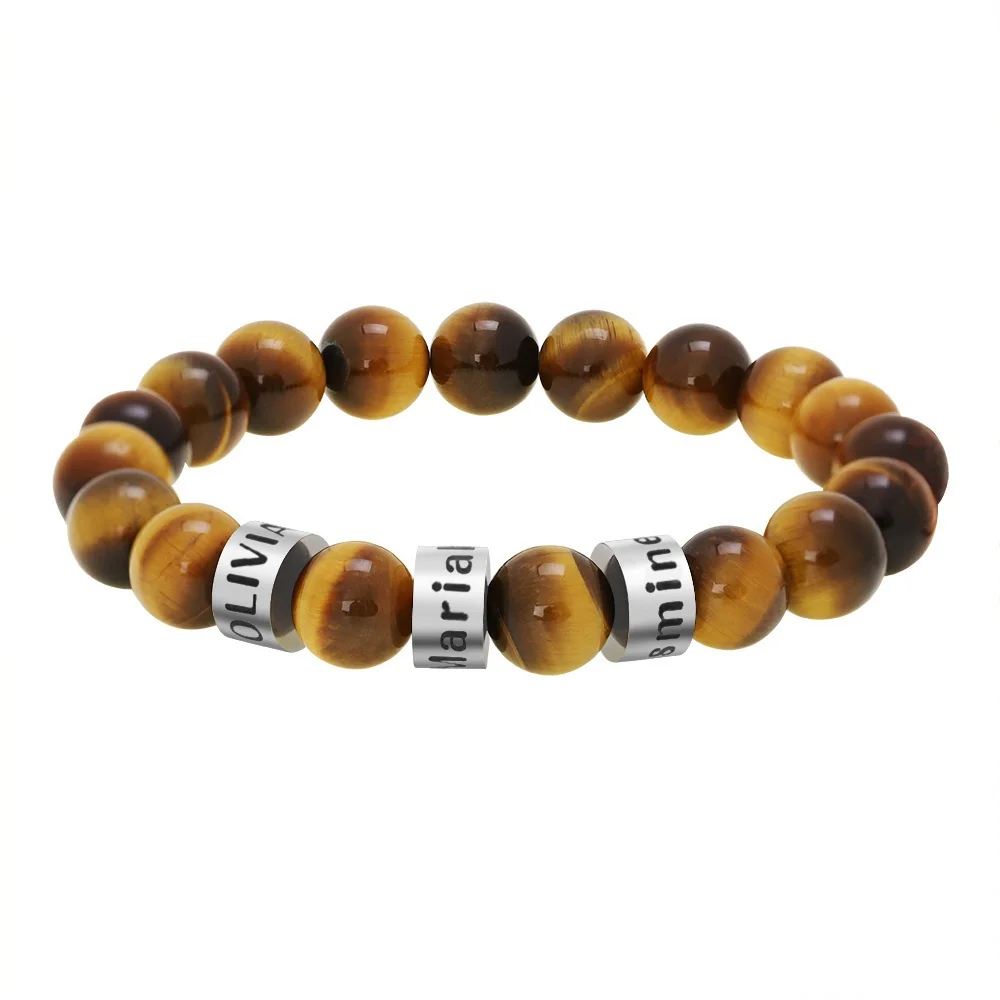
The Open Cuff and Double Chain are different region references; the Name Ring is another category entirely. Do not copy a proof between them.
Send one chosen string and its plain-English meaning: “May 6, 2024; please use exactly this wording.” If converting to Roman numerals, request and check the converted draft rather than treating the conversion as decoration you can skip reviewing.
Name the occasion in the planning note
Before formatting the date, write what it represents. A shared anniversary could refer to a first conversation, a first meeting, a ceremony, or a date the people themselves chose to remember. A graduation gift could refer to a ceremony or another agreed milestone. Do not assume that the most formal event is automatically the intended one.
An original worksheet can include occasion, source of the date, who confirmed it, and final wording. This is a private planning record. The bracelet does not need to display all four fields. Their purpose is to keep a correct-looking string from commemorating the wrong moment.
Compare readability and available space separately
For the May example above, writing the month in letters makes the meaning easier to explain without relying on the reader's preferred numeric order. A compact version can still be chosen if the wearer wants it and its interpretation is deliberate. Keep a plain-language explanation beside the compact string.
Do not conclude that the shorter string must fit because it uses one fewer character. The maker still needs to confirm the actual region, typeface, spacing, and supported punctuation. A slash, hyphen, comma, or numeral is part of the proposed text treatment, not just a bookkeeping mark.
If a full written month makes the proposed layout too crowded, consider an accepted month abbreviation or a year-only message. Each alternative changes the information shown. A year remembers a broader period rather than one exact day. Choose it only if that serves the intended occasion.
Read the date both ways during review
Keep one reviewer looking at the planned event and another at the exact string. The first question is “Does this commemorate the moment we chose?” The second is “Does the proof match the date text we submitted?” These checks can reveal different mistakes.
For a fictional planning exercise, imagine a note that says May sixth while the copied text says June fifth. The format may be clean, but the two records conflict. Pause and resolve the source date rather than selecting the version that fits the panel more neatly. This example illustrates a review process; it is not a customer incident.
Read every digit in the year separately. A glance can miss a transposed digit because the general shape still resembles the intended date. Compare the final proof with the saved master instead of reconstructing the date from memory.
Keep decorative conversions reviewable
If Roman numerals are wanted, first preserve the ordinary date in the brief. Ask for the complete proposed conversion and have it checked before reviewing the jewelry layout. Do not accept an unfamiliar decorative string merely because it looks balanced.
Specify separators and reading order. A maker should not have to infer whether the three groups represent month, day, and year or another sequence. Keep the interpretation in plain English alongside the exact requested text.
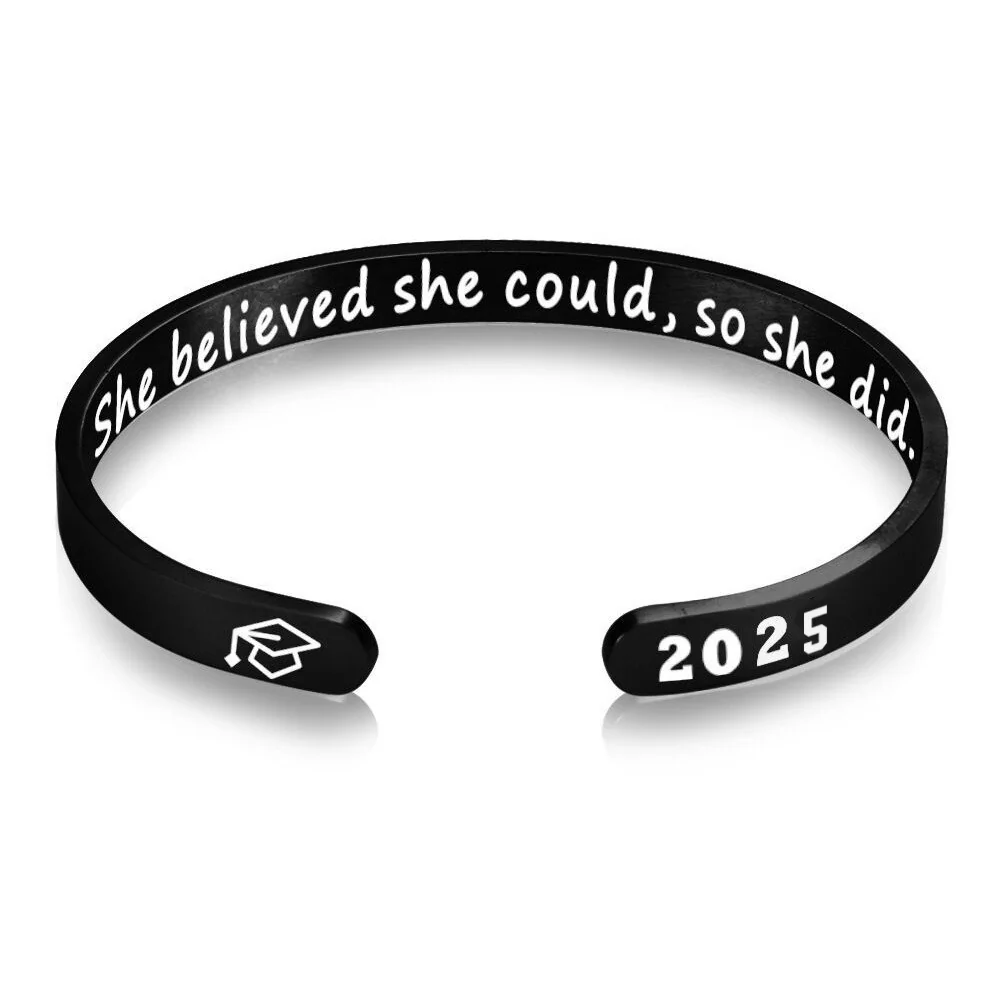
If symbols such as a graduation cap are also wanted, ask whether they are separately supported and where they would appear. The Open Cuff gallery example contains a symbol and year, but it does not confirm a new symbol-date arrangement. Avoid treating the visible sample as an unrestricted menu of decorative features.
Choose a region only after choosing the message
A date on an end, an inside phrase, and a date on a clasp create different reading experiences. Ask whether the wearer wants to see the date immediately or encounter it privately. The intended location can then guide the request for a supported region.
The cuff's open shape does not establish that every surface can be marked. Likewise, a clasp inscription example does not establish a second line for a date. Ask for a proof tied to the exact piece and option, with the selected date shown where it would actually be placed.
Save one approved text draft and mark every alternative as unused. The planning result should contain a verified occasion, a deliberate format, and the outstanding layout question. Date accuracy and manufacturing approval remain separate steps; completing the first makes the second much easier to review.