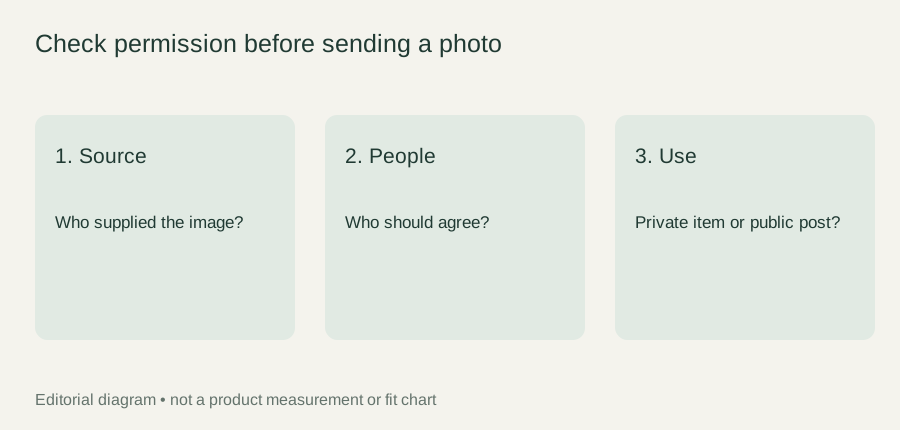
Check that the photograph is appropriate to use before sending it. Having a copy does not establish every permission needed for every use.
Keep the use specific
Ask the person who supplied the photograph whether it may be used for this private gift. Consider the preferences of the people shown, especially when the image or occasion is sensitive. If the source is unclear, choose another image you can properly account for.
Separate the gift from marketing
Permission to prepare a personal piece should not be treated as permission to publish the photo, proof, or story. Keep that as a distinct question. Do not upload a private image as a public example simply because the recipient approved the gift.
Record who agreed, the image version, the intended use, and any limitation. This is a practical editing record, not a legal opinion or a guarantee of rights.
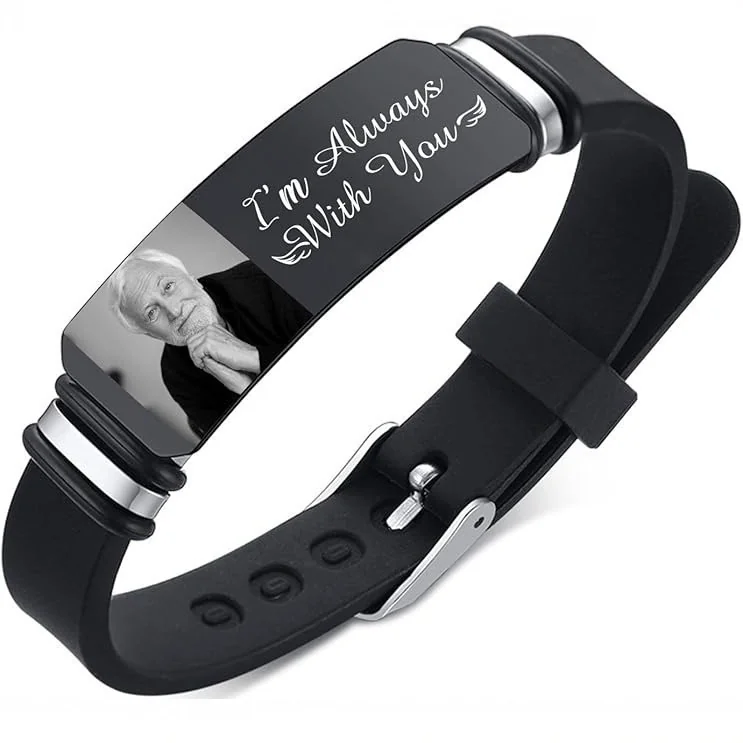
The Portrait Cuff current reference does not confirm a customer-photo submission workflow. Ask how a file would be handled before sending sensitive material; share only what is needed for the agreed task.
Identify the photograph and its intended audience
Start by identifying the exact file you want to use. Record who supplied it and whether they can explain where it came from. A family album copy, a professional portrait, and an image copied from a public page have different source histories. This preparation note helps you locate the person who can answer a permission question; it does not determine legal ownership or establish a right to use the image.
Describe the intended use narrowly. “A private wearable gift for one recipient” is clearer than “personalization.” If you also want to post the finished piece on a public account, list that separately. Someone can be comfortable with a private gift while declining a public image. Keep the two decisions independent instead of treating an enthusiastic response to the gift idea as permission for everything that follows.
Ask questions the person can answer
Show or identify the specific photograph, explain the proposed task, and ask whether that use is acceptable. Avoid requesting broad permission when only a limited use is needed. If the image includes several people, consider their preferences individually, especially where the subject or occasion is private. A person who sends a group photograph may not be able to speak for everyone shown.
When children or other sensitive circumstances are involved, speak with the appropriate person responsible for the decision before submitting the file. This article supplies a practical preparation approach rather than a rule about legal consent. If the permission question cannot be resolved, choose another image with a clearer source instead of asking a maker to interpret an uncertain answer.
Keep a short use record
| Record field | Practical entry |
|---|---|
| Image identification | The selected filename or an unmistakable description |
| Source contact | Who supplied the image and what they know about its origin |
| Proposed use | The specific private gift or other agreed purpose |
| People consulted | Who answered the relevant preference questions |
| Limits | Any restriction on sharing, alteration, or public display |
| Outstanding question | What still needs clarification before submission |
Use ordinary language and preserve any relevant reply with the record. Do not label the sheet “rights cleared” simply because several boxes are filled. The sheet documents what was asked and answered. If a restriction applies, carry it into the submission discussion instead of leaving it in a private note the maker will never see.
Ask about handling before transmitting the file
You can ask a prospective service how images are submitted, who handles them, and whether images or finished proofs may be used as public examples. Ask whether any retention or deletion information applies to the proposed task. Record the actual answer; do not assume that a closed checkout or a private message establishes a particular file-handling practice.
If the answer is incomplete, avoid sending a sensitive image while trying to discover the process. A text description of the proposed gift may be enough for an initial capability discussion. Once a suitable workflow is confirmed, send only the necessary source and clearly identified working copy, rather than unrelated photographs or a whole album.
A fictional permission conversation
In this fictional editorial example, Pat wants a bracelet using a portrait taken by a friend. Pat identifies the photograph and asks about using it for one private gift. The friend agrees to that proposed use but does not want the image posted in a shop gallery. Pat records the restriction and asks the prospective maker whether the task can be handled without public promotion.
The maker's response must address that limitation before Pat submits the file. If the service requires public example use, Pat can decline that workflow or choose another approach. The friend's permission for the gift is not rewritten as an agreement to the service's separate promotional use. This example illustrates a decision process and does not resolve any person's legal rights.
Recheck when the purpose changes
Changing the crop can alter who appears or how they are represented. Changing a private gift into a public post changes the audience. If either happens, revisit the relevant preference or permission question rather than relying on the earlier reply. Keep the active image version and its agreed purpose together. A clear final record identifies the photograph, the task, the sharing limits, and any unresolved issue before the file leaves your control.