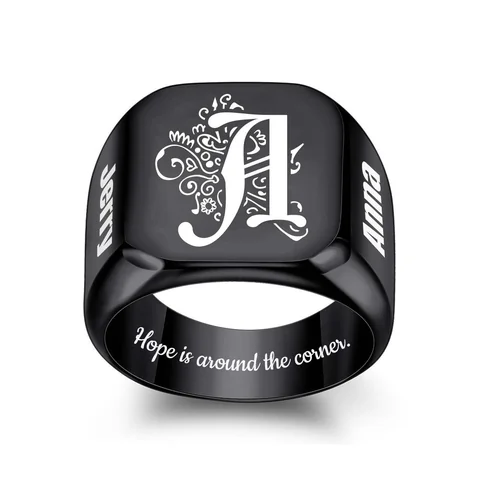
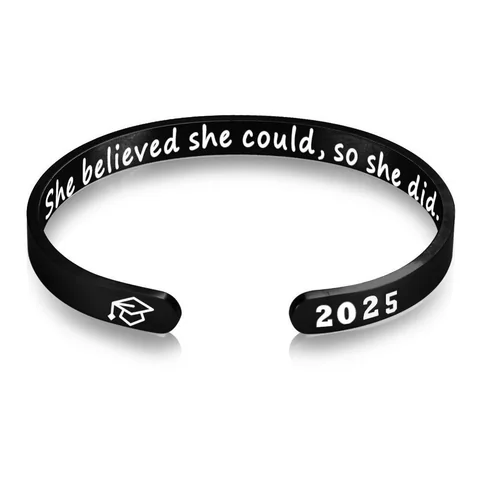
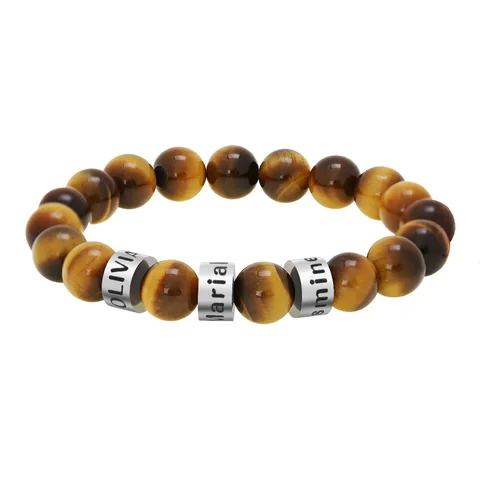
For an open cuff, request the interior dimensions, the gap between the ends, and the intended way to put it on. Wrist circumference alone leaves the opening question unanswered.
Ask for labeled distances
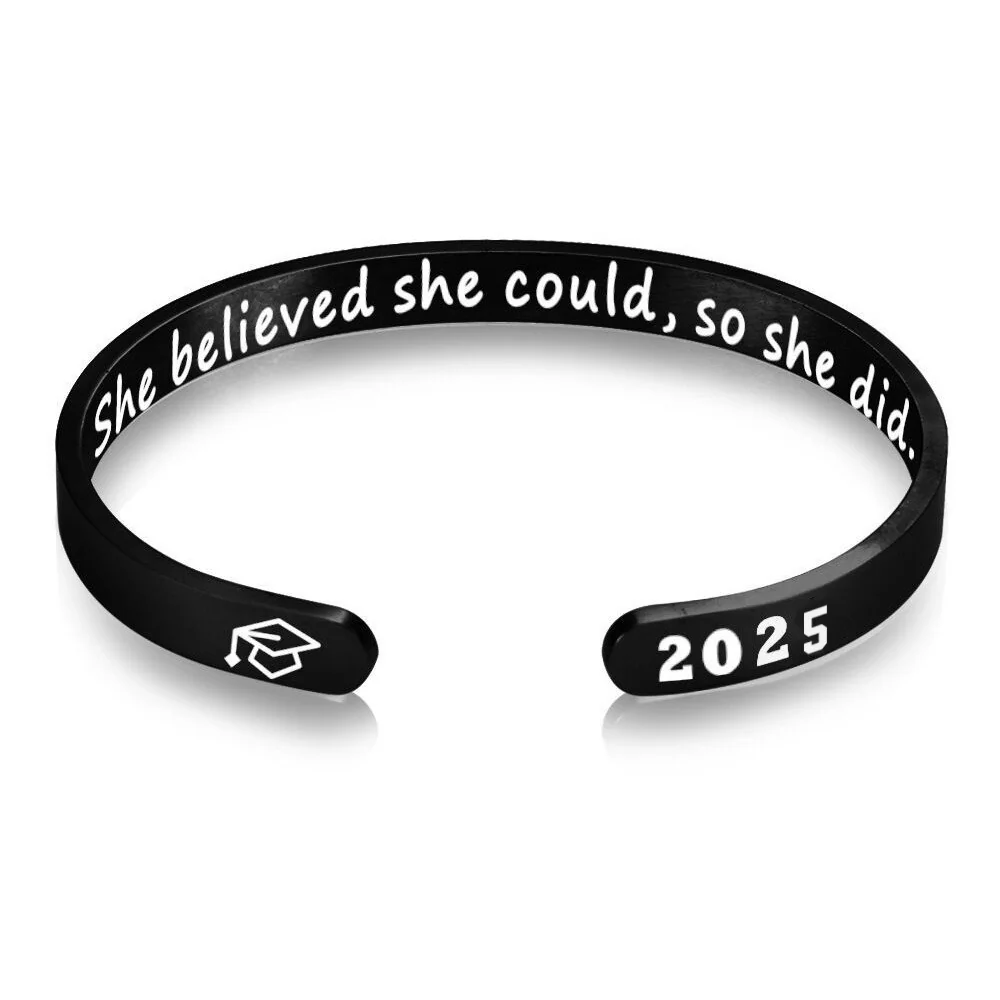
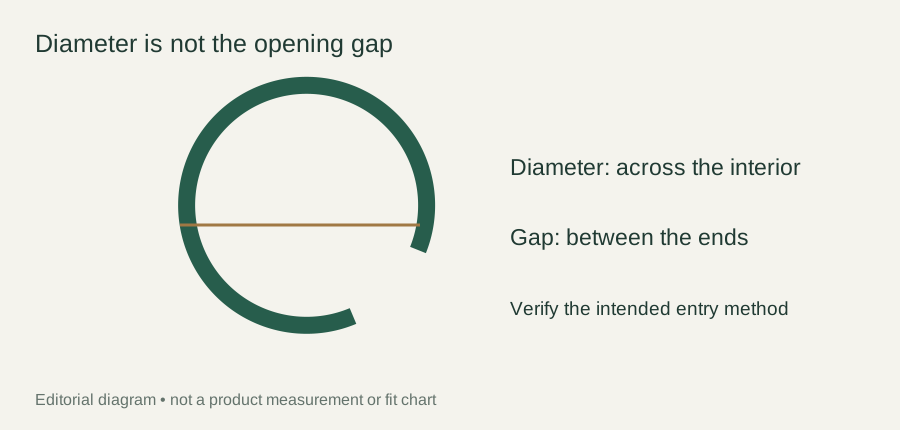
The Open Cuff supplier text lists a diameter of approximately 65 mm. It does not label that number as the end gap or an approved wrist range. Ask for a diagram that identifies the measured endpoints and any difference between horizontal and vertical interior dimensions.
Do not turn an opening into an adjustment promise
An open shape may tempt you to squeeze or pull the ends. Do not do so unless the manufacturer supplies explicit instructions for that exact construction. Material, structure, and finish can matter, and the current record does not authorize bending.
Give the supplier your wrist measurement and ask how their entry method works for it. If the opening cannot be explained or the size relationship remains undefined, choose another supported sizing route. The fact that a cuff has no clasp does not make its fit universal.
Separate wearing space from the way it goes on
Two questions need answers: what space the cuff provides when worn, and how the wrist enters that space. A quoted diameter may help describe part of the interior, but it does not identify the distance between the ends. A visible gap identifies an open shape, but it does not define the approved entry method. Put both questions in the same request so one answer is not mistaken for the other.
Keep the wrist circumference attached to the intended wearing position. Then describe which interior and opening specifications are missing. If the supplier asks for another wearer measurement, request an explanation of how and where to take it. Do not improvise a procedure by pushing another object against your wrist or copying a diagram from an unrelated cuff.
A cuff may look circular in one photograph and more oval in another. Perspective alone cannot establish its actual interior dimensions. Ask for labeled horizontal and vertical distances if those are relevant to the design. The answer should state whether the distances are inside measurements and identify the exact version shown.
Request a diagram with named endpoints
An effective diagram labels the measured edges instead of placing a number near the object. Ask it to distinguish the interior span from the end gap. If a single diameter is supplied, ask which direction it measures and whether another direction differs. You do not need a technical drawing to identify those basic relationships, but you do need unambiguous endpoints.
Keep the manufacturer's description beside the diagram. A dimension shown on a source image may be a historical supplier statement rather than an approved selling specification. Record the source date and option if provided. When the text and diagram differ, preserve both and flag the difference rather than choosing whichever number makes the desired fit seem possible.
If the answer gives an outside width, label it outside width. It may be useful for visual comparison, but it does not fill the interior field. If the gap is not supplied, leave it missing. This prevents a comparison sheet from becoming complete only because unrelated dimensions have been copied into empty cells.
Use a fictional request to reveal the missing link
In this fictional example, a wearer has a wrist circumference of 17.8 cm and is considering a source image described as approximately 65 mm in diameter. Their note asks which interior direction that diameter represents, what the end gap measures, and which entry instructions apply to the exact version. They do not calculate a circumference from the diameter and call it a fit recommendation.
The first reply says that the cuff is open and therefore adjustable. That leaves the method and intended range undefined. The wearer requests the approved action, who should perform it, and the limit or intended result supplied by the manufacturer. If those answers remain unavailable, the word adjustable stays an unsupported description in the comparison rather than permission to pull the ends apart.
The wearer can still prepare a desired inscription separately. That keeps the personalization discussion moving without treating the attractive name layout as an answer to the fit problem. Once a supported size and entry route are identified, the inscription can be reviewed on that exact option.
Compare an existing cuff without altering it
If you already own a cuff you like, record its comfortable wearing position and the way you normally put it on under its own instructions. Photographs of its undisturbed shape may help explain preference. Do not bend it into the candidate's apparent shape or assume its gap is appropriate for another construction.
Use the reference to describe what you want, such as how much movement you prefer or whether the ends sit in a particular orientation. Keep those preferences separate from any measured dimensions. The final decision needs the candidate's own fit specification and entry guidance. If either remains unclear, a documented unresolved decision is more useful than an attempted adjustment based on appearance.
Save the diagram with the option name rather than as a generic cuff chart. A later change of construction needs its own specification, even when the replacement photograph looks similar.