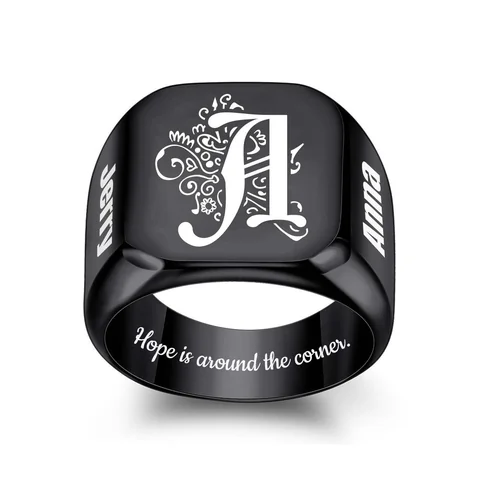
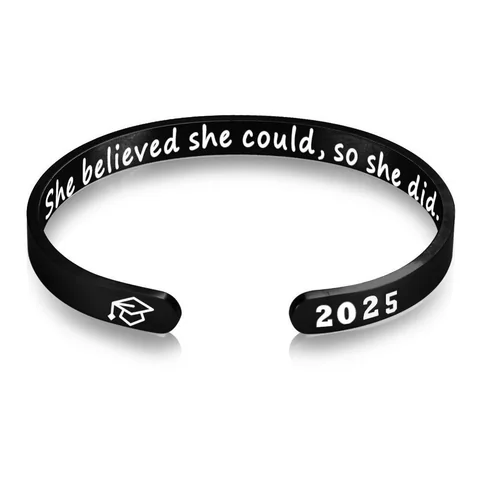
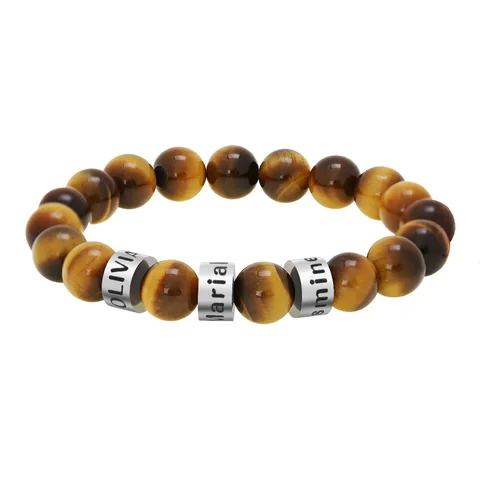
Share a detail instead of requiring identical pieces. Two people can choose the same word or date while wearing different forms of jewelry.
Choose the common element first
An original planning example is “North” on two different pieces. One person may prefer a ring and the other a bracelet. The shared word belongs to their agreement; the product category belongs to each wearer’s preference.
You could also share a date while using different surrounding text, or repeat one visual detail without repeating an inscription. Avoid forcing a surname or relationship label that one wearer does not want.
Approve each piece independently
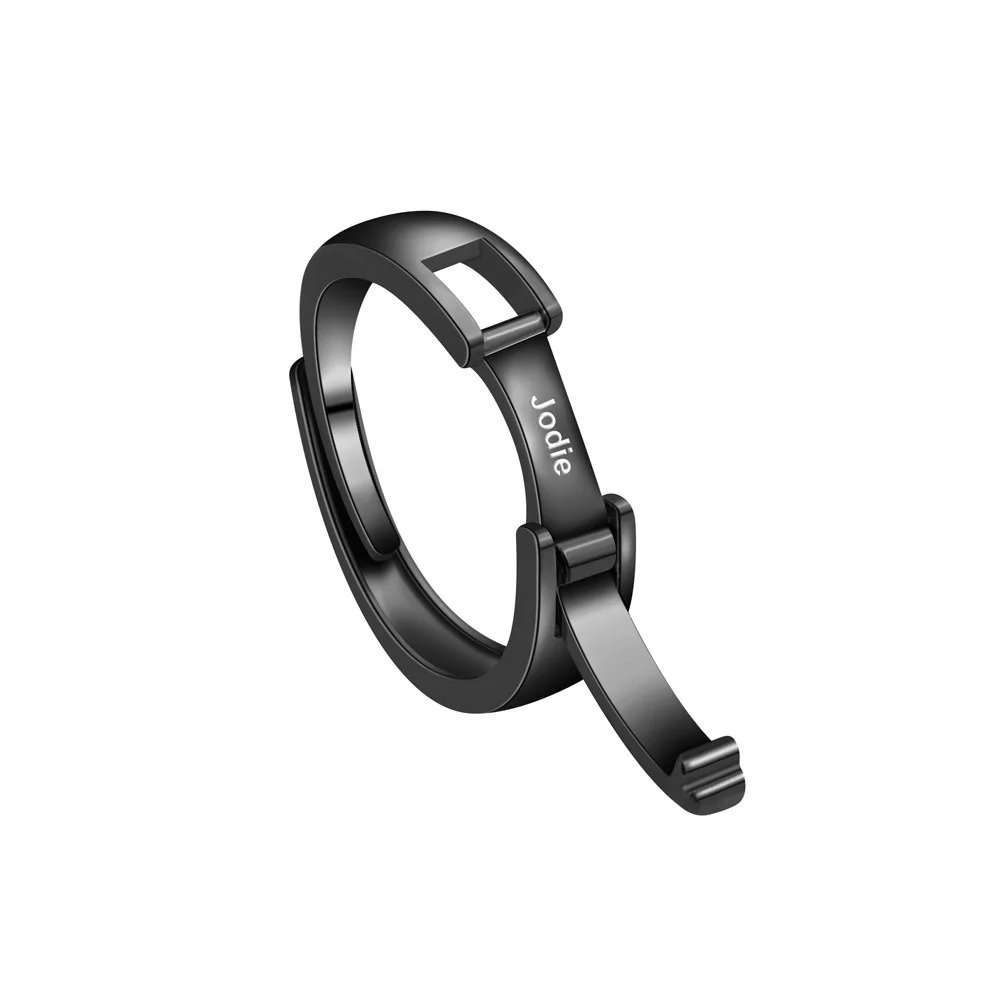
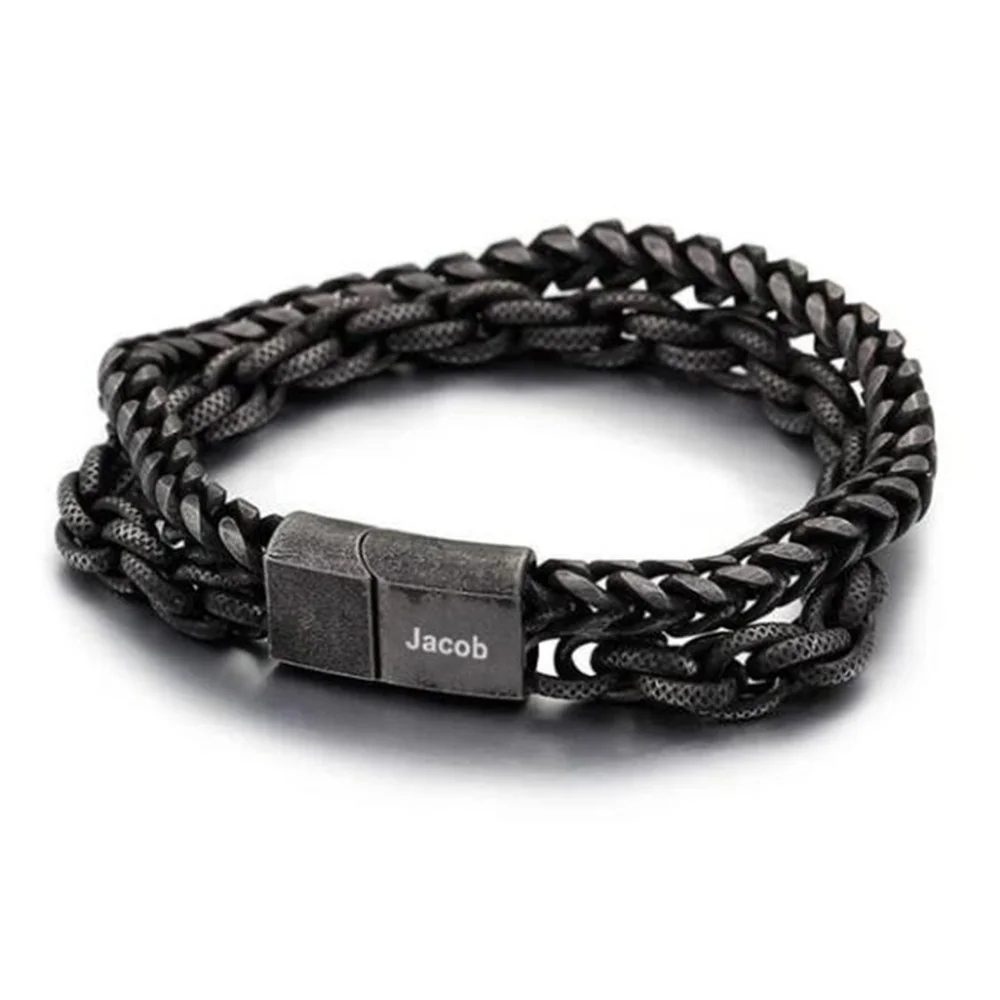
If you began by searching for personalized couple rings, compare that plan with separate pieces before committing to matching shapes. The Name Ring and The Double Chain current pages are individual design references, not a confirmed bundle.
Check size, text region, option, and included quantity for each. A shared message cannot substitute for two fit decisions. If one design cannot support the wording, revise the pair of briefs together instead of letting the seller silently produce mismatched versions.
Agree on what needs to match
Write one sentence together describing the connection. It might be “We both want the same word,” or “We want different words that refer to the same place.” This sentence helps distinguish the relationship detail from the physical design. Identical lettering, color, position, and jewelry type are additional preferences; none follows automatically from choosing a shared message.
Then divide the preferences into required and optional features. A required date should be checked in both briefs. An optional matching finish can be reconsidered if one person prefers another appearance. If each person wants the other's name, write the two final inscriptions explicitly. Do not say “matching names” and expect the maker to infer which name belongs on which piece.
Use a two-column planning page
Give each wearer a column with the same questions: preferred category, intended inscription, desired position, measurement still needed, and unresolved option details. Compare the columns only after each person has filled their own. This prevents the first person's choice from silently becoming the default for the second.
| Decision | Wearer one | Wearer two |
|---|---|---|
| Shared meaning | Same agreed detail | Same agreed detail |
| Jewelry category | Personal preference | Personal preference |
| Exact text | Written as a full string | Written as a full string |
| Fit information | Independently recorded | Independently recorded |
| Approval | Individual proof version | Individual proof version |
The empty table is a planning tool, not an order form or evidence that every combination is available. A ring and a bracelet will need different fit information. Even two rings should have separate measurements and confirmed size selections; matching appearance does not make their dimensions interchangeable.
Keep shared dates unambiguous
If a date is the common detail, agree on the event before choosing a format. The day you met, the day you moved, and the day you celebrated can be different. Write the event in ordinary language in the private brief, then write the exact inscription beside it. This lets both people check the meaning without relying on a numeric string alone.
For an ambiguous date, spelling out the month in the planning document can expose a misunderstanding before it reaches a proof. That does not establish that the longer form fits the intended jewelry. Once the agreed event is clear, compare possible formats with the confirmed text area and approve the exact final string independently for each piece.
A fictional pair with different needs
In this fictional editorial example, Alex wants a ring and Jamie prefers a bracelet. Their shared detail is “North,” referring to a trip they both recognize. Alex's brief requests that word alone; Jamie's brief asks about the same word on a clasp. Neither person wants the travel date displayed. These are proposed layouts awaiting confirmation, rather than production instructions supported by the images.
Suppose the confirmed bracelet region cannot accommodate the preferred lettering. The pair can consider a shorter shared detail, different lettering, or a different design. They should approve the revised connection together. Changing only Jamie's word to an initial might be acceptable, but it should be a deliberate choice, with both final briefs updated. A silent substitution would make the result different from the shared plan.
Check how the pair will be identified
When a seller can accept the two requests, ask how each finished piece is linked to its own approved brief. Use neutral labels such as “piece A” and “piece B” rather than relying on box position or size alone. Confirm whether the quoted quantity refers to one item or two; a photograph containing several pieces cannot answer that question.
For a gift presented together, the accompanying note can explain the common detail while leaving each wearer free to use their piece differently. Wearing both at the same time is not necessary to preserve the connection. The useful final document contains one shared meaning statement and two complete, separately approved design briefs.
Keep later changes attached to the relevant column. If only one wearer changes the size or category, identify that revision explicitly so the other person's approved instructions remain easy to locate.