Decide whether you want the anchor above, within, or below the collar opening. Then check whether a confirmed chain setting can provide the placement you want.
Use one familiar shirt
Note how you usually fasten the collar and whether an existing necklace sits where you like. Keep that chain's measurement definition beside the observation. The comparison should come from the wearer’s clothing and preferences, not a rule about gender or body shape.
If the pendant would usually be hidden, decide whether that is desirable. A private inscription may not need constant visibility; a visual anchor detail may.
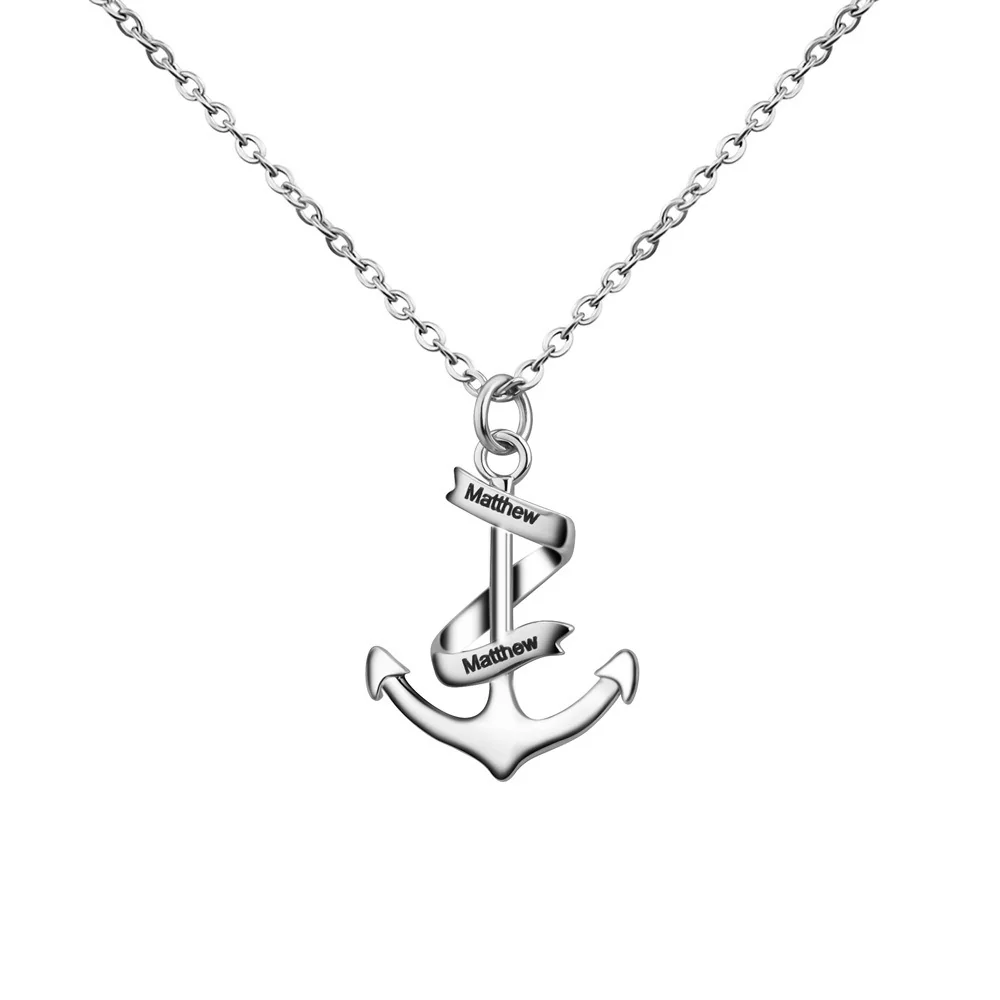
Check the selected setting
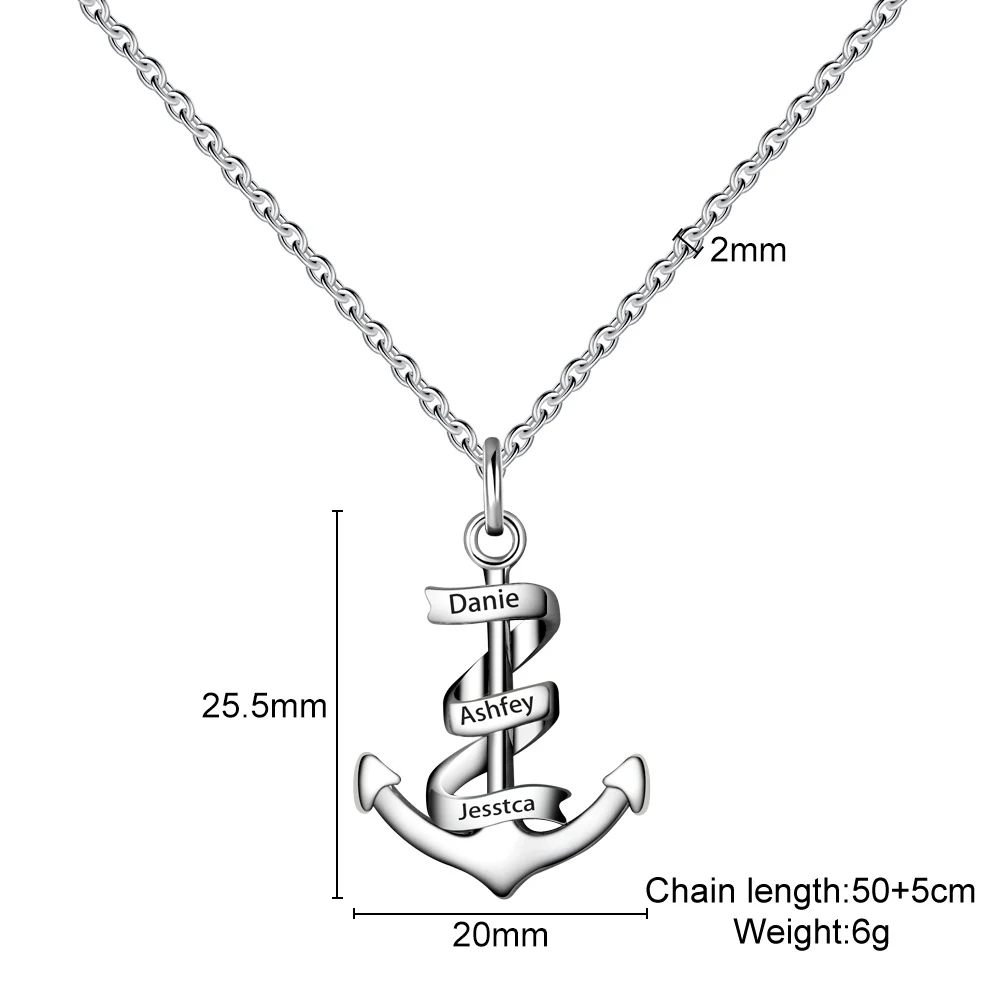
For The Anchor Necklace, the source labels “50 + 5 cm”; the use of that extra length and its fit relationship require confirmation for the selected version.
Do not imitate the neckline of an unrelated model photo and call the placement established. Record the preferred position, actual reference necklace, and unresolved chain-setting question. If no confirmed setting supports the goal, choose another arrangement rather than assuming the extension solves it.
Define the collar position in ordinary terms
Use the shirt you actually wear and fasten it as you normally do. Decide whether the anchor should be above the opening, visible within it, or below the fabric. Write that location preference before choosing a chain setting. “Visible between the collar edges” describes a goal; it does not specify a universally suitable necklace length.
Consider whether the personal text needs to be visible as well as the anchor outline. You may want the shape seen while keeping the names less noticeable. Record that distinction so the placement decision does not automatically become a request to display every inscription.
Use an existing necklace as a reference if available
Observe where your current necklace sits with the same shirt and fastening. Record its measurement definition if known: the actual chain measurement rather than the apparent vertical distance in a photograph. Keep pendant dimensions separate. Another pendant's outline may occupy different space even when its chain measurement is similar.
If you do not have a reference necklace, you can still draw the desired position on a shirt sketch. Label it as a placement preference rather than a fit measurement. Do not derive a chain length from the sketch or a model photograph. The product-specific setting must be confirmed before it can be compared with your goal.
Keep three measurements separate
| Information | What it describes |
|---|---|
| Chain length | The identified chain measurement for the exact version |
| Pendant dimensions | The anchor's own outline and relevant component size |
| Preferred location | Where the wearer wants it relative to the collar |
| Collar arrangement | The shirt and fastening used in the comparison |
| Adjustment question | What the stated extra length actually allows |
The source's “50 + 5 cm” label is an attributed statement, not a complete explanation of the selected version's adjustment. Ask how that label applies to the exact configuration and which confirmed settings are available. Do not treat the additional number as proof that any preferred collar position can be reached.
A fictional open-collar planning example
In this fictional editorial example, Jordan likes the anchor outline and wears one familiar shirt with the top opening left as usual. Jordan wants the pendant visible within that opening. A current necklace sits lower than desired, but its pendant is a different shape. Jordan records that observation rather than converting it directly into a new chain-length recommendation.
Jordan asks for the intended anchor version's chain setting, relevant dimensions, and clarification of the extra-length label. If those details remain unconfirmed, the visual preference stays provisional. If a confirmed setting later places the pendant below the desired opening in the actual arrangement, Jordan can reconsider the shirt, the placement goal, or the jewelry choice.
The example does not establish a chain setting for another wearer. It uses one shirt and one stated preference to make the product question concrete.
Review more than a still photograph
When the actual individually suitable piece is available, observe the chosen collar arrangement during ordinary intended movement. Note whether the anchor remains where you prefer visually or becomes covered. The observation should describe that arrangement rather than promise that the pendant will hold a fixed position throughout every activity.
Do not pull the chain, force a fastening, or alter the pendant as a way to preserve the desired location. If an adjustment method is provided, use its applicable instructions. A visible preference cannot authorize an unfamiliar operation or make an unconfirmed setting available.
If you change the collar fastening or compare a second shirt, create another placement note. Keep the first result tied to its original garment rather than describing one setting as suitable for both.
Keep text approval linked to placement
If names are planned on the ribbon-shaped details, confirm the exact strings and available regions separately from the chain decision. A source name demonstrates a gallery layout; it does not approve your names, count, or letter arrangement. Keep a text proof question in the same brief without assuming that placement resolves manufacturing capability.
The final record can identify the shirt, fastening, desired anchor location, actual comparison necklace if used, and the confirmed or unresolved chain setting. This gives the reviewer a clear placement task while preserving the distinction between an appearance preference, a source dimension, and an approved fit specification.