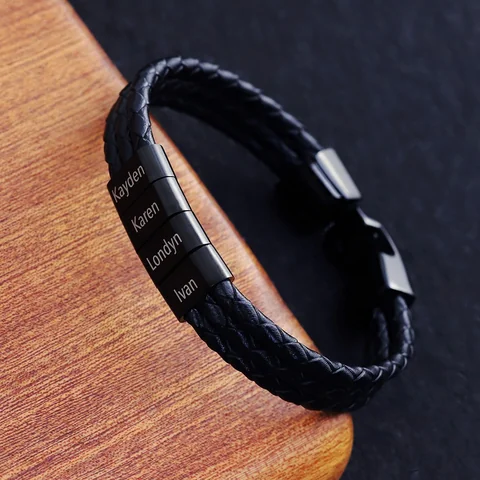
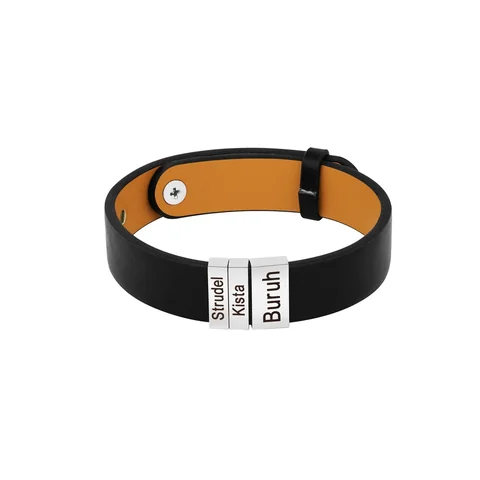
Keep the spelling consistent and approve the two layouts separately. Repeating one name creates a shared detail, but it does not create shared dimensions or text allowances.
Write a master name record
Store one approved spelling and capitalization. Beneath it, create a necklace brief and a bracelet brief with their product IDs, selected options, and proposed regions. Copy the exact name rather than retyping it from memory.
If the necklace and bracelet use different fonts, decide whether that difference is intentional. Do not let a longer name be abbreviated on only one piece without the wearer’s approval.
Check each proof against the same record
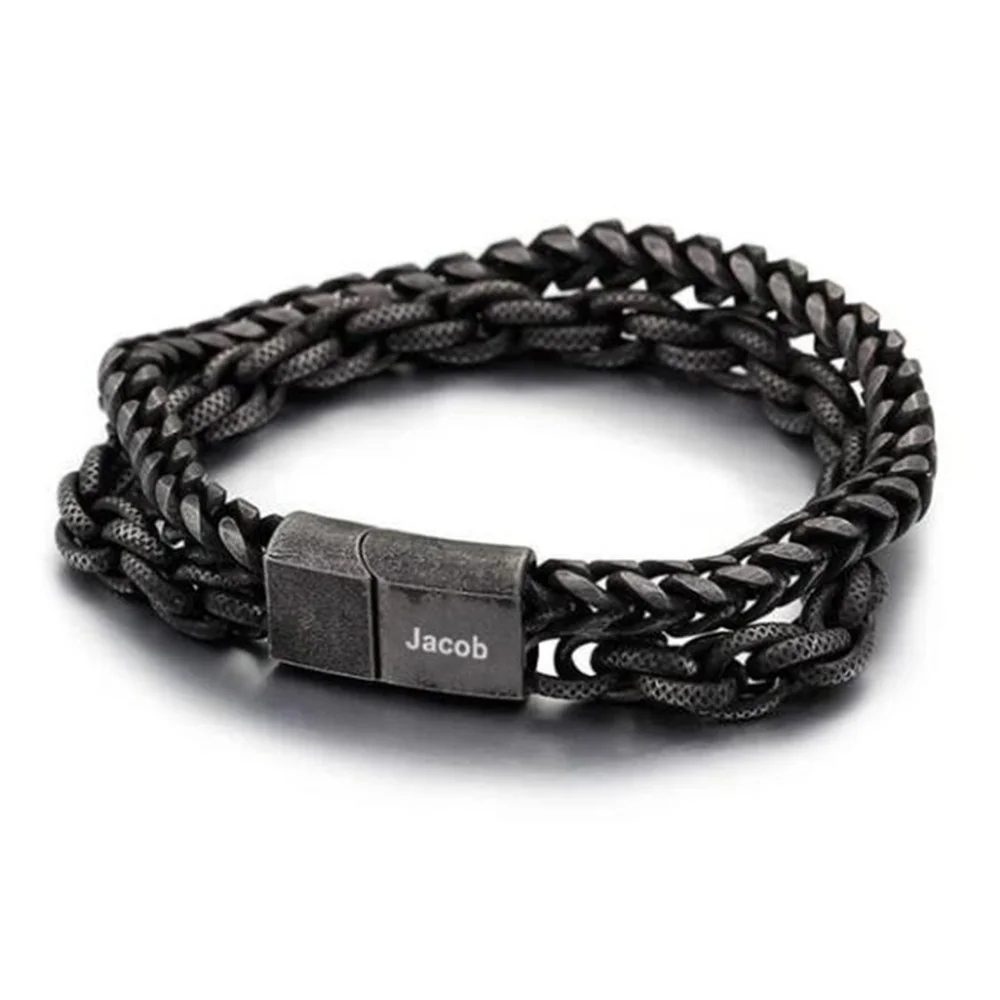
For The Anchor Necklace and The Double Chain, compare spelling, case, region, and orientation. Fit remains a separate necklace-length question and bracelet-size question.
If one region cannot support the approved name, revise that layout or the pair of briefs together. A matching theme does not justify transferring a manufacturing approval from one category to the other. The current pages are individual references, not a confirmed set or bundled purchase.
Decide why the name should appear twice
Repeating one name can create a visible connection, but the wearer may prefer only one inscription. Ask whether the repetition itself matters or whether the goal is to use different jewelry forms with the same personal meaning. Write that decision before duplicating the text across several regions.
A necklace and bracelet can also have different visibility roles. The anchor outline might be the main visible detail while the bracelet name is the personal cue. Keep those roles explicit so a shared spelling does not automatically turn into identical prominence, lettering, or placement.
Create one source string and two complete records
Write the approved name exactly once in a master field, including accents, spaces, punctuation, and capitalization. Copy it into the two piece records and compare each copy back to the source string. The master record prevents casual spelling changes, but it does not replace individual production questions.
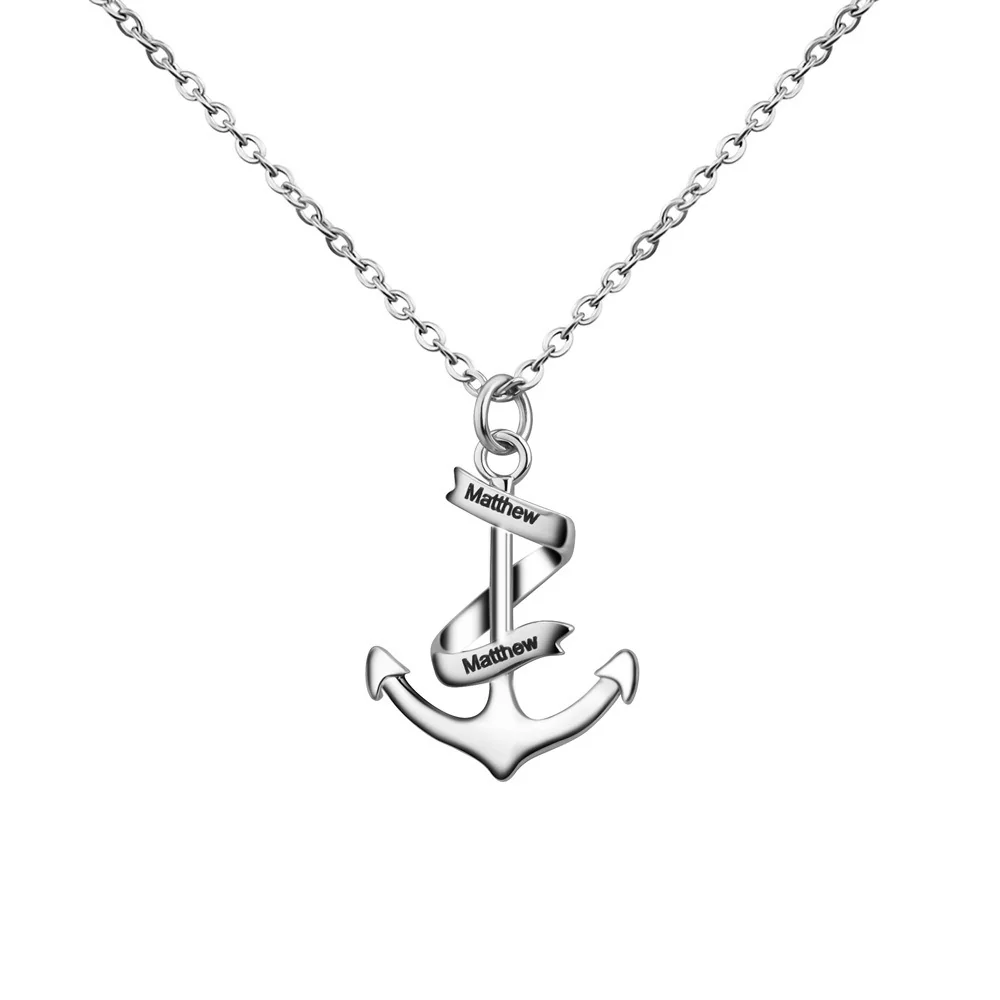
For the necklace, identify the proposed ribbon-shaped region or regions and ask which are actually offered. For the bracelet, identify the intended component. Do not say “same name everywhere” without naming each location. A photographed repeated sample is not an instruction to repeat your name across an unconfirmed number of surfaces.
Use a paired-layout checklist
| Field | Necklace record | Bracelet record |
|---|---|---|
| Exact name | Copy of the approved string | Copy of the approved string |
| Intended region | Each proposed ribbon or other area | The specific component |
| Reading direction | A labeled layout question | A labeled layout question |
| Text presentation | The proposed lettering and arrangement | Its own proposed lettering and arrangement |
| Fit | Necklace setting and pendant questions | Bracelet sizing and closure questions |
| Approval status | This proof version | This proof version |
The columns should remain complete even when the text is identical. A maker reviewing one column should not have to infer an option or region from the other. Keep missing specifications marked as not supplied.
A fictional repeated-name exercise
In this fictional editorial example, Casey wants “Morgan” on an anchor necklace and a bracelet. Casey first chooses whether the anchor should use one confirmed region or repeat the name in multiple offered regions. The gallery example does not settle that choice. The bracelet draft identifies one proposed clasp region separately.
Suppose the necklace proof uses the full name and the bracelet proposal shortens it to an initial. Casey compares both against the master string and asks whether the full bracelet wording is supported. If not, Casey decides whether a different arrangement or a deliberate abbreviation is acceptable. The maker does not receive permission to abbreviate merely because the necklace version is already approved.
If Casey changes the master spelling later, both records must be checked again. If Casey changes only the bracelet option, the necklace spelling remains approved while the bracelet's region and fit questions are revisited. This distinguishes a shared-content change from a change local to one piece.
Review repetition visually as well as literally
Once the regions and options are confirmed, compare the intended prominence of the name on both layouts. Correct spelling does not guarantee that the repetition serves the wearer's visual goal. A necklace with several prominent text regions might dominate an outfit differently from a compact bracelet inscription.
Keep this as a preference review, separate from surface-quality or durability claims. If the two layouts look different because their regions differ, decide whether the difference is intentional. There is no requirement that unrelated jewelry forms use identical lettering to preserve the connection.
Check accents and spacing directly in both proofs, especially after copying between documents. The approved spelling remains the reference even when a lettering style makes individual characters harder to distinguish in the proposed layout.
Save a clear approval relationship
Keep the master name record, both current briefs, and the corresponding proof versions together. Label old alternatives as superseded so they cannot be confused with the active layout. Specify whether each approval covers wording only or the supported placement as well.
The final package should show one agreed name and two independently usable instructions. Confirmed inclusion and ordering information would still be needed before treating the pair as an actual purchase. A shared name can connect a gift idea without implying a bundle, a combined price, or transferred manufacturing approval.