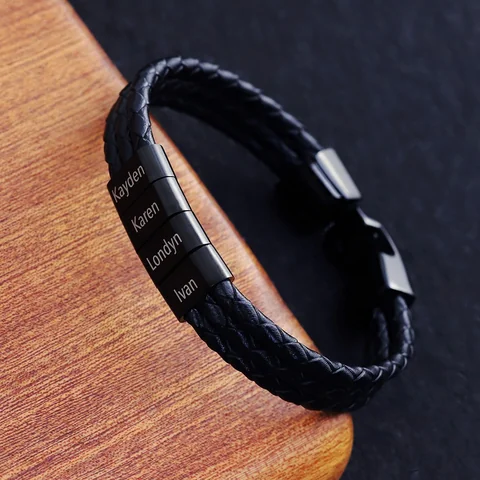
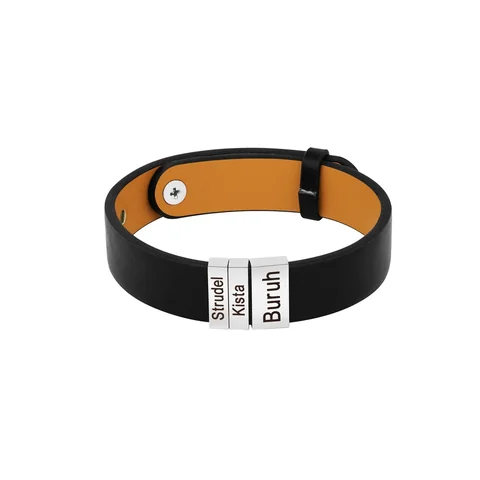
Choose the wearing side by observing your own routine, rather than a universal left-or-right rule.
Note where you wear a watch, which wrist rests against a desk, and whether a sleeve regularly covers the intended location. Follow workplace or activity rules that restrict jewelry.
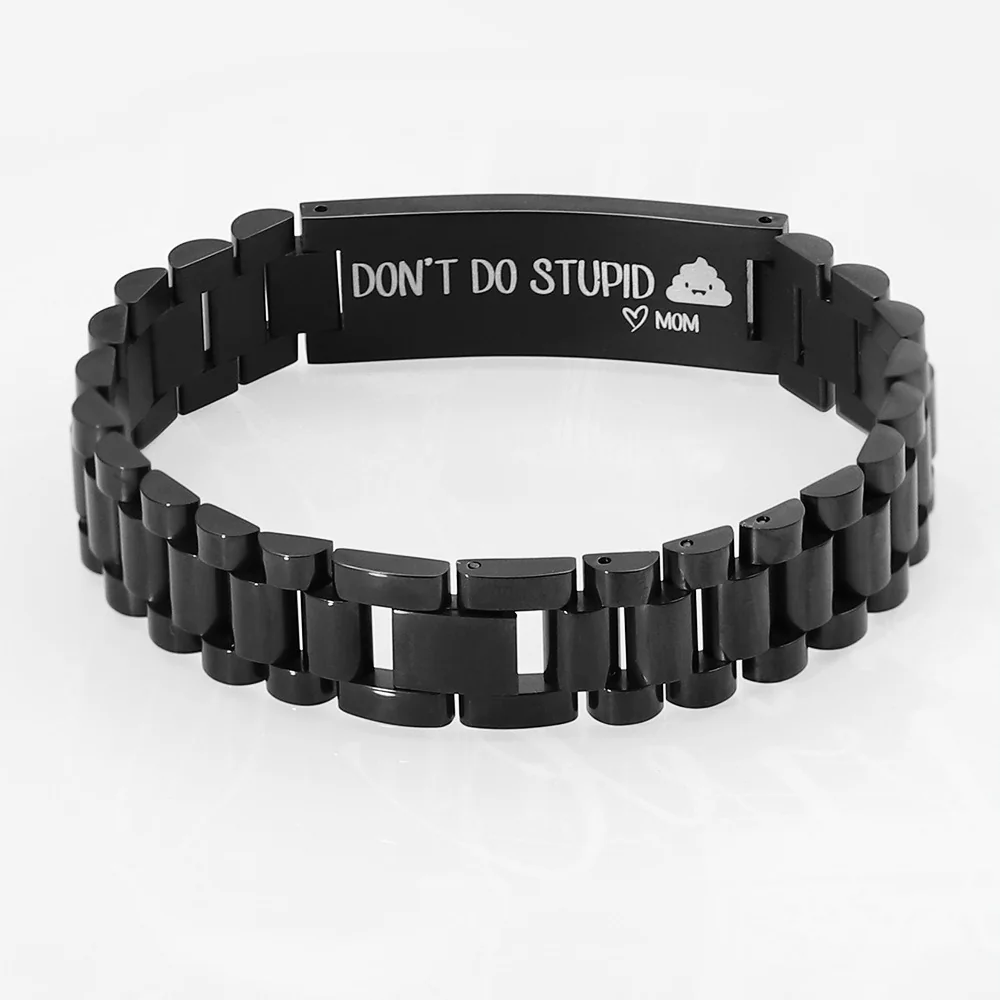
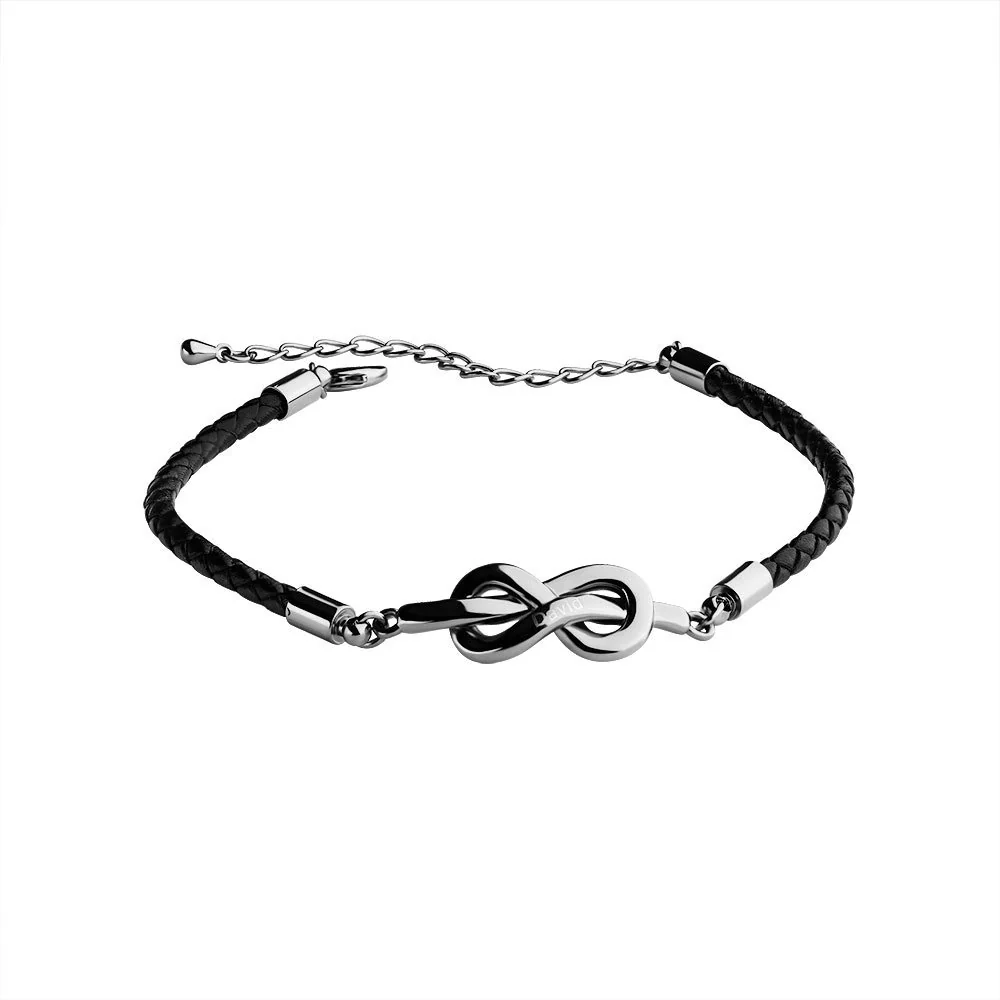
Compare the Engraved ID panel with the Engraved Cord's infinity-shaped center as appearance options. Their reference images do not establish comfort during typing or a tested preferred wrist.
Use an existing permitted piece to observe your routine if available. Do not improvise a tight fit or use an unverified clasp to test a new arrangement.
Record the chosen wrist and movement preference in the product inquiry. If the piece changes tasks or sides during the day, keep that in the brief. Personal use and confirmed fit matter more than a generic men's-jewelry convention.
Describe an ordinary day before choosing a side
Make a short list of the situations in which you expect to wear the bracelet. Include desk time, travel, social occasions, and any activity with an actual jewelry rule. Use your own schedule rather than a general list of men's activities. The aim is to identify where you want the piece visible and where an accessory may be inappropriate for your routine.
For each situation, write what each hand and wrist usually does. You may hold a bag on one side, wear a watch on the other, or rest one wrist near a desk edge. These observations do not predict how the candidate bracelet will feel. They provide concrete questions to consider when choosing an intended wearing side and asking about fit.
Keep required restrictions above personal preferences. If a workplace or activity has a jewelry rule, use the actual applicable rule rather than an assumed exception for a narrow or dark-looking bracelet. You can plan to wear the piece during another part of the day. A side choice should not be used to reinterpret a restriction on wearing jewelry.
Separate visibility from interaction
Decide whether you want the inscription readily visible to yourself, visible mainly to others, or mostly private. An inside-panel example and an infinity-shaped centerpiece communicate detail differently in the source references. Compare those visual arrangements without assuming the bracelet will rotate into a particular position or that a gallery view establishes how the text faces when worn.
Use a sketch of each wrist with your current accessories and usual sleeve position. Label the intended bracelet location without assigning a size from the image. This can show a visual preference for one side before you have product dimensions. It cannot establish clearance, comfort, or a safe fit for either referenced design.
If you have a permitted existing accessory, observe your normal routine with that familiar item rather than improvising a fit for the new candidate. Record what you notice and identify the existing item in your notes. Do not call the observation a test of the Engraved ID or Engraved Cord Bracelet; their actual dimensions and assembly still need confirmation.
Compare situations rather than using a handedness rule
Create a two-column page labeled left wrist and right wrist. Add one row for each situation that matters to you. Write a brief advantage, question, or restriction in each cell. An entry such as “watch already on this side” is an observation; “bracelet would be comfortable here” is a prediction that remains untested.
In a fictional editorial example, Chris usually wears a watch on the left wrist and initially chooses the right for a bracelet. Chris then reviews desk work and notices that the intended right-wrist location is often near the desk edge. The planning page leaves both possibilities open: opposite wrist for a social outfit, or bracelet worn without the watch on another occasion. No candidate has been wear-tested in this example.
Chris's inquiry asks for the bracelet's confirmed fit definition and relevant dimensions, and describes the intended location. It does not ask for a universally correct wrist. If the dimensions or closure arrangement remain unconfirmed, Chris keeps the side choice as a provisional styling preference. The question can then be revisited using actual product information rather than a gender convention.
Consider changes during the day
If you expect to change sides between situations, ask whether the identified piece's handling instructions support the needed opening and closing process. Do not infer frequent adjustment or one-handed use from the source image. A clasp photograph is a visual reference, not a demonstration of an approved routine or a tested ease-of-use result.
Keep fit information separate for each intended wrist when relevant. Do not assume that a preferred position has the same measurement on both sides or that an extension shown in the gallery supplies a confirmed usable range. Record measurements with their units and the requested measurement method, then obtain option-specific fit guidance.
You may decide that different occasions call for different choices. A bracelet can be an occasional accessory in your plan without requiring a single permanent wearing side. Write the occasion, side preference, other accessories, and unresolved fit questions together. This makes the decision repeatable when you later compare an actual identified option.
The useful result is a personal wearing brief, not a rule about left and right. It should state where you would like the piece, why that position suits the intended occasion, which actual restrictions apply, and what product information is still needed. That brief preserves your preferences while keeping comfort and fit judgments open until there is evidence for the selected assembly.