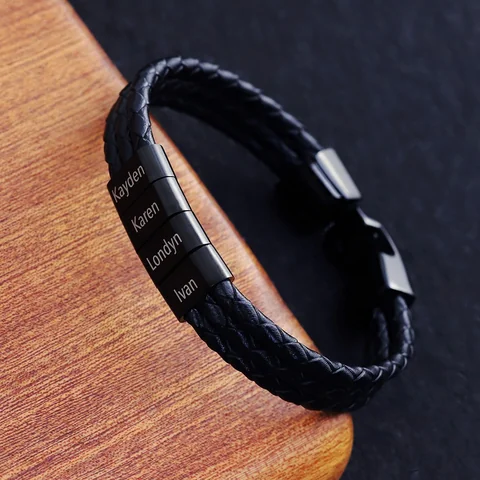
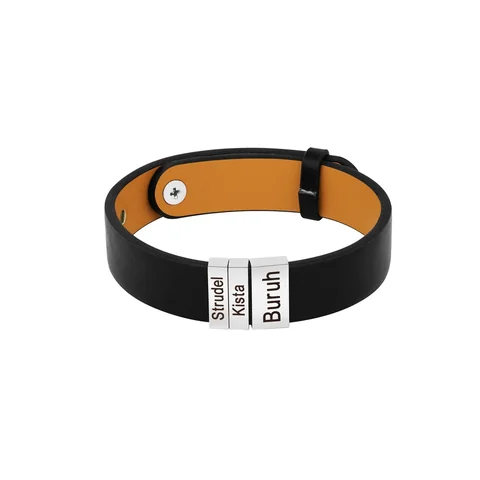
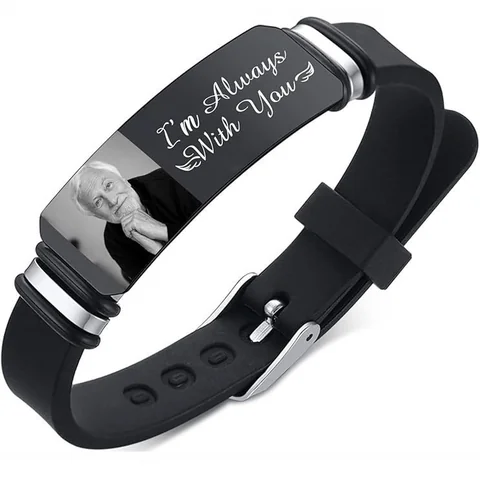
A personalized memorial bracelet can carry a name, a date, or a short message. If you want a design with a container as well, check its construction separately from the inscription. Before choosing a bracelet intended to hold something, establish how its container opens, what can go inside, and how it closes. An outside measurement or the word “keepsake” cannot answer all three questions.
For a gift, first ask whether the recipient wants this kind of piece. A name-only inscription may be a better choice when the person wants a reminder without a container.
What the source images show
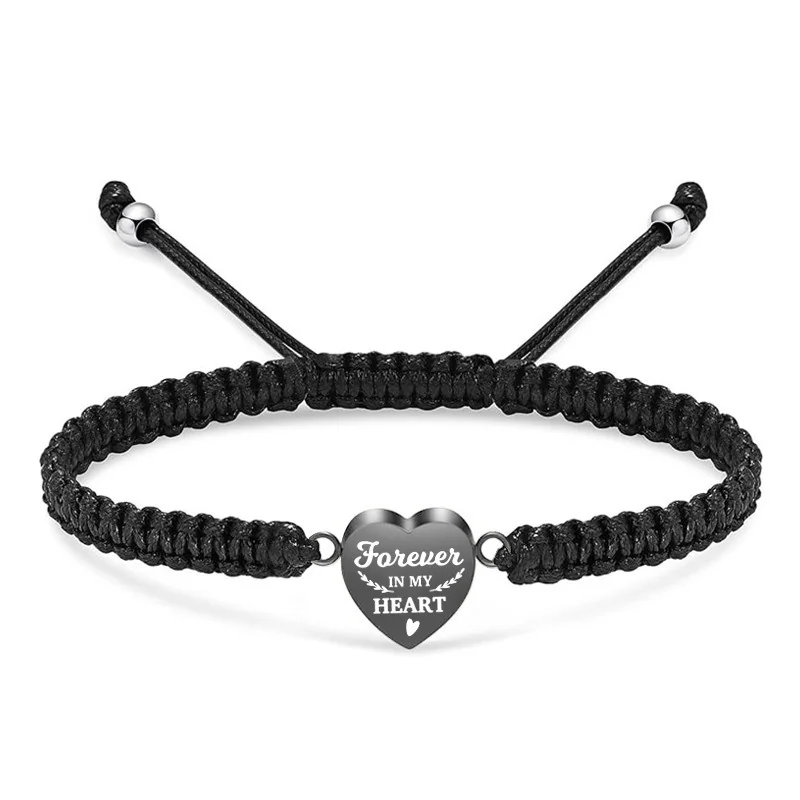
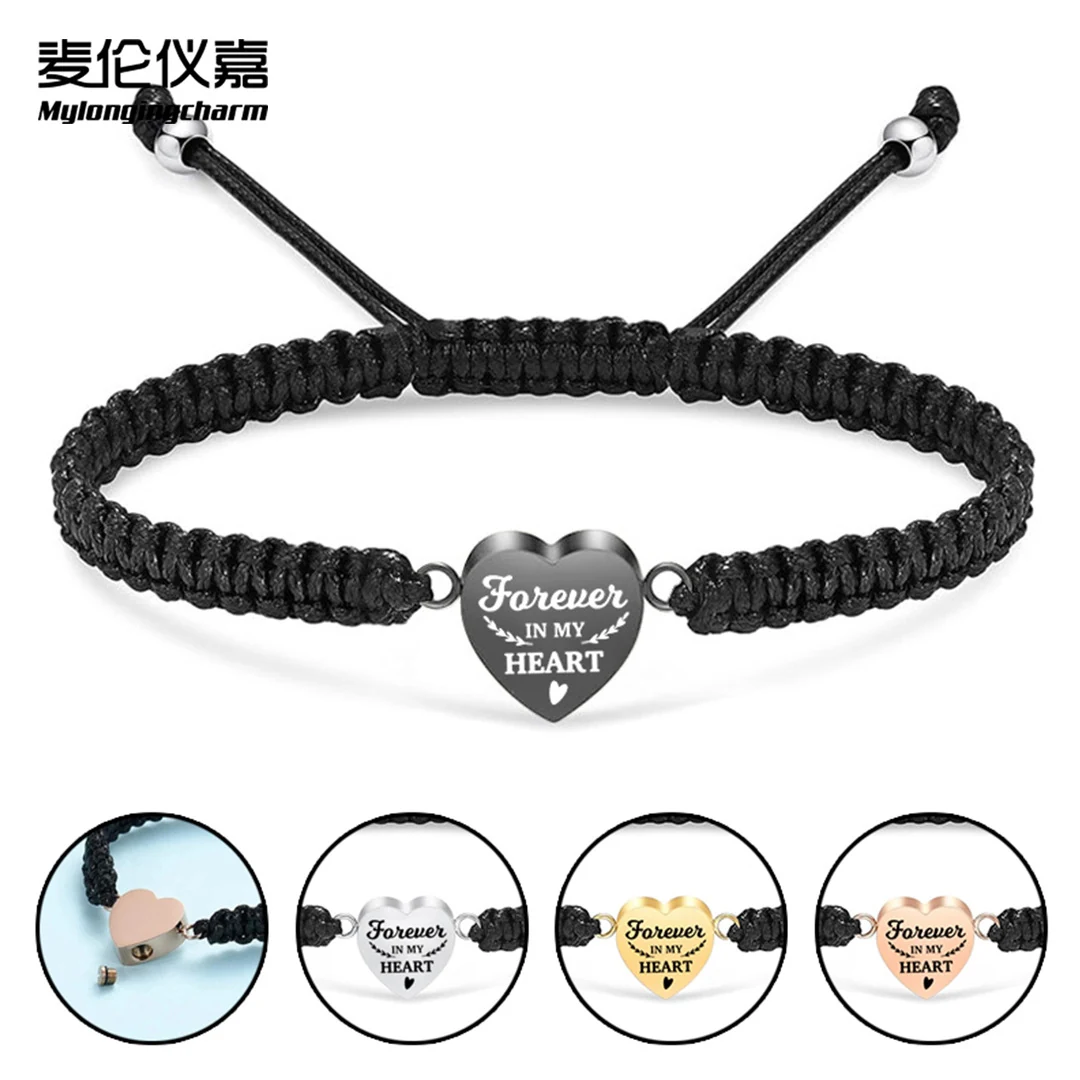
The supplier gallery behind Energvia's Heart Keepsake Bracelet includes a heart-shaped component with a small cap shown separately beside its opening. That is visual evidence that the illustrated version has an opening arrangement. It does not establish the internal volume or demonstrate a leak-resistant seal.
The source gallery for the Oval Keepsake Bracelet includes a narrow bar-shaped construction diagram labeled 42 mm across and 6 mm high, with an end shown open. The diagram must be matched to the exact intended version before its measurements or construction are applied to an Energvia sales specification.
These two source examples help identify the questions to ask. They are not filling instructions or a verification that every photographed variant has the same interior.
Outside size is not usable capacity
The visible width of a heart or the length of a bar tells you about its outline. The space inside depends on the interior construction, walls, opening, and closure.
Do not calculate capacity from the outside dimensions. Ask for the usable internal dimensions or a product-specific capacity statement, with the intended material identified. If that information is missing, the piece can be considered as a design reference, but it should not yet be chosen for a particular contents requirement.
The item or parcel dimensions in a wholesale packaging table do not resolve this question either. They are not a diagram of the interior.
Clarify the contents without oversharing
You do not need to provide a personal history to ask a construction question. A short inquiry can describe the proposed material and ask whether that exact version is designed to hold it.
For example: “I am considering this product as a small keepsake container. Please identify the approved contents, the usable internal space, the closure method, and the handling instructions for this version.”
This is an original question template. It does not imply that any contents have been approved for either Energvia reference.
If you have a particularly meaningful or irreplaceable item in mind, resolve these details before moving it into a container. An uncertain fit is a reason to pause, not to experiment with the opening.
Keep opening, closure, and water claims separate
An opening photo shows an opening. It does not prove how tightly the cap closes, whether a seal is present, or whether the piece is suitable for contact with water.
Ask for the manufacturer's instructions for the exact closure. Do not add glue, force a cap, or follow a filling method intended for another construction without confirmation that it applies.
The supplier records reviewed for these references do not establish waterproofness, permanent retention, or a verified sealing procedure. Those claims should not appear in a gift description or care card.
Decide on the inscription after the construction
A message and a container serve different purposes. Choose the construction only after the intended use is supported; then decide whether a name, a date, or a short private phrase is wanted.
Here are three original inscription ideas to discuss, not confirmed production layouts: “Always with me” for a short phrase; a first name with a meaningful date; or the initials of the person being remembered. Choose the form the wearer wants, then ask whether its exact text fits the approved area.
Keep the text in a separate draft until its location is confirmed. A phrase visible in a supplier photograph may be a stock example, rather than proof that the same area can receive your wording.
For a gift, confirm the recipient's preference before turning a sensitive meaning into a permanent inscription. A simple name can leave more room for the recipient's own interpretation than a long tribute selected on their behalf.
Make a decision sheet for the intended use
In a fictional editorial example, a recipient wants only a name inscription and has no interest in a container. The design discussion can therefore remain focused on the message, appearance, and confirmed text area. The visible opening in a source image adds no required function to that brief.
Another fictional recipient specifically wants to preserve a small meaningful item inside a piece. Their decision sheet must keep the container questions open until the exact version's approved contents, usable space, closure, and handling instructions are supplied. If one of those remains missing, the sheet records the design as unsuitable for that contents requirement for now. The item stays in its existing storage rather than being used to test an uncertain opening. This comparison separates an inscription choice from a container requirement without treating either preference as universal.
Sources and unresolved details
Heart source gallery and Oval source gallery, reviewed from the original archived images on October 3, 2026. Openings are visible in the source references; capacity, approved contents, sealing, and final-version correspondence remain unverified.