Repeated initials can be intentional, but they can also make a family list unclear. Decide whether the wearer needs to distinguish each person before choosing abbreviations.
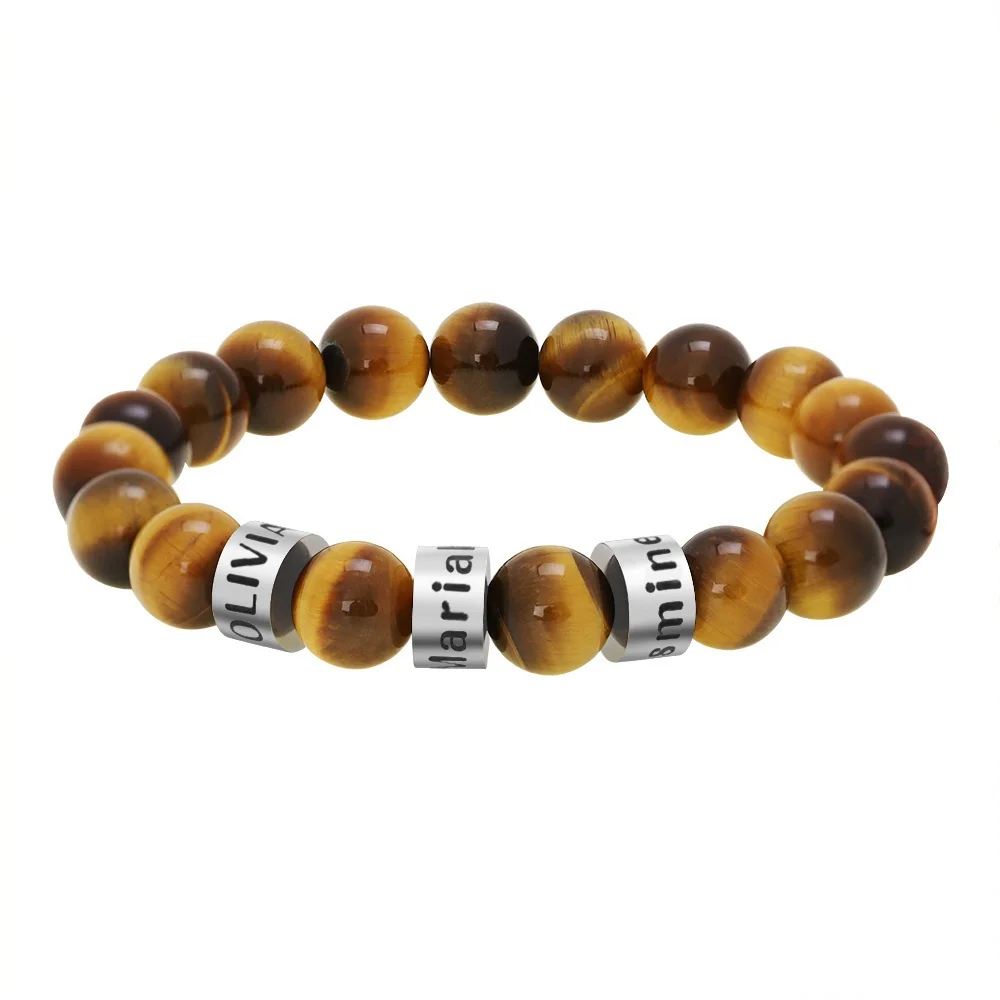
Compare three original drafts
For fictional siblings Maya and Miles, “M / M” leaves the identities ambiguous to others. “Maya / Miles” is explicit. “MA / MI” uses agreed short identifiers, but the family should approve them rather than leaving the choice to a designer.
If the wearer likes the shared initial as a private reference, keep it. Equal letters do not need to become equal names. The question is whether that ambiguity serves the intended meaning.

Document what each entry means
Write the full name beside each shortened entry in the private brief, even if only the short form is intended for the bracelet. This makes later proofreading possible.
For The Name Bead Bracelet or The Double Chain, verify the number of usable regions and the exact text allowance. Do not remove a meaningful distinction simply to fit an unverified input field. If the design cannot show the identifiers clearly, choose another layout or keep the explanation on a card.
Decide who needs to recognize each entry
Ask whether the initials are a private reminder for the wearer or a list that other people should be able to interpret. A wearer may recognize two identical initials from their positions or the gift's meaning. Someone viewing the bracelet alone may not. Neither purpose is automatically better, but the choice determines whether repeating the same letter creates a problem.
Write a one-sentence purpose beside the draft. “Two separate entries representing two children” is different from “a shared family initial.” The first needs a clear count and an approved mapping; the second may intentionally use one letter for everyone. This note stops a reviewer from reducing repeated entries because they appear redundant in the text file.
If each person is meant to have a separate element, identify that expectation before discussing abbreviations. A single inscription reading two letters is a different layout from two individually assigned regions. Keep the desired layout conditional on capability confirmation. A reference with visible separate components does not establish the selected version's usable count.
Make a private mapping table
Use a private table containing the full chosen name, the proposed displayed identifier, and its planned position. Add a field for the person's or wearer's approval when appropriate. The full names support proofreading; they do not all have to appear on the bracelet. Avoid including relationship details or other private information that the maker does not need for the inscription.
If repeated initials are intentional, record each entry separately in the table. Do not write only “M twice” when you also need a particular reading order. Give each occurrence a position label so the proof can show that both entries are present. The label is for the brief, and need not become part of the displayed text.
For shortened identifiers, confirm the actual letters chosen. A two-letter form might draw from the start of a name, a first and middle name, or another agreed convention. Those choices can produce different strings for the same person. Describe the convention or simply retain the approved mapping instead of letting the reviewer derive abbreviations independently.
Compare a fictional set of alternatives
In this fictional example, Maya and Miles share a first initial. The wearer wants two equal entries without implying rank. The family compares “M / M,” full first names, and the agreed identifiers “MA / MI.” Their comparison asks two questions: does each version preserve the chosen meaning, and can the supported layout display it clearly?
They choose repeated initials because the private shared letter is the point of the gift. Their brief lists Position One for Maya and Position Two for Miles, with the same visible letter in both. It also says that neither occurrence should be removed as a duplicate. The maker receives only the information needed to place and proof the entries.
Another fictional wearer chooses full names because they want the bracelet to identify each child directly. If the exact design cannot support the names, they compare another confirmed layout before accepting abbreviations. A short identifier is a voluntary wording choice, not an automatic correction to an unverified character allowance.
Review duplication deliberately
When checking the proof, count the entries before reading their letters. Then match each position to the mapping table. Repetition can make a missing entry less noticeable because the remaining letter still looks familiar. A correct first initial does not prove that the full intended number of occurrences is present.
Check spacing and separation only within the proposed supported arrangement. If two letters appear as one combined monogram, ask whether that was intended. If a separator has appeared without approval, decide whether it changes the chosen meaning. Keep any alternative proof as a separate candidate so its different wording or layout does not quietly replace the accepted one.
The final preparation should show the intended entry count, exact identifiers, position mapping, and whether the repeated letter is deliberate. With those decisions written down, the same-initial problem becomes a manageable wording and layout choice rather than a reason to invent distinctions the wearer did not ask for.