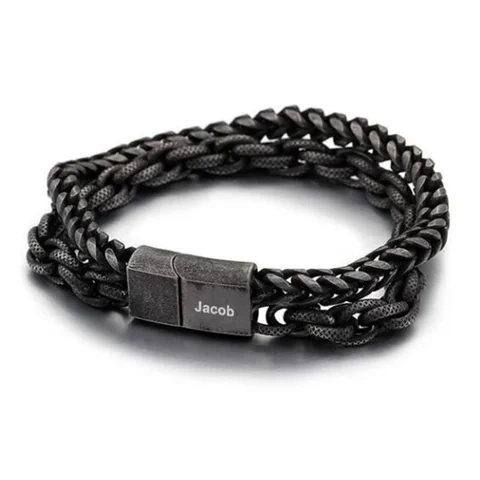
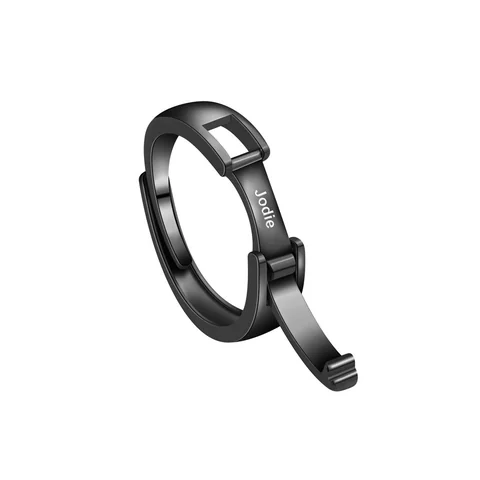
Ask which name the wearer wants now and whether a future change affects the choice. Do not turn a possible change into a reason to use an unwanted abbreviation.
Separate identity from permanence
The wearer might choose their current name, a first name, an agreed nickname, or a shared word. Each has a different meaning. A first name may suit one person; another may specifically want a new surname recorded.
Discuss the decision directly: “Would you like this to record your name today, or do you prefer wording that stays independent of a surname?” This lets the recipient define the purpose.

Ask about changes only if they matter
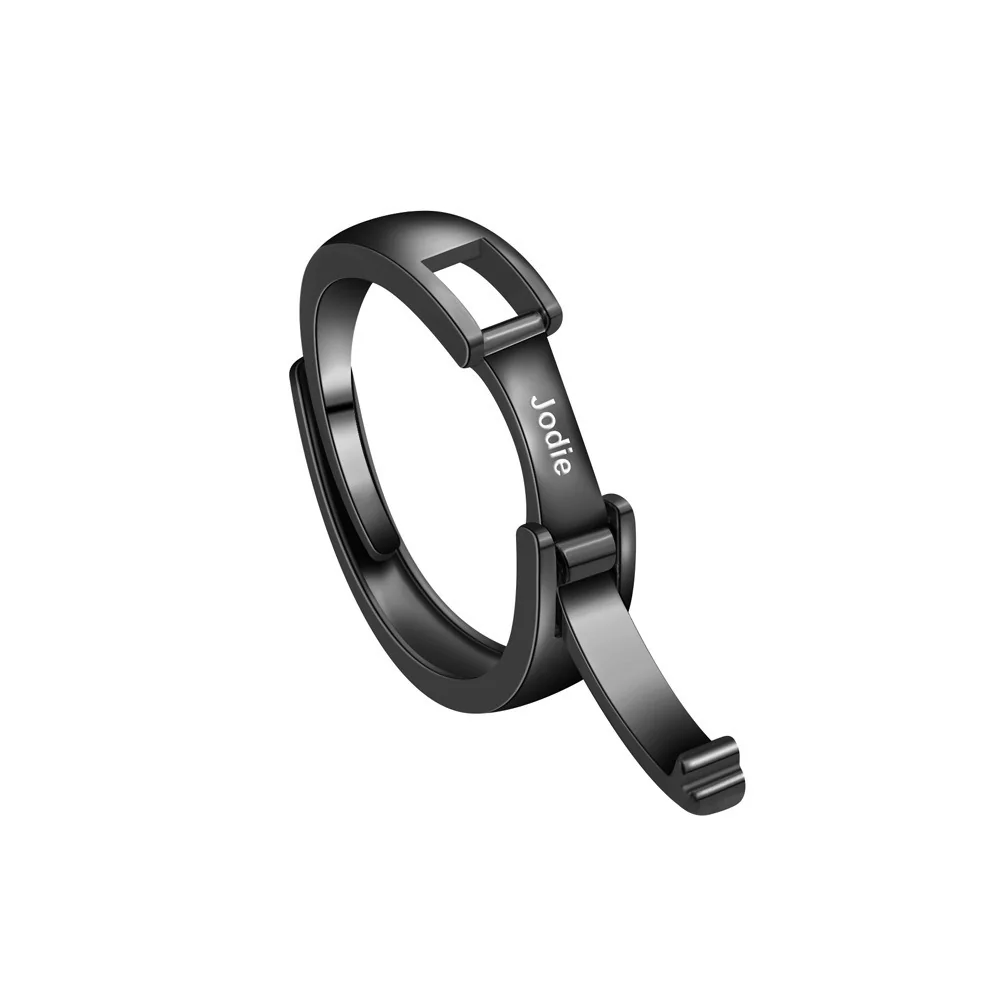
For The Name Ring or The Double Chain, a later alteration would require an explicit answer about the construction, existing mark, process, and service. The current records do not confirm removal of an inscription, re-engraving, or replacement parts.
If a future update is essential and no supported route is provided, choose wording the wearer accepts without relying on that service. Keep the original spelling and chosen version in the brief. Planning ahead should preserve the person's choice, not weaken it.
Ask about the purpose without requesting a personal explanation
The wearer does not need to justify why a name might change. Ask which wording they want on this gift and whether the timing matters to that wording. A current name, an anticipated name, and a name-independent word can each be meaningful. The choice belongs to the person, and none should be treated as a temporary substitute unless they describe it that way.
Avoid using a legal document as the default spelling source when the wearer has chosen another form. The brief should reflect the exact name they want displayed, including spacing and capitalization. If they want a full surname, do not shorten it automatically because a future change seems possible. If they prefer a first name, record that preference without making claims about what names will remain unchanged.
Keep the name choice separate from any date or occasion wording. A date could record the gift's occasion, but it should not be added as a presumed explanation for an identity change. The wearer may want the name alone. Prepare only the fields they have chosen, then evaluate the product's confirmed inscription region.
Compare wording candidates by meaning
Make a short decision sheet with the candidates the wearer actually accepts. For each, write what it would represent now and whether its meaning depends on a future event. This is an editorial planning aid, not a prediction of the person's future. A candidate can be acceptable today even if they later choose a different name.
Do not assume that an initial is neutral. It can be tied to a surname as strongly as the full word, or it can be an unwanted reduction of a chosen name. Ask the wearer to read each candidate as a finished inscription. The shortest option is useful only if it preserves the meaning they want.
If the wording is unresolved, preserve separate labeled drafts rather than placing several names into one production request. A reviewer might otherwise select one without knowing that the identity decision is still open. Mark the current preference and the remaining question clearly so the text proof begins from an approved choice.
Work through a fictional timing decision
In this fictional example, a wearer named Jordan is considering a future surname change. They want the ring to mark a graduation happening now. Their first draft uses the current full name, while a second uses Jordan alone. After discussing the purpose, they choose the current full name because the gift is intended to record this particular moment.
Their brief does not require the ring to be updated later. It records the chosen spelling and the purpose privately. If the exact design cannot support that text, the next step is to compare another confirmed region or another accepted candidate. The giver does not replace the name with an initial simply because it appears easier to fit.
Another fictional wearer wants a ring specifically celebrating a new chosen name but has not finalized its spelling. They defer the inscription decision and present the design idea first. This is a practical timing choice; it does not rely on removing an earlier mark or obtaining a replacement service. The gift can remain meaningful while the final wording is still pending.
Set a wording decision point
Agree when the final name will be reviewed before a manufacturing proof is requested. That point should follow the wearer's decision rather than an assumed social deadline. Save the confirmed spelling in one master note. Any later change creates a new wording version and needs a new comparison with the proposed layout.
If a later alteration is essential, obtain the actual service terms and construction-specific answer before relying on it. A statement that a design is personalized does not establish that an existing inscription can be removed. Separate any supported replacement route from re-engraving; they are different services with different questions, and neither is confirmed in the present records.
Keep the accepted name, intended product version, wording date, and proof together. The useful outcome is a gift that reflects the wearer's present choice, with future uncertainty handled through an explicit decision rather than an unsupported alteration promise.