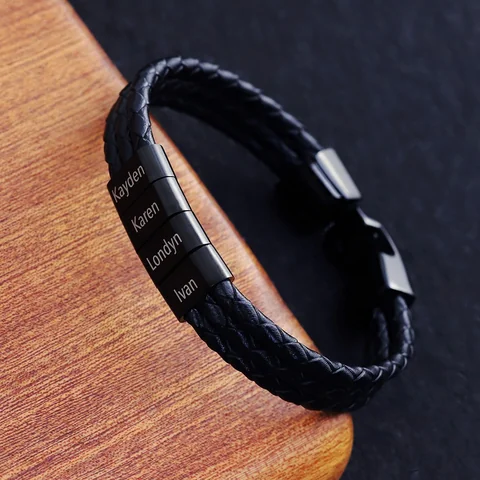
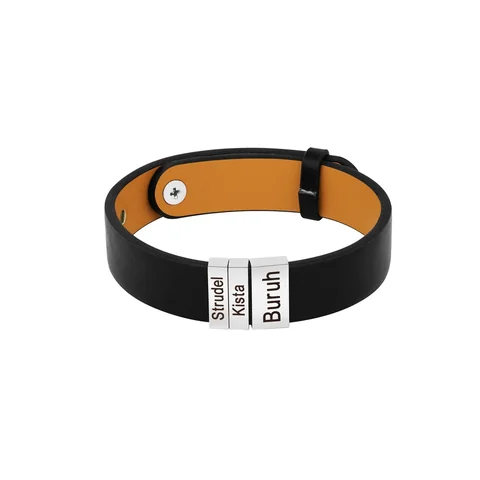
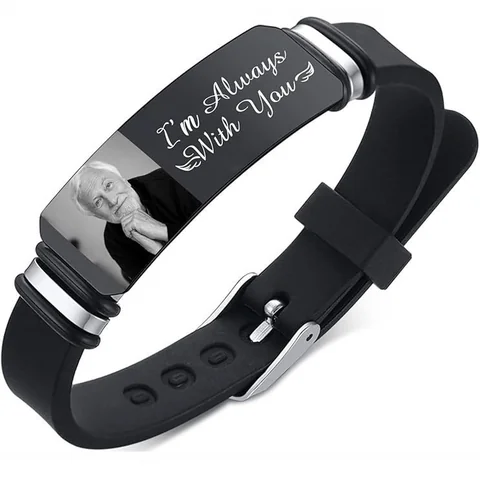
Treat an emoji as an artwork request until the production method is confirmed. Its colorful appearance on a phone does not tell you how it would look as an engraving.
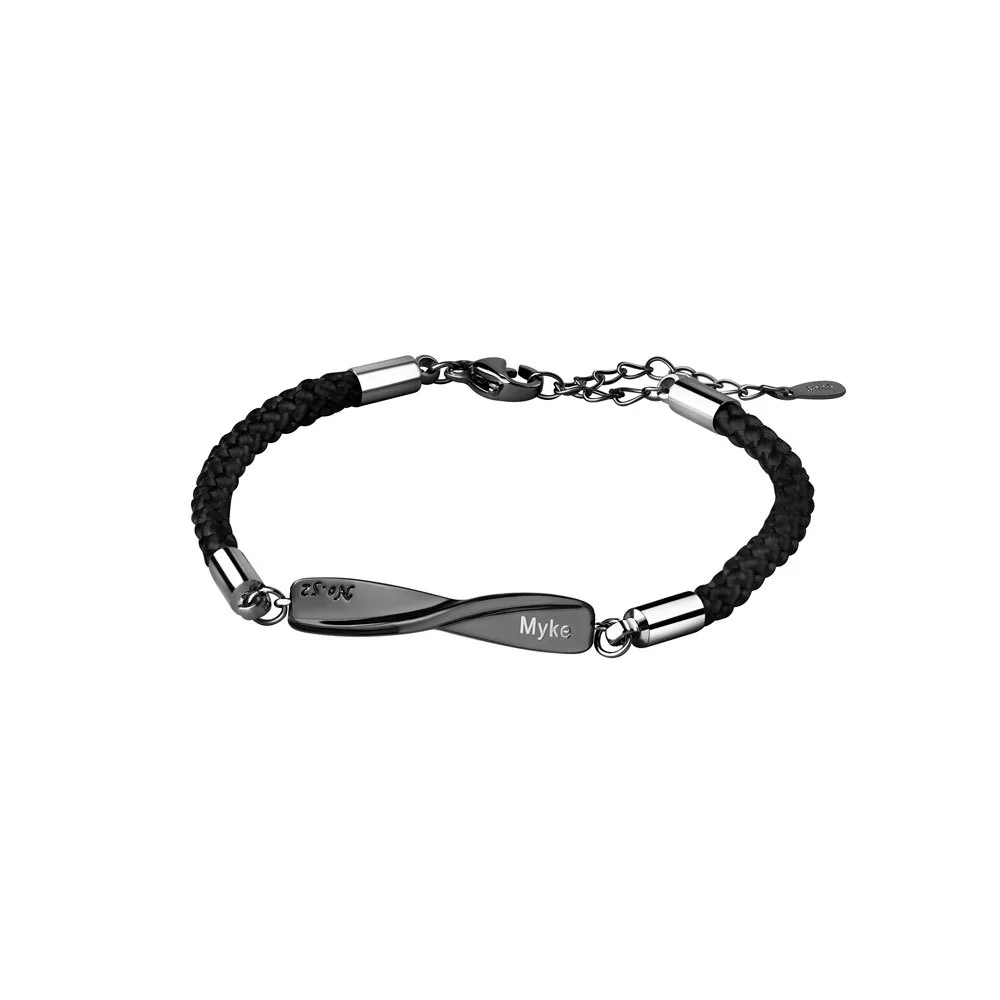
Separate three kinds of detail
| Detail | What to request |
|---|---|
| Plain text symbol, such as an ampersand | The exact character and supported font |
| Emoji shown in color on a screen | A demonstration of the proposed finished representation |
| Shaped decorative component | Confirmation that the selected version includes that component |
These requests should not be merged under “add a symbol.” A shape can be part of a bracelet while the same-looking text character remains unsupported.
Keep a text-only alternative
Write the intended meaning in words beside the proposed symbol. For example, a fictional brief might offer “Home” as an alternative to a house emoji. The wearer can choose whether the word preserves the meaning; the seller should not make that decision silently.
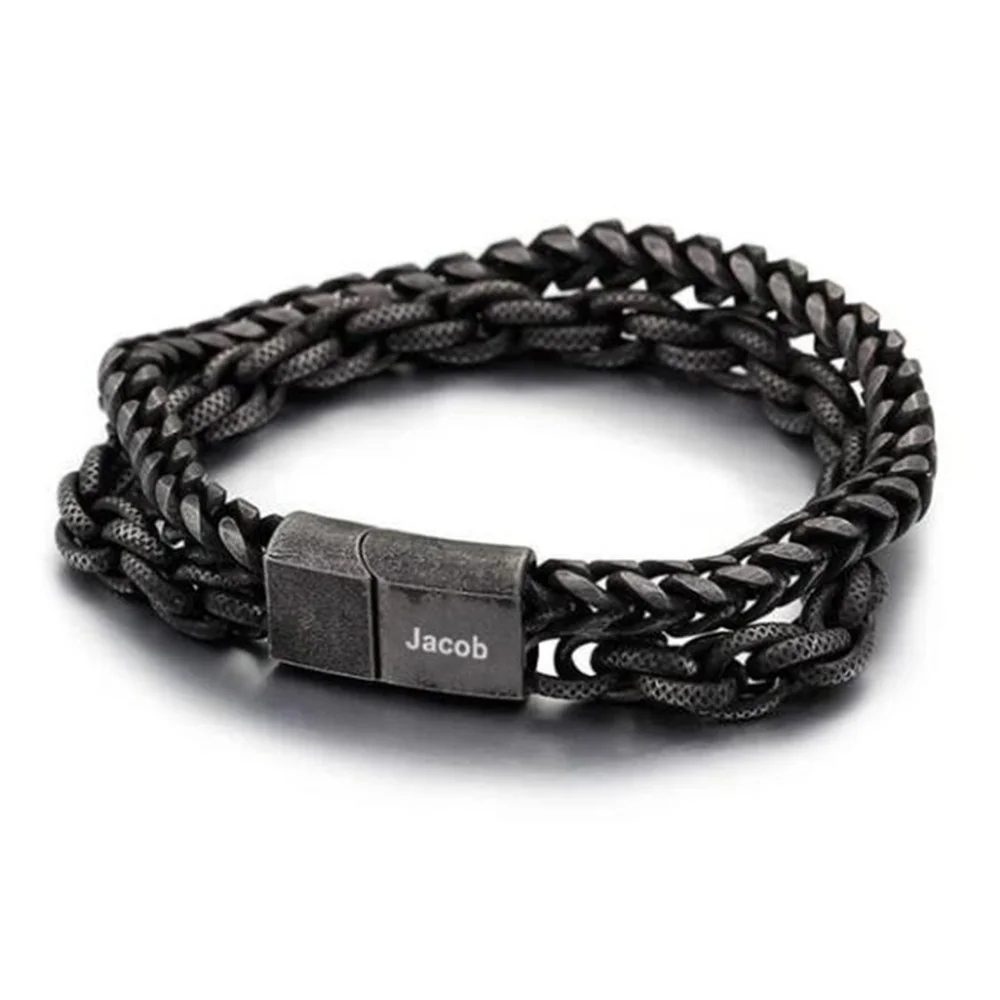
Ask for an explicit proof for The Double Chain. When considering The Infinity Bracelet, also verify which visible details belong to the offered option. If the symbol renders as a blank box or an unexpected graphic, stop and resolve it before approval.
Explain the meaning before selecting the mark
Start with a sentence describing what the symbol should communicate. “A reminder of our first home” gives you more useful choices than “put this emoji here.” The sentence belongs in the private brief, even if no words from it appear on the bracelet. It helps the wearer decide whether a simplified drawing, a text character, or a short word still carries the intended meaning.
Separate necessary features from decorative ones. For a hypothetical house symbol, a roof and doorway might be essential, while a colored window might be optional. For a music reference, a specific note shape may matter more than its color. The reviewer needs to know which changes require approval. Otherwise, simplifying the graphic can accidentally replace the idea you meant to preserve.
Avoid describing a symbol only by its name when several appearances could fit that description. “Heart” could mean a text outline, a filled silhouette, an anatomical drawing, or a colored phone image. Include the exact reference you want considered and describe the relevant shape in words. This does not establish that any version can be made; it establishes what the request actually is.
Keep the symbol out of the text field until resolved
A field that accepts a pasted character is evidence of input acceptance alone. It does not demonstrate the appearance, supported artwork, or placement in the finished piece. Save the exact text string and a separate visual reference. If the screen preview changes the symbol after you paste it, keep a screenshot of the changed result and flag that discrepancy.
Do not assume an attached screenshot is a usable production file. It may contain interface buttons, a background, or other details that are not part of your request. Identify the requested graphic clearly, then obtain the actual file requirements if the exact design supports artwork. Keep the unedited reference so a later outline can be compared with the image you originally chose.
For a message containing both words and a symbol, show the intended order explicitly. Write whether the mark comes before the words, after them, or between two names. State whether surrounding spaces are intentional. An instruction such as “Mia heart Ben” leaves open whether “heart” should become a word, a character, or a drawing.
Use a fictional decision sheet
In this fictional example, two friends associate a mountain trip with a mountain emoji. They prepare three candidates: the emoji reference, a simple mountain outline they would consider if supported, and the phrase “Our trail.” Their private note says that the mountain shape matters, while the phone image's sky color does not. They have not approved the outline merely by listing it as an alternative.
When a proposed proof shows two peaks instead of the single peak in their chosen reference, they compare the change with their meaning note. If a single peak is important to the memory, they request a revision or choose the phrase. If the outline still conveys the intended trip and both agree, they record that exact artwork as approved. The decision is about their selected meaning, not an assumed universal definition of a mountain symbol.
The same sheet can include a declined option. Recording “Do not substitute an infinity mark” prevents a reviewer from replacing an unsupported graphic with a familiar decorative element. A physical infinity-shaped component in a gallery is a different choice from reproducing the friends' mountain artwork.
Inspect the proof as a complete message
Review the symbol alone first, then read the words and symbol together. Check for a missing mark, a filled area that should be open, an unexpected rotation, or a substitution with a similarly named graphic. Look at the proposed finished scale rather than judging only a large illustration. If the smallest meaningful detail disappears, identify that detail before requesting another version.
Your final brief should contain the exact words, the approved graphic reference, its position, and the chosen alternative if the original request cannot be supported. Leave unresolved artwork marked unresolved. A symbol that looks acceptable on your phone has not completed those decisions, and a beautiful reference image should not override the wearer's preferred meaning.