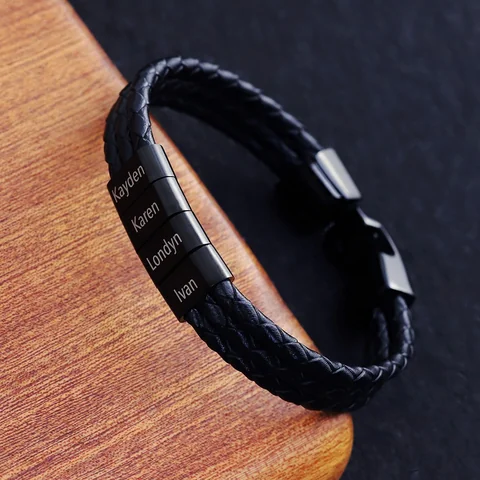
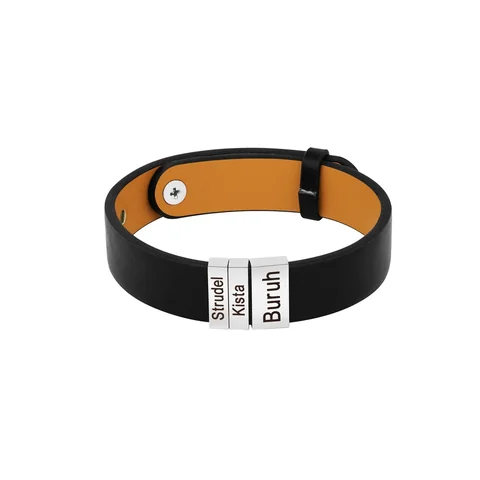
Put the recognizable detail on the jewelry and the explanation in the note. A small inscription does not need to carry the whole message.
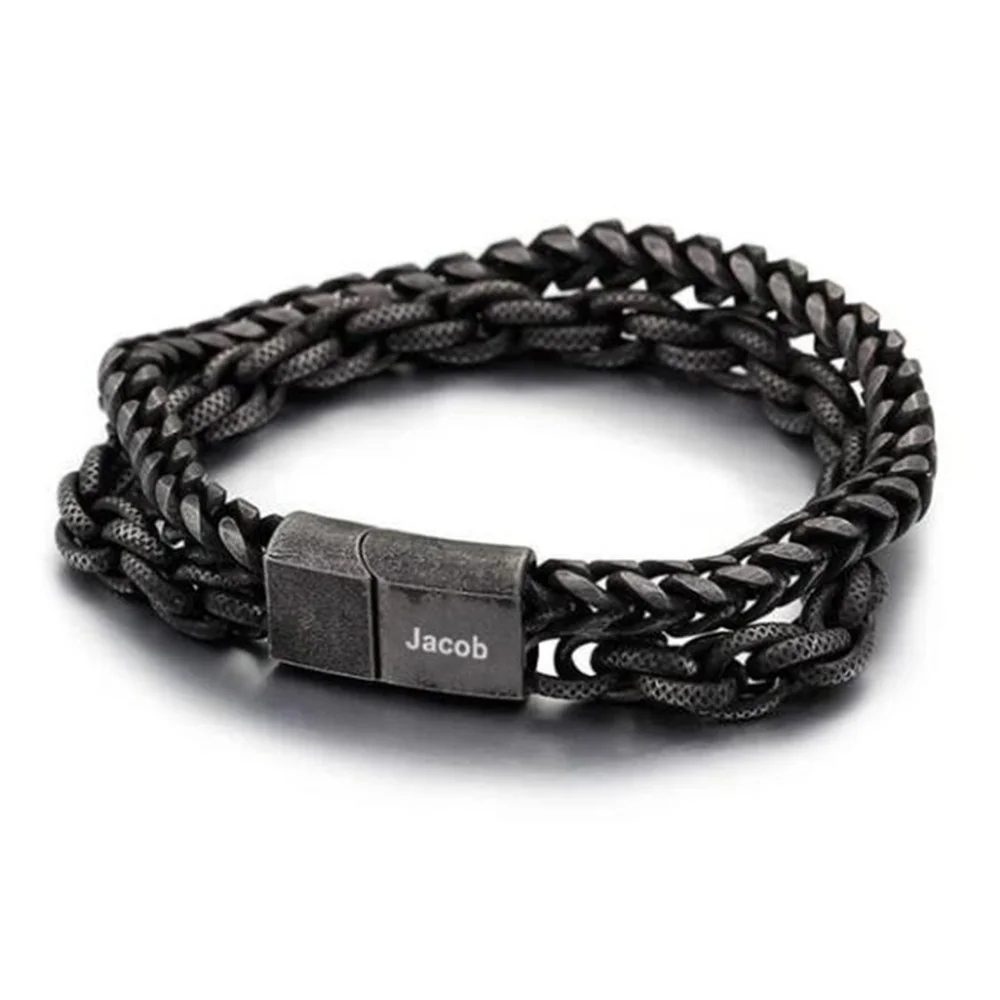
Write the inscription and note together
These are original fictional writing exercises:
| Proposed inscription | Accompanying note |
|---|---|
| Next bend | “A small reminder to leave room for the next turn. The longer plan can change; the invitation to explore stays.” |
| Still here | “I wanted a few words you could recognize without needing to tell anyone else the story.” |
Use these as editing models, not as ready-made claims about your relationship. Replace the central detail with one the recipient actually recognizes.
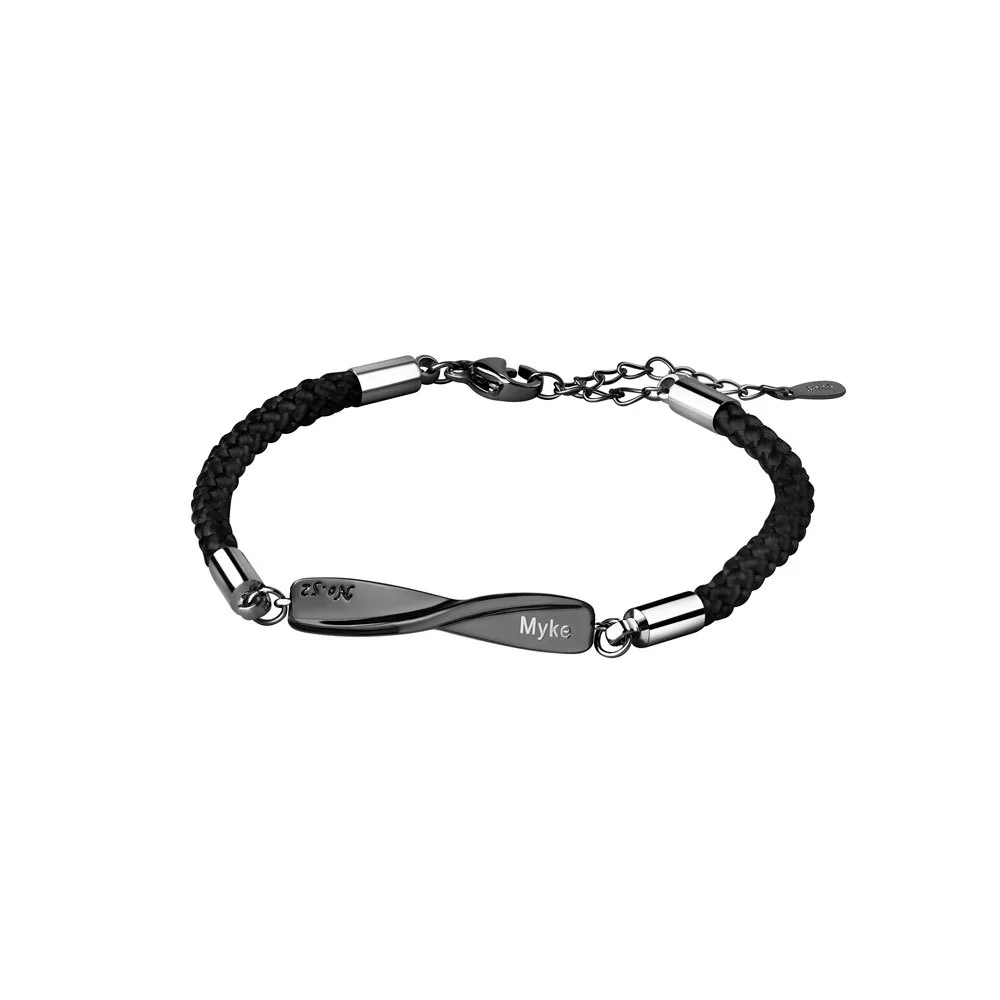
Keep the two parts from competing
The note can explain the occasion and include a sign-off. The inscription can remain short and clear. Repeating a paragraph on both usually adds little.
For The Double Chain or The Infinity Bracelet, ask whether the exact short text fits the confirmed region. If a phrase only works after a lengthy explanation, consider a clearer inscription or leave the whole message in the card. Do not shrink the lettering just to preserve every sentence.
Give each part one job
The inscription can act as a cue: a name, a place, or a few words that bring the memory into focus. The note can identify the occasion, explain why you chose the cue, and say what you want to say to the recipient. Writing these jobs separately makes it easier to decide which words must appear on the piece and which belong on paper.
Start with the longer message. Write what you would say if there were no jewelry at all. Then underline the smallest detail the recipient would recognize. That detail becomes a proposed inscription, while the rest becomes the basis of the note. The proposed wording still needs a confirmed text region and feasible layout; the editing exercise does not establish a character allowance.
Replace general praise with a specific memory
A note can be personal without making large statements about the recipient. Instead of saying that someone is always fearless, describe an actual occasion you both recognize and explain why it matters to you. Do not borrow someone else's experience or present an editorial example as a memory you shared.
For your own draft, ask three questions: What prompted this gift? Which detail will the recipient recognize? What do I want to say directly? You may decide that only the second answer belongs on the bracelet. A sign-off and an explanation of the gift can remain in the note, leaving the inscription clear enough to stand alone.
Three fictional writing exercises
These fictional editorial examples demonstrate different relationships between a short cue and a note. They are proposed writing choices, not tested production layouts or accounts of real gifts.
| Cue | Longer note idea | Editing decision |
|---|---|---|
| Home route | “I chose the words we used for our walk back after dinner. I wanted to mark that ordinary time together.” | The specific explanation stays in the note |
| Onward | “This marks the beginning you chose. I am glad I get to hear about what comes next.” | The occasion is explained without predicting success |
| Your name | “I kept the piece simple because the name was the part I wanted you to see. The longer message belongs here.” | The inscription remains an identifying detail |
You can reject all three and still use the exercise. The useful question is whether the cue carries enough meaning for this wearer. If it does not, write another cue rather than lengthening it until it becomes the entire card.
Check whether the inscription sounds right by itself
Read the short text without the note beside it. Does it make sense in the voice you intend? A phrase that feels playful in a letter may sound like a command when engraved alone. A phrase intended for encouragement may carry an unwanted memorial meaning. Ask the recipient when the meaning is sensitive instead of assuming that the note will resolve every interpretation.
Then read the note while covering the inscription. It should still explain the gift clearly. If the note only repeats the two engraved words several times, add the actual reason for choosing them or shorten it. The two parts should support each other without depending on identical wording.
Keep revision and formatting separate
Decide the wording before discussing decorative lettering. Preserve the exact text in a plain written record, including whether punctuation belongs on the piece. Keep the card text in a separate field so a maker does not mistake its opening line or signature for an additional engraving request.
If a layout cannot support the preferred cue, consider shortening the cue with the recipient's agreement or selecting another confirmed region. Do not move the whole note onto another surface without checking that surface's capability. A message that matters enough to preserve deserves an explicit decision about what changes.
Prepare a coherent presentation
The note can say that the inscription was deliberately kept short and then supply the fuller thought. Avoid including unconfirmed product promises such as lasting forever, fitting perfectly, or arriving for every future occasion. Say what you chose and why. Before finalizing, check the cue against its proof, the note against your intended meaning, and the recipient's name against the envelope or card. These are three separate editing checks, and each can prevent a different error.