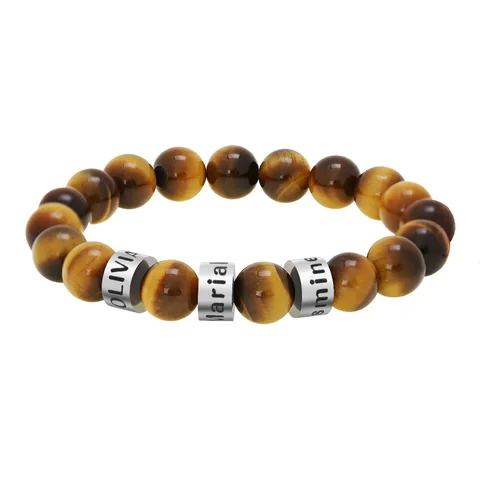
Write the text first and draw its regions second. For a custom name bracelet for men, a useful layout worksheet shows which words must stay together and which entries can be separated.
Fill in the regions without choosing a product
The following is an original editorial exercise using fictional names:
| Region | Proposed text | Reason for keeping it together |
|---|---|---|
| 1 | Ada | One complete name |
| 2 | Eli | One complete name |
| 3 | Home team | A phrase that loses meaning if divided awkwardly |
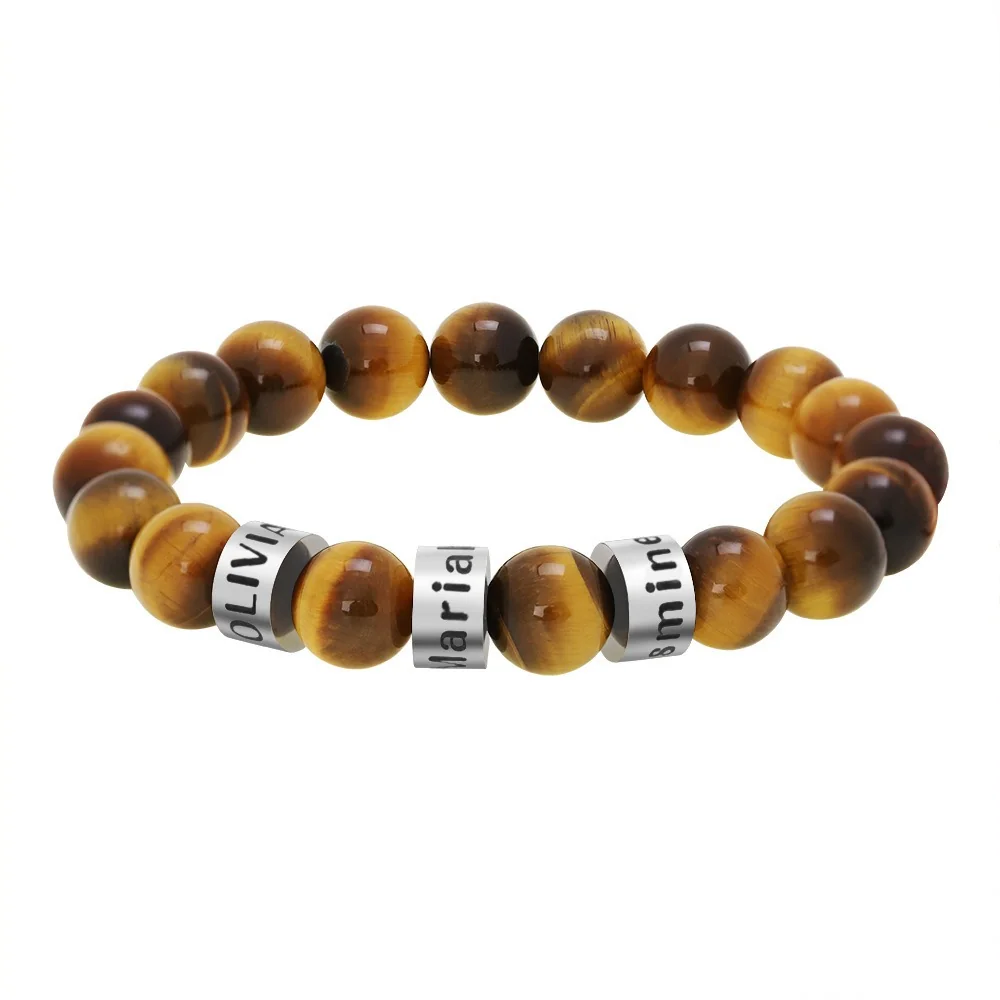
These are planning boxes, not approved engraving areas. The exercise produces a three-region requirement; it does not establish that a pictured bracelet supports it.
Now make a second draft with all three entries on one panel. If the phrase crowds the names, decide which information belongs on the jewelry and which belongs on a card.
Check the gap between the worksheet and the design
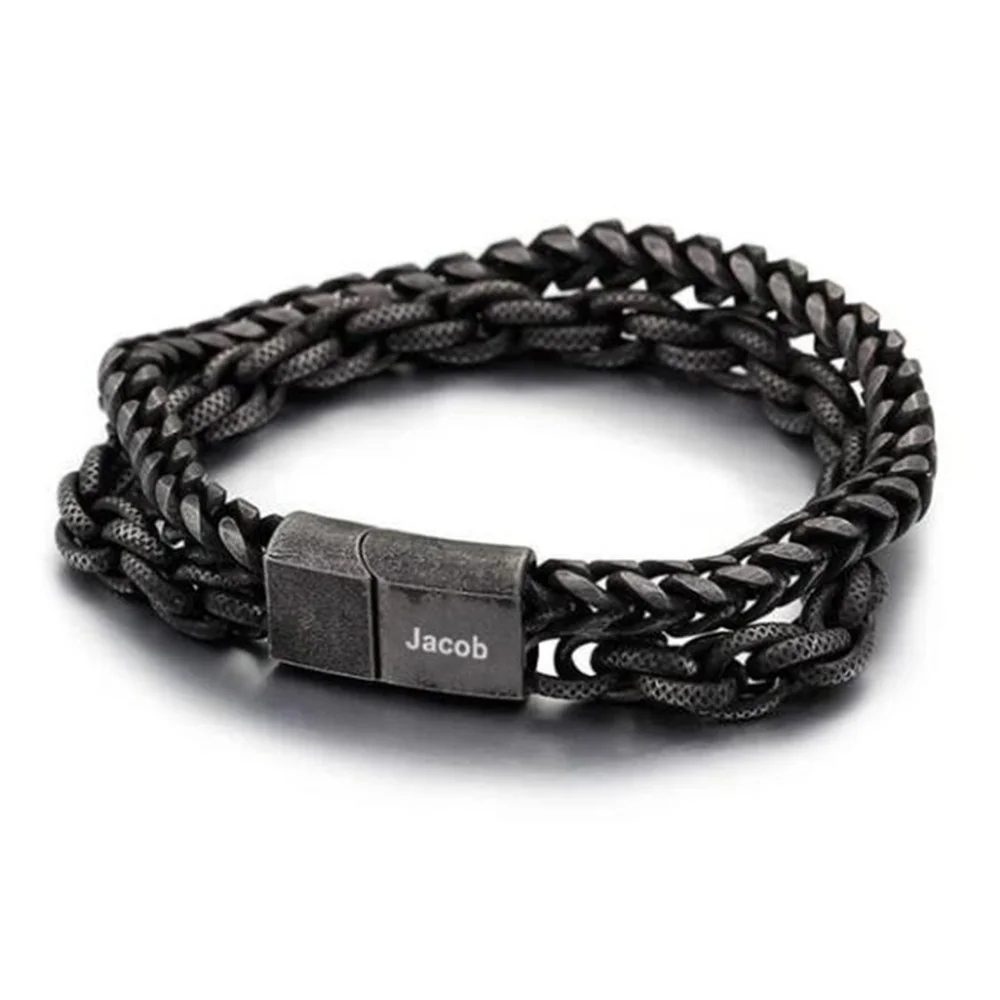
Compare the Name Bead reference and Double Chain reference only after the worksheet is clear. Request the actual number of usable regions, the allowance for each, and whether the named elements are included in the selected configuration.
Do not squeeze several entries into an unconfirmed field simply because a preview lets you type them. A resolved brief needs both the exact words and a confirmed place for each.
Start with the information that cannot be lost
Make a plain-text master containing every proposed entry exactly as written. Beside each entry, note whether it is essential or optional. Essential means the brief no longer serves its purpose if that entry disappears. Optional means the information could move to the gift note without changing the bracelet's central meaning. This distinction is more useful than cutting words until a preview field accepts them.
For an original planning example, imagine two fictional names, “Lena” and “Sam,” followed by the phrase “Our small team.” The names identify the people. The phrase explains their relationship. A reader may decide the names belong on the jewelry and the explanation belongs on a card. Another may prefer the phrase alone. Neither choice needs to be made by an unconfirmed character limit.
Assign each entry a role
Describe a region as a reading unit, not a guessed physical dimension. One region could hold a complete name. Another could hold a complete date. A phrase should stay together if separating it would change how it reads. Do not draw a box labeled with a made-up engraving width merely to make the plan look precise.
Mark the intended reading order with arrows on paper. If several elements are involved, identify where reading should begin. The arrangement seen in a gallery picture may depend on how the bracelet is positioned for photography. Ask whether the intended order can be reproduced in the actual configuration.
Add a note about visual emphasis. Equal importance does not necessarily mean identical text lengths. If a long name and a short name should receive equal attention, say so. Let the maker explain the possible layout instead of assuming both can be scaled to the same box without a tradeoff.
Prepare two meaningful alternatives
Alternative one can keep the individual names and move the shared phrase to a card. Alternative two can keep the shared phrase and move the names to the card. These are different interpretations of the gift, not merely smaller versions of the same crowded layout. Discuss the meaning with the wearer before deciding.
A third alternative may be a different jewelry shape with a confirmed text region. That change is appropriate only if the new location is wanted and its specifications are available. Switching from a bracelet to a necklace does not automatically solve the engraving-space question.
Keep a revision log with the exact text removed or moved. A note such as “deleted the shared phrase to give the two names priority” explains the decision. A note such as “made it shorter” does not. The clearer explanation helps another reviewer assess whether the intended meaning survived.
Translate the paper layout into a focused request
Send the master text and the region plan together. Ask the seller to identify which region is supported by the selected version, whether the pictured number of elements is included, and how the proposed reading order would be arranged. Include the longest entry so the response addresses the difficult part rather than only the shortest example.
If the seller proposes abbreviations, ask to see the complete revised text before agreeing. If the seller proposes smaller lettering, ask for an intended-scale proof. If the seller proposes another configuration, request its exact identity and dimensions. Each response changes a different part of the brief and needs its own review.
The completed worksheet should have one exact spelling master, one preferred arrangement, and one deliberate fallback. It should also name the unresolved manufacturing question. That is a concrete result you can save while ordering was recorded as closed in the October 3, 2026 review: the meaning has been decided, and the remaining uncertainty is visible instead of hidden inside a promising preview.
Identify who can approve a change
If the worksheet represents several people, decide who will confirm the spellings and who will approve the arrangement. Those roles can belong to different people. The person familiar with each name checks identity; the intended wearer decides how the list should read on the bracelet. Keep both answers before changing a long name or deleting a region. This prevents a layout revision from becoming an unapproved personal decision.