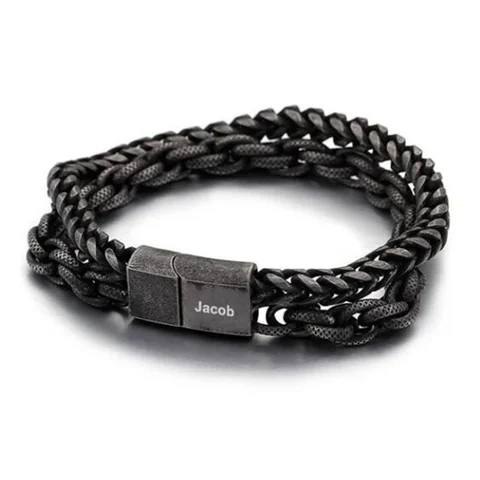
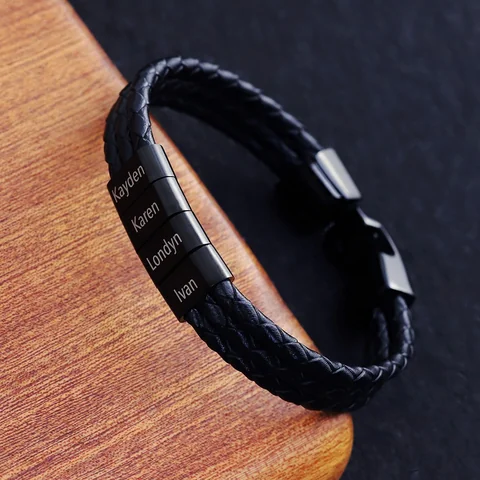
A bead diameter is not a wrist size. For a bead bracelet, you need a definition of the finished wearing space as well as the selected arrangement of beads and name elements.
Identify the number you were given
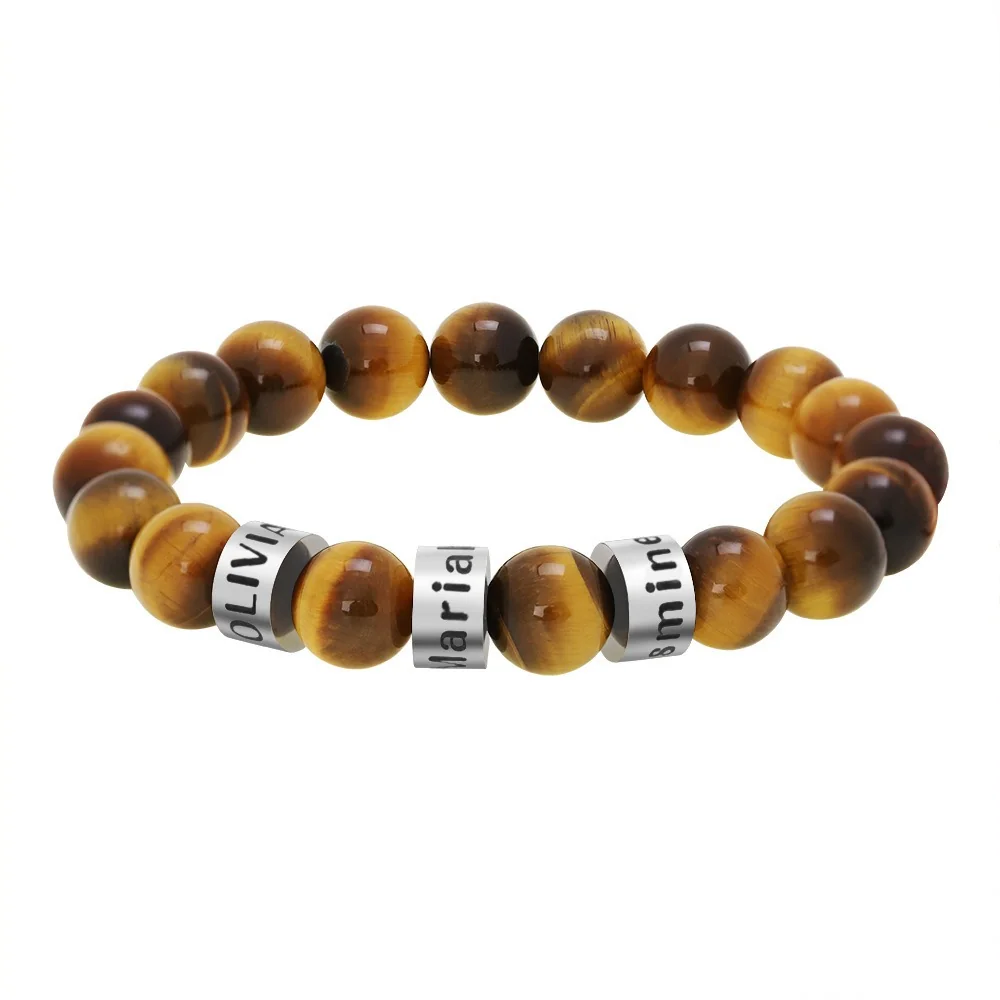
The archived supplier text for The Name Bead Bracelet includes a diameter figure of approximately 74 mm and separate bead dimensions. The record does not establish that the diameter is a sales-approved fit measurement. Do not turn it into a wrist recommendation by multiplying it by pi.
Ask what the diameter describes, how it was measured, and which arrangement was measured. Changing name-element quantity also needs a construction-specific answer; a gallery image cannot settle that relationship.
Send a fit request with the configuration
Include your measured wrist circumference, the desired name-element count, and the exact source option. Ask: “What wrist range is this finished arrangement intended for, and what measurement supports that range?”
Avoid using a thin chain's outside length as the bead bracelet's inside space. If no defined fit range is provided, keep this design as a reference rather than selecting a size from appearance.
Map the configuration before comparing dimensions
List the components you want included, using descriptive names instead of guessing their materials. Record the desired number of name elements and the exact wording for each. Keep the round beads, name elements, closure or connecting structure, and any other visible component separate in the note. A configuration description gives the supplier a specific arrangement to address.
Do not use a photograph's apparent number of beads as an inventory statement. Parts can be hidden behind the display surface or beyond the crop. A gallery may show an example rather than every available configuration. Treat your list as a proposed arrangement until the exact version and its usable components are confirmed.
If two options show different name-element counts, ask whether they share the same finished fit definition. It is possible for a configuration question and a fit question to be related without your knowing the relationship. You should not decide that adding a name automatically lengthens the bracelet or that removing a bead automatically compensates for it. Those would be construction claims the current evidence does not establish.
Identify inside, outside, and component measurements
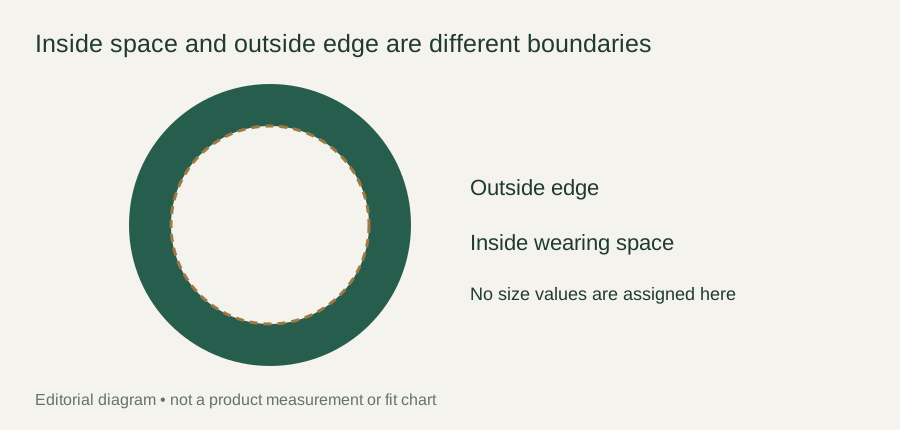
The outer boundary of a bead arrangement is different from its inner boundary. A diameter measured across the outside does not directly identify the space where a wrist would sit. A diameter of an individual bead describes a component. A diameter stated for the whole arrangement still needs a definition of the boundary and condition under which it was measured.
Use the conceptual drawing above as a vocabulary aid when forming the question. You can ask whether the supplier's figure refers to an outside span, an inside opening, an individual component, or something else. Do not extract measurements from the drawing itself. It is deliberately a planning illustration rather than a product model.
Likewise, a mathematical circle calculation cannot settle whether the actual arrangement is circular, how its parts occupy the wearing space, or whether the stated diameter describes that space. Retain the supplier's original statement and request the relevant finished wearing specification. A precise calculation applied to an undefined boundary only creates a more precise version of the same uncertainty.
Prepare a fictional bead-bracelet comparison
In this fictional example, a wearer wants three separate name elements and has a measured wrist circumference of 18 cm. One reference photo displays four names. The wearer writes “requested configuration: three names” and lists the three exact entries. They do not delete a bead from the photo or calculate a new circumference from an assumed bead diameter.
The initial reply repeats a diameter number but does not say which boundary it measures. The wearer asks for a labeled diagram of the finished three-name arrangement and its intended wrist range. If the supplier supplies a diagram for the four-name example only, the requested configuration remains unanswered. The wearer can preserve that partial evidence while declining to treat it as fit confirmation.
Their comparison sheet keeps the wrist reading, requested arrangement, supplier dimension wording, and unanswered fit field together. They can then compare another design without losing the fact that the bead version is unresolved. The goal is a supported choice for the requested arrangement, not proof that every version must share the same number.
Account for preferences without inventing an allowance
Describe the fit you want in everyday terms. You might prefer the name elements to stay near the wrist or accept more movement. If you own a bead bracelet that already fits comfortably, describe its construction and your experience with that piece. A measurement of it can be useful when its definition is explicit, but it remains a reference from another product.
Do not stretch an existing elastic piece merely to compare a maximum span unless its own instructions provide a relevant method. Do not dismantle or rearrange it to imitate the candidate. A reference should preserve the original structure and state any measurement limitations.
Before considering personalization complete, separate fit approval from text approval. Three correctly spelled names in a preview do not establish a comfortable finished arrangement. The useful outcome is an agreed component configuration with a defined wearing specification, or a clear decision to pause because that specification remains unavailable.