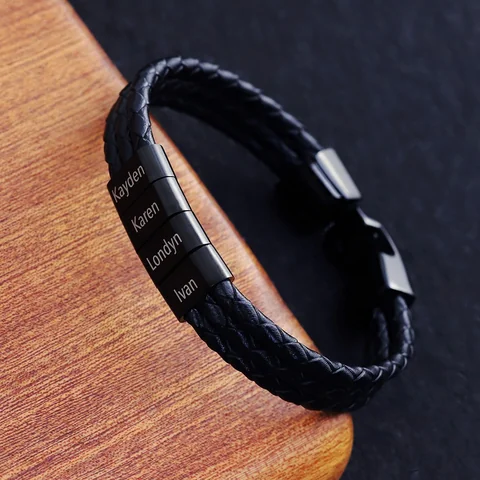
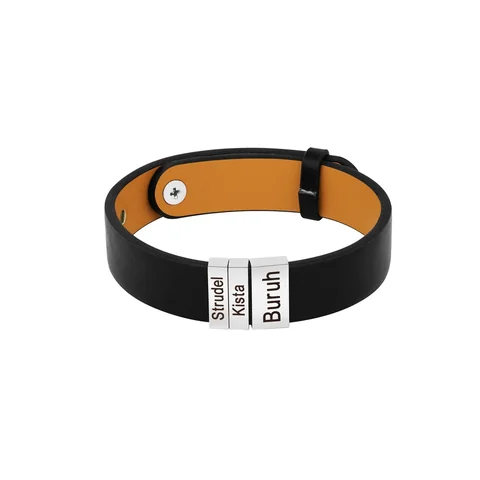
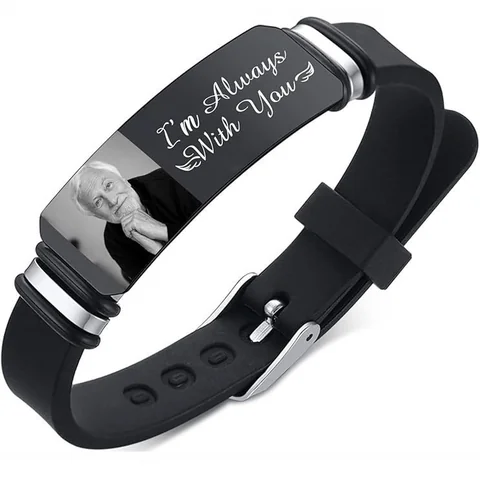
When comparing an engraved bracelet for men, the design and its listed weight deserve separate attention. If you dislike noticing a bracelet every time you move your hand, check its listed weight before choosing a design. A dark finish, a thin-looking chain, or the word “minimal” cannot tell you how heavy the finished piece will be.
Weight is useful for narrowing a shortlist. It cannot predict comfort on its own: the bracelet's fit, width, position, and contact with a watch or sleeve still matter.
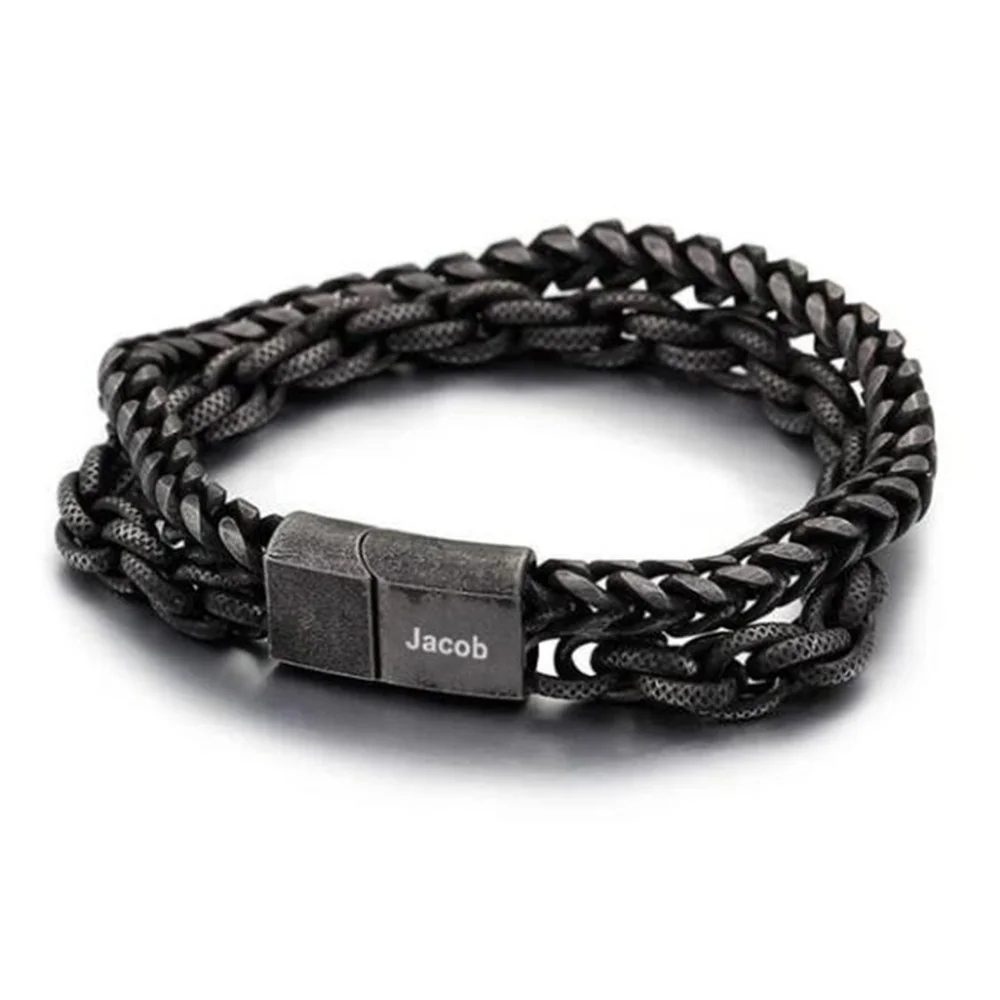
Start with numbers that describe the bracelet
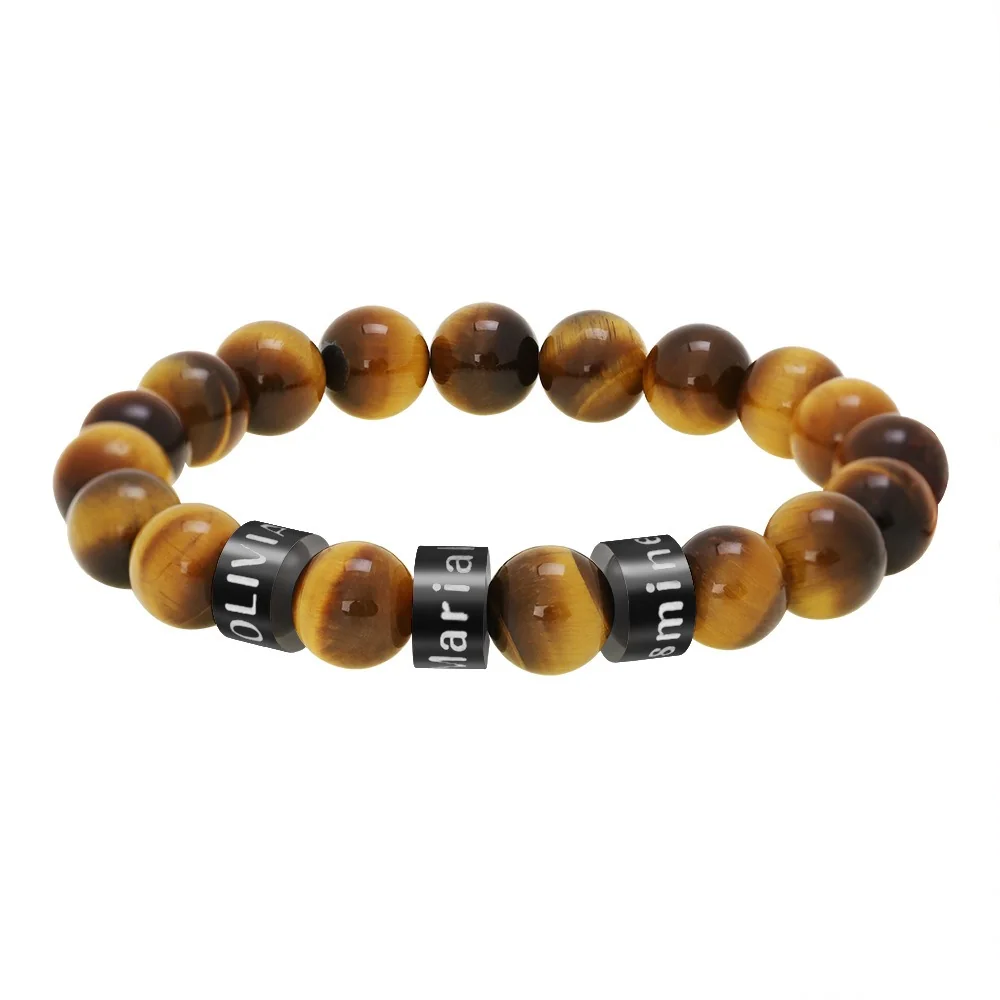
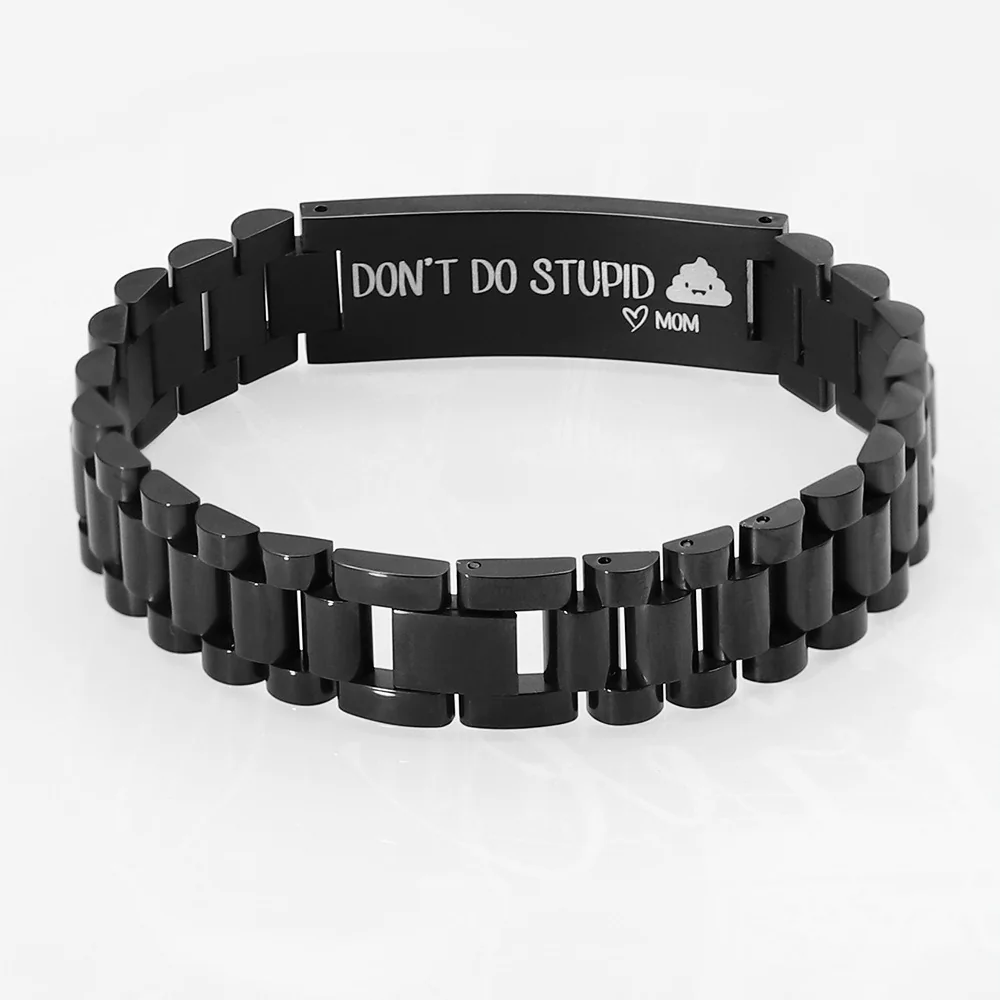
The original supplier descriptions for these three Energvia references include approximate weights:
| Design reference | Supplier-listed weight | What the figure lets you compare |
|---|---|---|
| The Three-Name Bead Bracelet | About 37 g | A bead design with a stated weight in its product description |
| The Double Chain | About 56 g | A chain design with a higher listed weight |
| The Engraved ID Bracelet | About 61 g | An ID design with a slightly higher listed weight than the Double Chain |
These are supplier-reported figures from the archived product descriptions, not measurements made by Energvia. The difference between the first and last entries is 24 g on paper. That helps explain why two designs that look similar in a small gallery image deserve separate consideration. It does not establish how either will feel on your wrist.
Keep the exact configuration beside the number. A base bracelet, a bracelet with added name elements, and a different length may need separate weight information. A figure for one configuration should not silently follow every option.
You can inspect the outlines on the Three-Name Bead Bracelet, Double Chain, and Engraved ID Bracelet reference pages. Use the photos for the shape comparison, and the cited supplier records for the figures above.
Avoid the packaging-weight shortcut
A wholesale listing may also contain a table of item or parcel length, width, height, and weight. That table serves a different purpose from a clearly labeled bracelet specification. Unless the supplier identifies what was weighed, do not treat it as the weight of the piece you will wear.
The same caution applies to a photo caption. A weight beside a different clasp, strand, or name-element arrangement is evidence for that pictured version. First establish that it matches your intended design.
Use a bracelet you already know as the reference
If you own a bracelet whose weight you like, record that preference in concrete terms. “I forget it is there while typing” and “I like feeling the chain move when I walk” describe different goals.
If you have a scale that can give a reliable reading for the piece, record its weight in grams. Otherwise, keep the comparison qualitative. Guessing a number adds uncertainty rather than removing it.
Make a short note with three entries:
- Your existing bracelet and what you like or dislike about wearing it.
- The supplier-listed weight of the candidate, including the relevant configuration.
- The practical question that remains, such as whether an added element changes the finished weight.
This note is more useful than asking whether a bracelet is simply “lightweight.” There is no single weight threshold that fits everyone's preference.
Keep weight and width separate
A lower listed weight does not mean a narrower profile. A broad centerpiece can occupy more space under a sleeve even when the complete bracelet weighs less than a chain design. Conversely, a bracelet that looks restrained may still have a substantial listed weight.
Compare those two attributes separately. Use a confirmed width for a paper outline if one is available; leave that field open if it is not. Then decide whether your priority is a quieter appearance, less weight, or room around an existing watch.
For a weight-sensitive choice, begin with the lower supplier-listed figure, then confirm the finished configuration and fit. For someone who enjoys a substantial piece, the higher figures provide a starting point for comparison, without turning weight into a quality ranking.
Sources and limits
Supplier descriptions: Three-Name Bead Bracelet source, Double Chain source, and Engraved ID Bracelet source. Archived source figures were reviewed on October 3, 2026. Finished weights and wearing comfort have not been independently tested.
Decide which uncertainty matters most
An original comparison exercise can have two possible priorities. A fictional wearer who dislikes noticing extra weight would begin by asking whether the lowest supplier-listed figure describes the exact name-element configuration they want. Another wearer who likes a substantial visual centerpiece would begin with panel width and placement, then ask whether the stated weight belongs to that version. These briefs lead to different questions even when they use the same three references.
Do not report a comfort improvement as a percentage derived from the listed grams. The weight difference is arithmetic; wearing experience has not been measured. Similarly, dividing weight by price would not establish quality or value. Neither calculation answers how the bracelet sits or whether the wearer likes it.
If one candidate lacks a weight statement, leave its numerical field empty and label it not supplied. You can still compare its pictured outline, but it should not enter a weight ranking as if it weighs nothing. Request a finished-piece figure tied to the selected length and included components.
Save the comparison with the question that could change your choice. For example: “Lower stated weight preferred, pending a matching configuration and usable size information.” That note is specific enough to revisit when the missing specifications arrive and modest enough to reflect the current evidence.